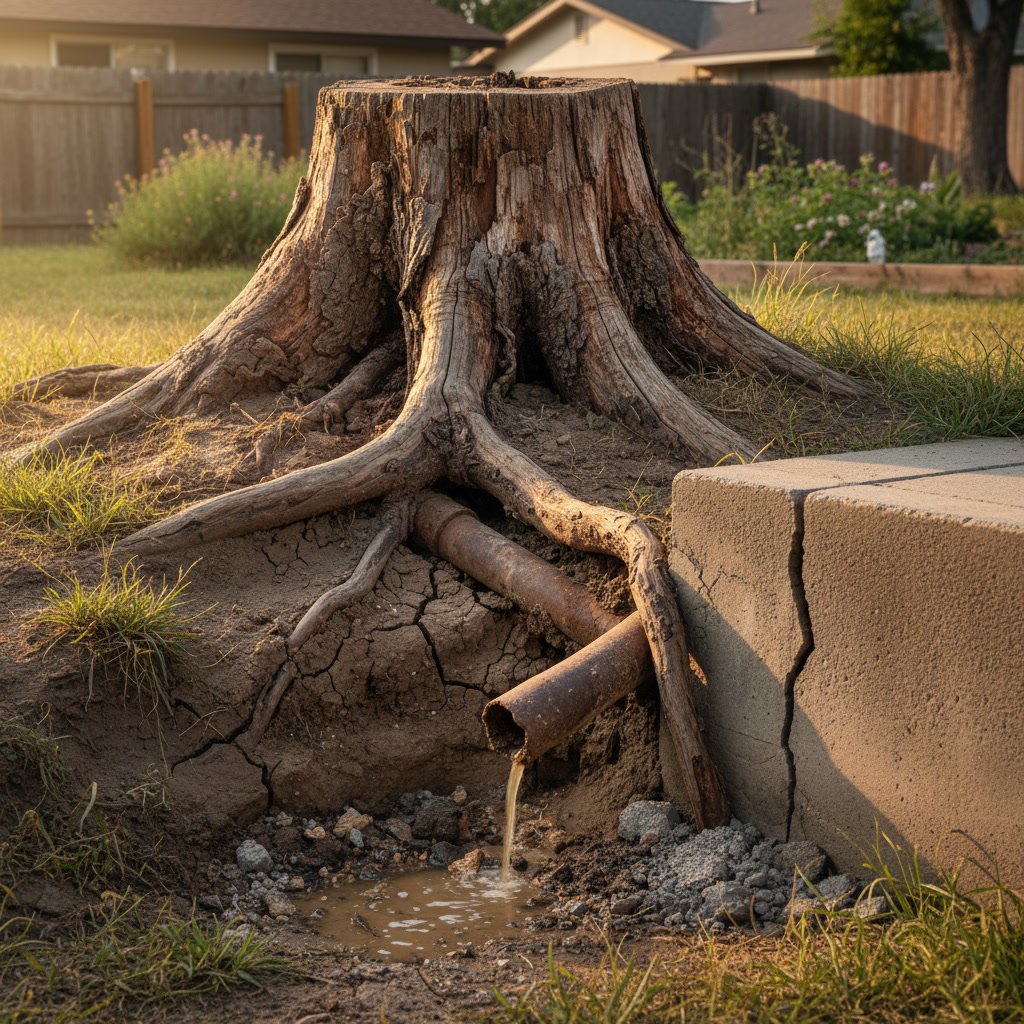
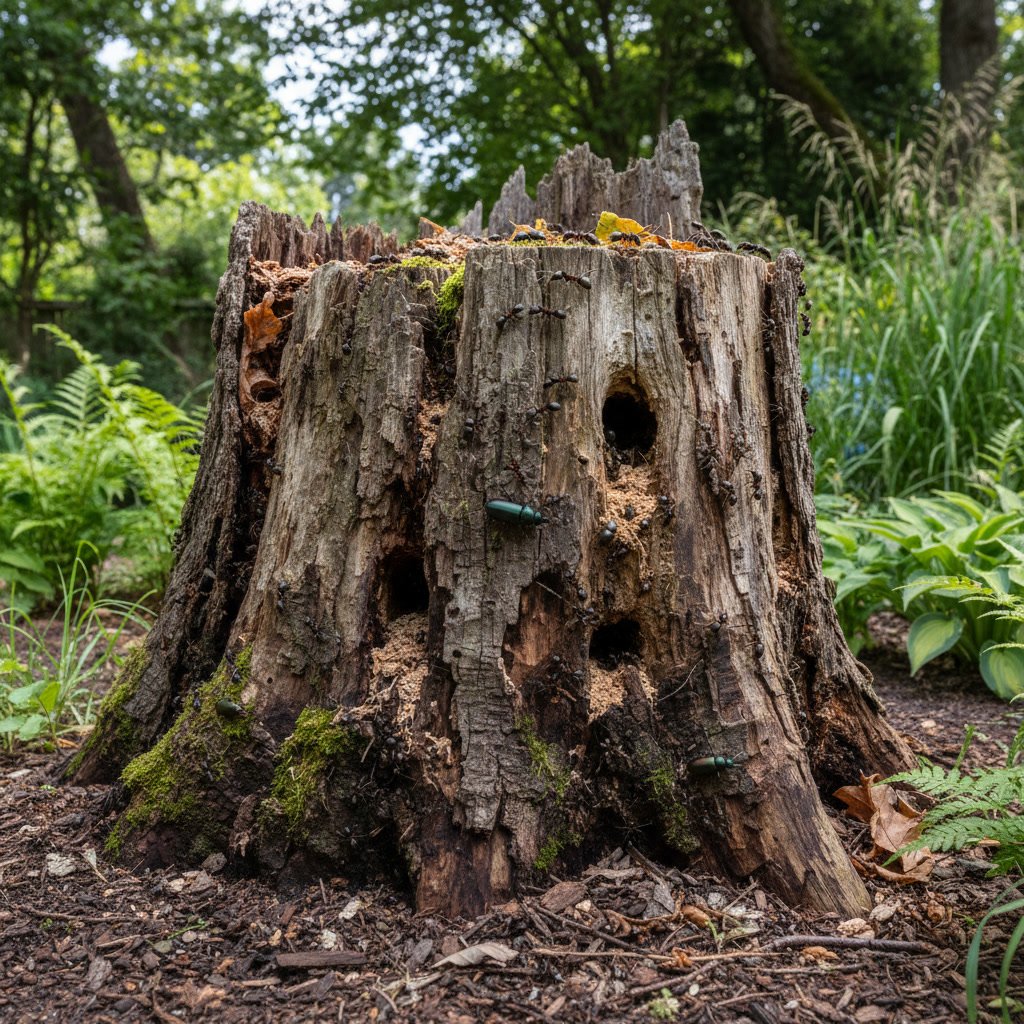
Tree stumps attract ants beetles because they provide an ideal food source and nesting habitat. Decaying wood contains moisture, cellulose, and fungal growth that carpenter ants and wood-boring beetles need to survive and reproduce. Once these pests establish colonies in stumps, they can quickly spread to healthy trees, wooden structures, and even your home’s foundation.
The relationship between old tree stumps and insect infestations is more than just inconvenient. It creates a chain reaction that affects your entire landscape and property value. Understanding why these pests are drawn to stumps helps you make informed decisions about yard maintenance and pest prevention.
The Biology Behind Pest Attraction to Dead Wood
Carpenter ants do not actually eat wood like termites do. Instead, they excavate galleries inside moist, decaying wood to build their nests. A single tree stump can house multiple satellite colonies that contain thousands of workers. These colonies need wood that has already begun to soften from fungal decay, which makes old stumps perfect targets.
Wood-boring beetles, on the other hand, feed directly on wood fibers during their larval stage. Species like the powderpost beetle and longhorn beetle lay eggs in cracks and crevices of dead wood. When larvae hatch, they tunnel through the stump for months or even years, consuming cellulose and leaving behind a network of channels that weaken the wood structure.
How Moisture Levels in Stumps Create Ideal Conditions
Fresh stumps contain significant moisture even after the tree is cut. As the stump begins to decay, it retains water in its porous wood fibers. This moisture level, typically between 20 and 30 percent, creates the perfect environment for both fungal growth and insect colonization.
Carpenter ants require moisture content above 15 percent to successfully establish nests. They are particularly attracted to stumps with rot pockets where fungal decay has already softened the wood. These damp, dark cavities offer protection from predators and temperature extremes while providing easy excavation for expanding colonies.
Why Westminster Property Owners Face Increased Risk
Maryland’s humid climate accelerates wood decay and pest activity. Summer humidity levels regularly exceed 70 percent, which keeps stumps moist for extended periods. Combined with frequent rainfall and warm temperatures, conditions in Westminster are particularly favorable for carpenter ant and beetle populations.
Properties with multiple stumps face exponentially higher risk. Each additional stump functions as a breeding ground that supports larger pest populations. These colonies send out scouts that identify nearby wooden structures, creating pathways between your yard and your home.
The Progression From Stump Infestation to Structural Damage
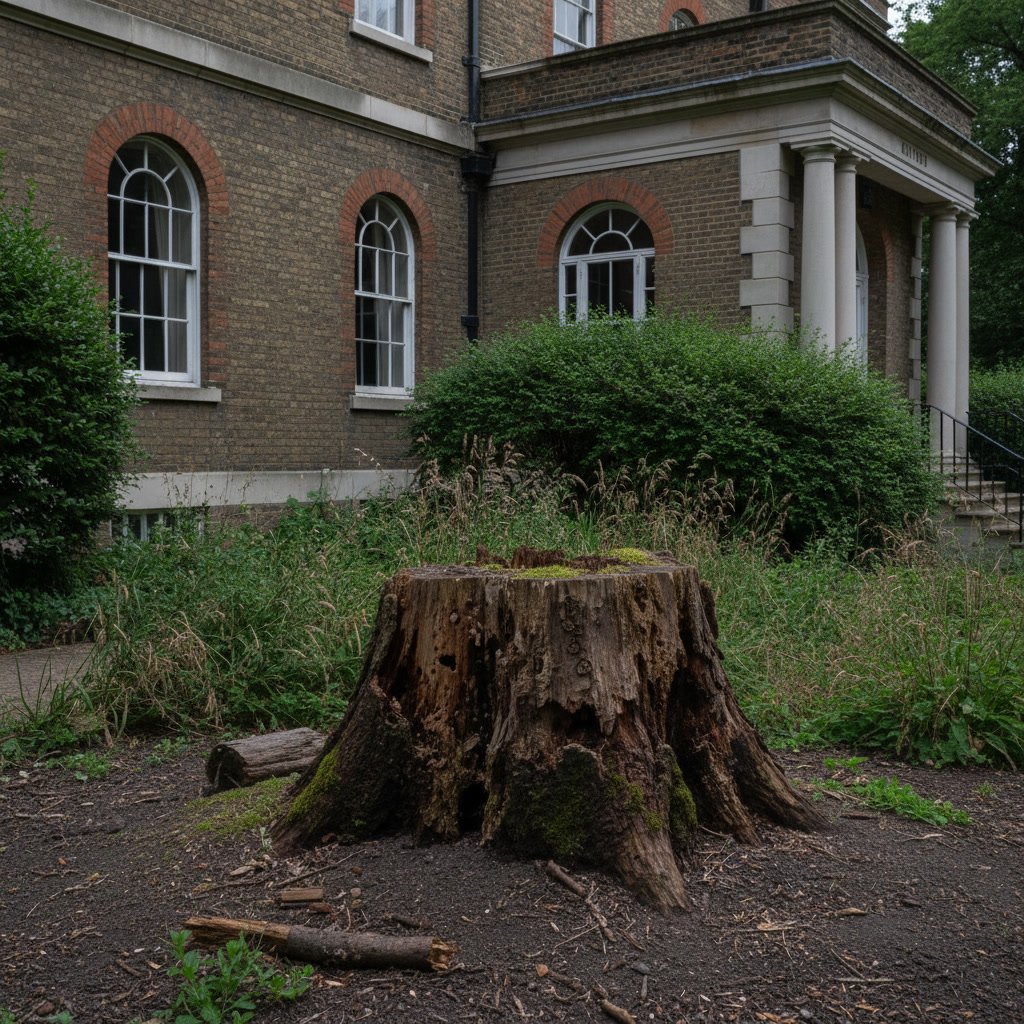
Pest problems rarely stay confined to stumps. Carpenter ants establish parent colonies in stumps, then create satellite colonies in other wood sources within 100 yards. This includes fence posts, deck supports, shed foundations, and eventually the wooden components of your home.
Wood-boring beetles follow a similar pattern. Adult beetles emerge from infested stumps and fly to nearby wood sources to lay eggs. A single female can lay 50 to 100 eggs, with larvae taking one to five years to mature depending on the species. During this time, they create extensive tunnel networks that compromise structural integrity.
Professional stump removal eliminates the source colony before pests spread. Grinding stumps below ground level and removing wood chips prevents future colonization and breaks the infestation cycle.
Five Warning Signs Your Stump Has Been Colonized
Identifying pest activity early prevents widespread damage. Look for these specific indicators around stumps in your yard:
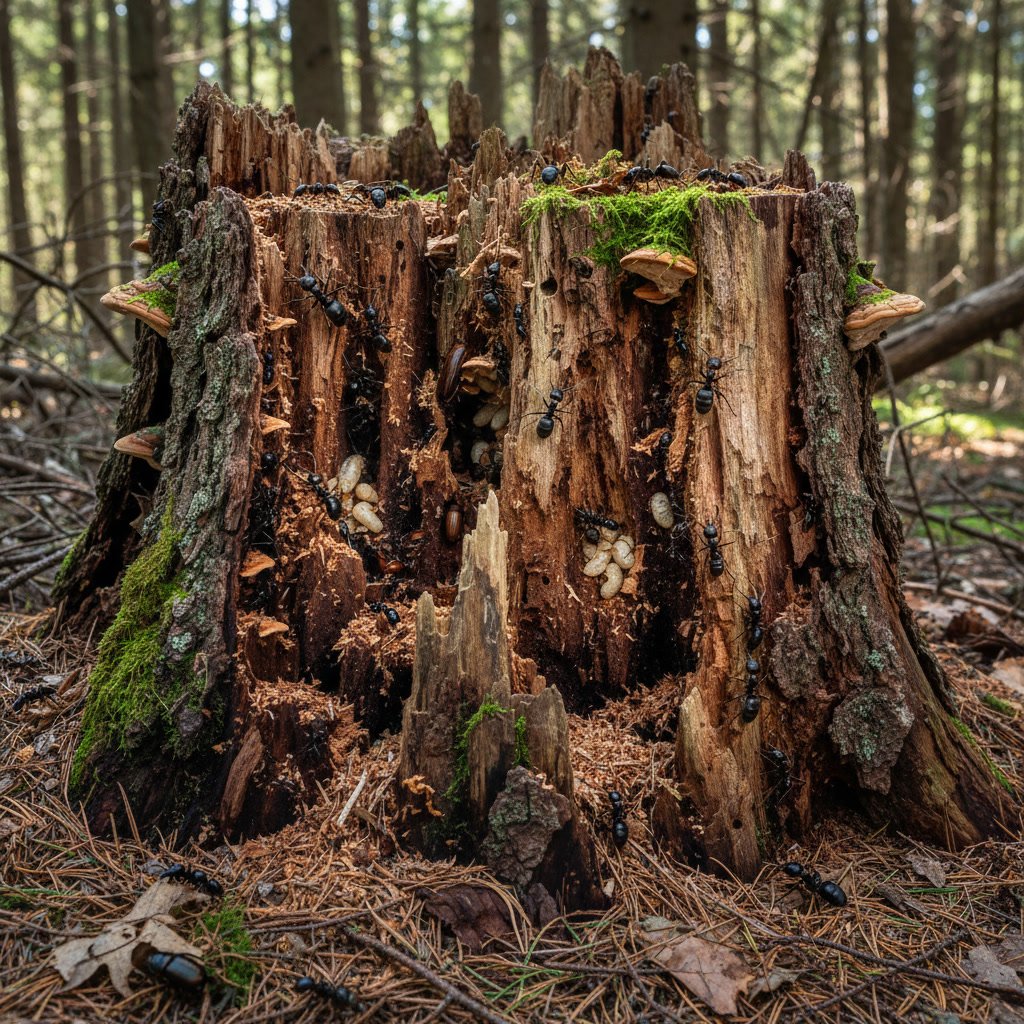
- Sawdust or wood shavings piled near the stump base, which carpenter ants create when excavating galleries
- Small exit holes ranging from 1/8 to 1/4 inch in diameter, left by emerging wood-boring beetles
- Hollow sounds when tapping the stump surface, indicating extensive internal tunneling
- Visible ant trails leading to and from the stump, especially during evening hours
- Fungal growth or mushrooms sprouting from the stump, signaling advanced decay that attracts pests
If you notice signs that your stump is rotting, pest colonization has likely already begun. The fungi that decompose wood create the soft, moist conditions carpenter ants prefer for nest building.
How Stump Age and Tree Species Influence Pest Activity
Stumps become more attractive to pests as they age. Freshly cut stumps take several months to develop the fungal decay needed for carpenter ant colonization. However, wood-boring beetles can attack stumps within weeks of cutting, especially if bark remains attached.
Certain tree species attract pests faster than others. Hardwoods like oak, maple, and ash contain higher moisture content and decay more slowly, supporting longer-term infestations. Softwoods like pine decay rapidly but attract different beetle species that prefer resinous wood. Understanding these patterns helps predict risk levels for specific stumps on your property.
The Connection Between Stumps and Nearby Tree Health
Pest colonies in stumps do not stay isolated. Carpenter ants forage for food sources up to 300 feet from their nest, often targeting stressed or damaged trees. They are attracted to trees with wounds, decay, or existing pest damage, accelerating decline in already vulnerable specimens.
Wood-boring beetles emerging from stumps frequently attack nearby trees showing signs of stress. Species like the emerald ash borer and Asian longhorn beetle cause millions of dollars in damage annually by spreading from dead wood to living trees. Removing stumps cuts off this breeding cycle and protects the health of your landscape.
Regular tree trimming combined with stump removal creates a comprehensive pest prevention strategy that maintains tree vigor and eliminates breeding sites.
Why Chemical Treatments Cannot Replace Physical Removal
Some property owners attempt to treat infested stumps with insecticides rather than removing them. While chemical treatments may kill surface pests, they rarely eliminate colonies deep inside the stump. Carpenter ants nest in chambers 12 to 18 inches below the surface, well beyond the reach of most spray applications.
Insecticide treatments also create environmental concerns. Chemicals leach into soil and groundwater, affecting beneficial insects, soil organisms, and nearby plants. Repeated applications increase costs without addressing the underlying problem: the stump itself provides ongoing habitat for new pest generations.
Professional grinding removes stumps six to 12 inches below grade, destroying all nest chambers and eliminating the wood mass that supports pest populations. This mechanical solution provides permanent results without chemical residues or recurring treatments.
Cost Comparison Between Prevention and Pest Remediation
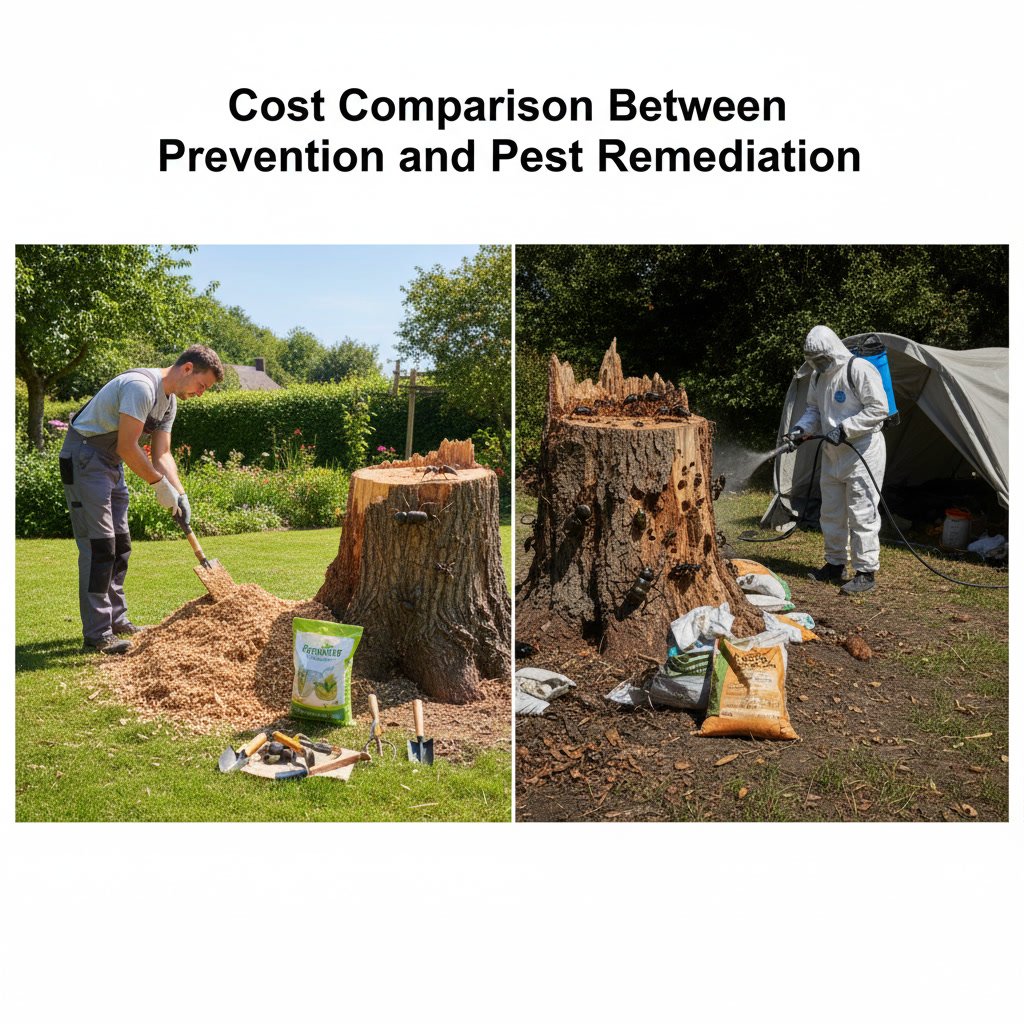
Removing a stump costs significantly less than addressing a full-scale pest infestation. Professional stump grinding for a typical residential stump ranges from $100 to $400 depending on size and location. Treating a carpenter ant infestation that has spread to your home’s structure can cost $2,000 to $8,000 or more.
Wood-boring beetle damage to structural timbers often requires replacing affected beams, joists, or framing members. These repairs can exceed $10,000 for extensive infestations. Property owners who invest in preventive stump removal avoid these costly scenarios while protecting property values and landscape investments.
Understanding typical stump grinding costs helps you budget for preventive maintenance that saves money in the long term.
Protecting Your Property Through Proactive Stump Management
Tree stumps create cascading problems that extend far beyond their immediate footprint. Each stump left in your yard serves as a pest breeding ground that threatens healthy trees, wooden structures, and your home’s foundation. Carpenter ants and wood-boring beetles do not simply disappear when ignored. They multiply, spread, and cause exponentially greater damage over time.
Professional stump removal eliminates these risks at the source. Complete grinding destroys existing colonies, removes the wood mass that attracts new pests, and prevents the soil-borne fungi that create ideal conditions for infestations. This proactive approach protects your landscape investment and maintains property values for years to come.
Abba Chief Tree Service provides comprehensive stump removal throughout Carroll County, helping property owners eliminate pest habitats before they become serious problems. Our team uses professional-grade equipment to grind stumps below grade and remove all wood debris that could support future infestations. If you have tree stumps creating pest risks on your property, contact us at +14435367420 to schedule an assessment and protect your yard from carpenter ants and wood-boring beetles.