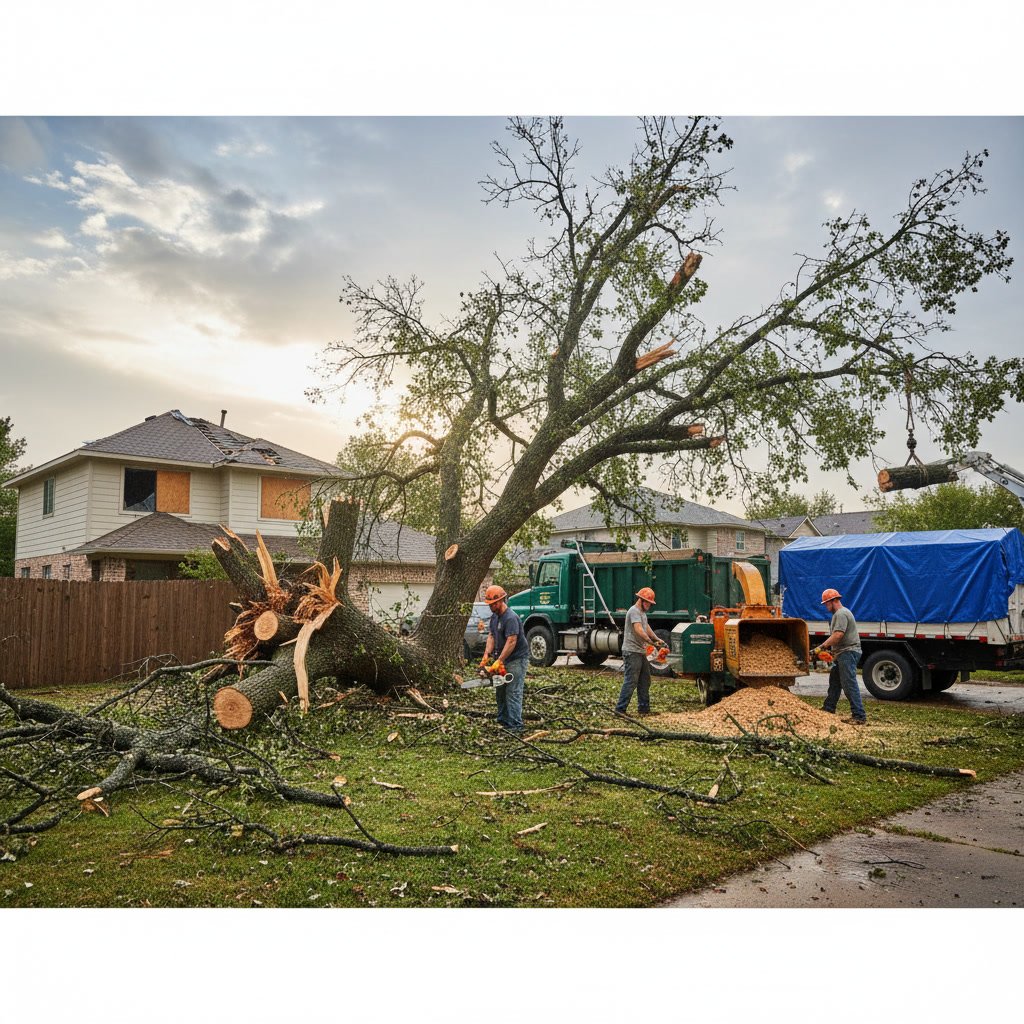
Storm damage cleanup is the process of safely removing fallen trees, broken branches, damaged limbs, and debris from your property after severe weather events like hurricanes, thunderstorms, ice storms, and high winds. This service restores yard safety, prevents secondary damage to structures and utilities, and allows you to reclaim your outdoor space quickly. Professional crews use specialized equipment to handle hazardous trees, grinding stumps, hauling debris, and clearing pathways without further harm to your landscape or home.
Why Severe Weather Creates Urgent Safety Hazards in Your Yard
Heavy storms drop significant debris across properties within minutes. High winds snap branches weighing hundreds of pounds, dropping them on roofs, vehicles, and pathways. Lightning strikes split trunks vertically, leaving unstable sections that can collapse without warning. Ice accumulation weighs down limbs until they break, often landing on power lines or fences.
Uprooted trees expose massive root balls that create trip hazards and leave craters in lawns. Fallen trees block driveways, preventing vehicle access and trapping residents. Broken limbs hanging precariously in canopies, known as widow makers, pose lethal risks to anyone walking below. Water pooling around downed trees accelerates soil erosion and creates breeding grounds for mosquitoes.
Damaged trees leaning against structures apply constant pressure to siding, roofs, and gutters, often causing hidden structural damage that worsens over time. Branches resting on power lines create electrocution hazards that only trained professionals should address.
The Immediate Steps Professionals Take During Storm Damage Cleanup in Westminster
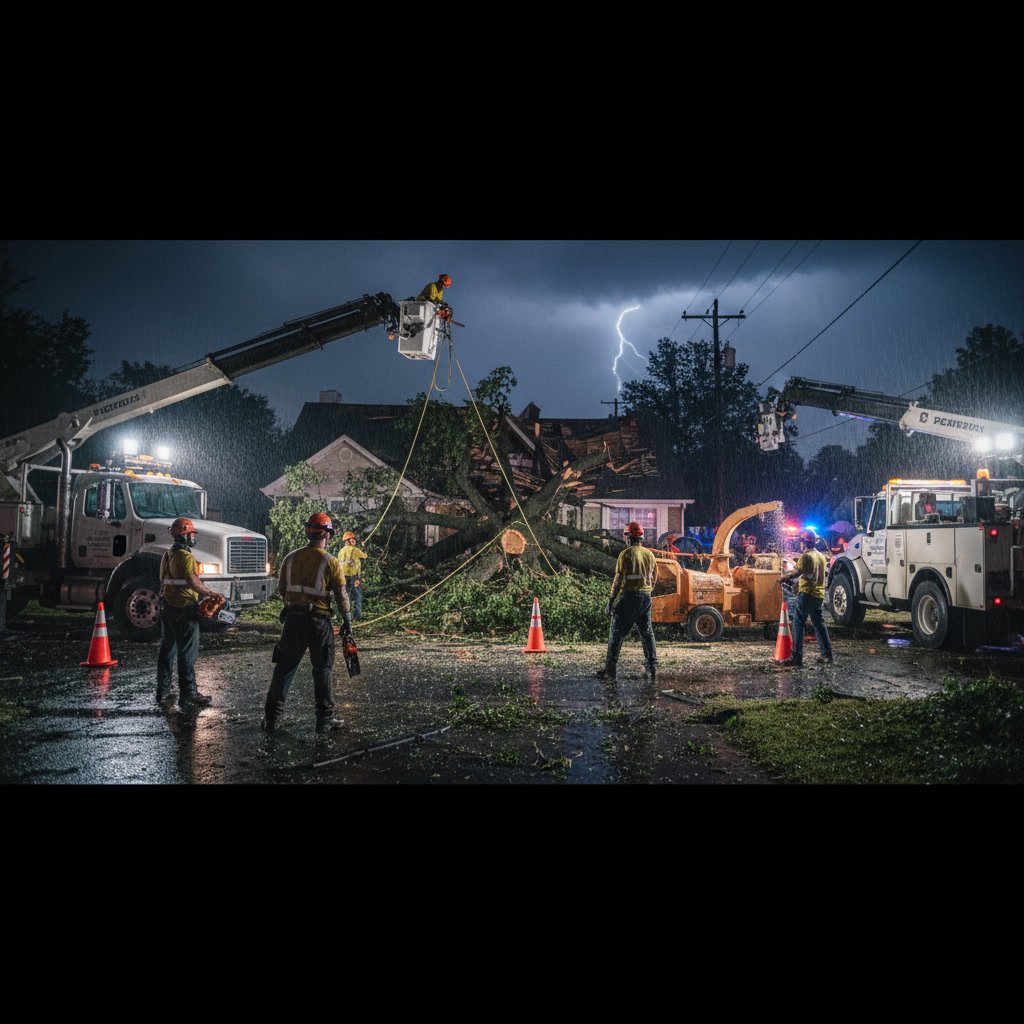
Certified arborists arrive onsite to assess the full extent of damage before any cutting begins. They identify which trees are salvageable and which require complete removal. Crews establish safety perimeters around hazardous trees and mark underground utilities to prevent accidental strikes during excavation.
Professionals prioritize clearing access routes first, removing debris blocking driveways and walkways. They use chainsaws, rigging systems, and cranes to safely lower large sections of fallen trees without damaging nearby structures. Teams work methodically from top to bottom when removing hanging branches, ensuring each cut is calculated to prevent uncontrolled falls.
How Cleanup Crews Handle Hazardous Hanging Branches and Leaning Trees
Hanging branches lodged in canopies require careful rigging to avoid sudden drops. Arborists climb adjacent stable trees or use bucket trucks to position themselves safely above the debris. They attach ropes to the hanging section, then make precise cuts while ground crews control the descent with tension.
Leaning trees that haven’t fully fallen demand different techniques. Crews assess the angle of lean, the integrity of the remaining root system, and the tree’s center of gravity. They may use wedges and felling cuts to control the direction of fall, or employ cranes to lift sections away from structures. Trees leaning more than 30 degrees typically cannot be saved and require full removal.
For trees split by lightning or wind, arborists evaluate whether the remaining structure can recover. Vertical splits extending below major branch unions usually mean the tree will fail completely. These situations often require emergency tree service to prevent total collapse.
Debris Removal and Hauling: What Happens to the Wreckage
After cutting, crews sort debris into categories. Large trunk sections become firewood or are hauled to sawmills. Smaller branches and limbs go through commercial wood chippers, reducing volume by up to 90 percent. The resulting wood chips can be spread as mulch on your property or hauled away, depending on your preference.
Leaves, twigs, and organic matter are collected and composted at approved facilities. Crews rake and blow smaller debris, ensuring your lawn is clear of material that could smother grass or harbor pests. Heavy equipment like skid steers and dump trucks transport bulk debris offsite, often requiring multiple trips for large storm events.
Some municipalities in Carroll County offer temporary debris collection, but private services handle removal faster and more completely. Professional teams ensure nothing remains that could damage mowers or create hidden hazards.
Stump Grinding and Root Extraction After Tree Removal
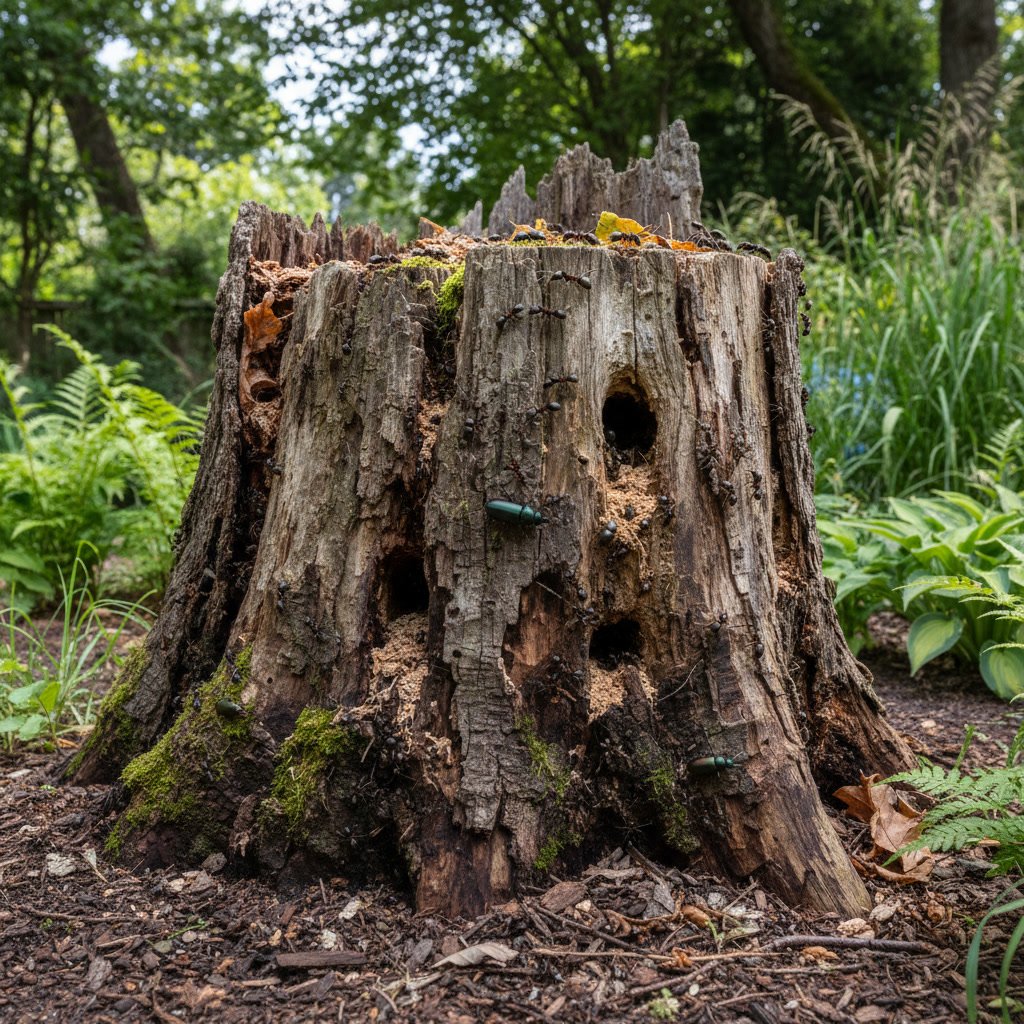
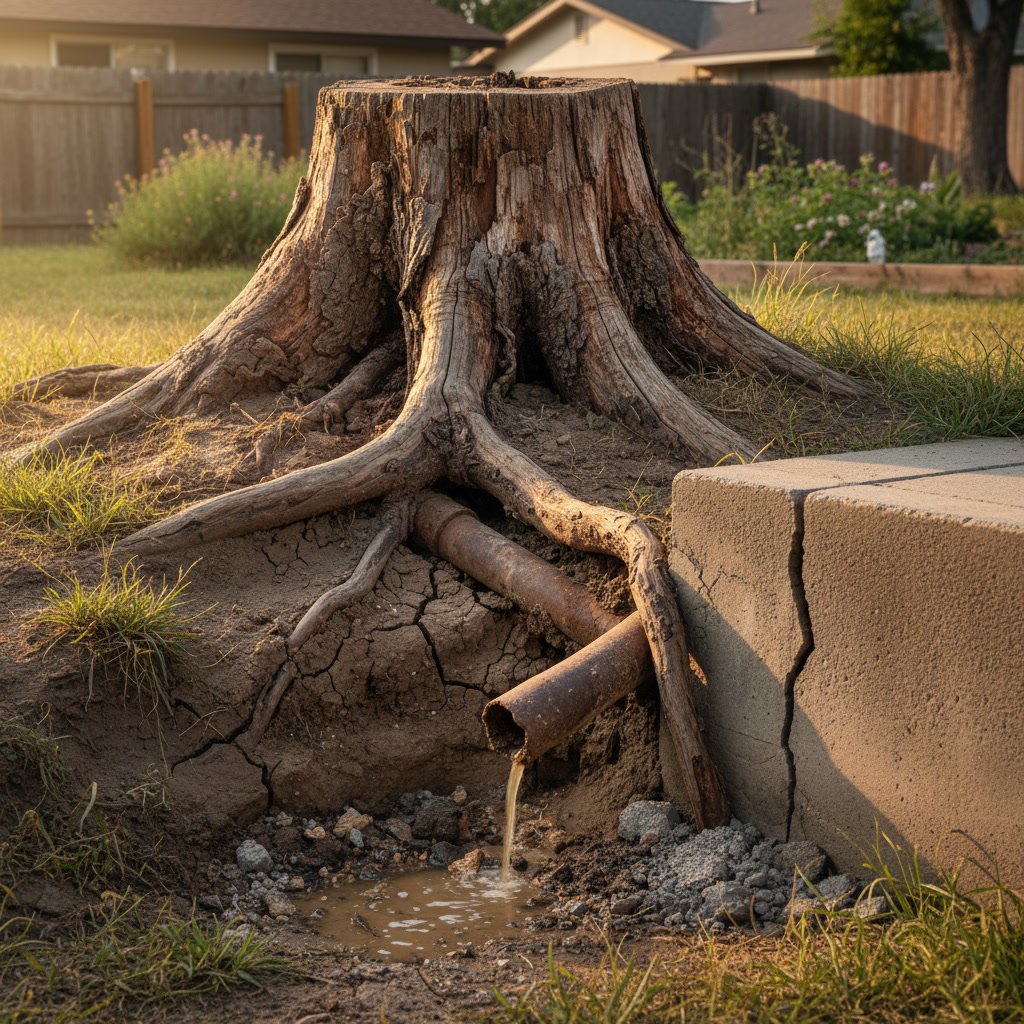
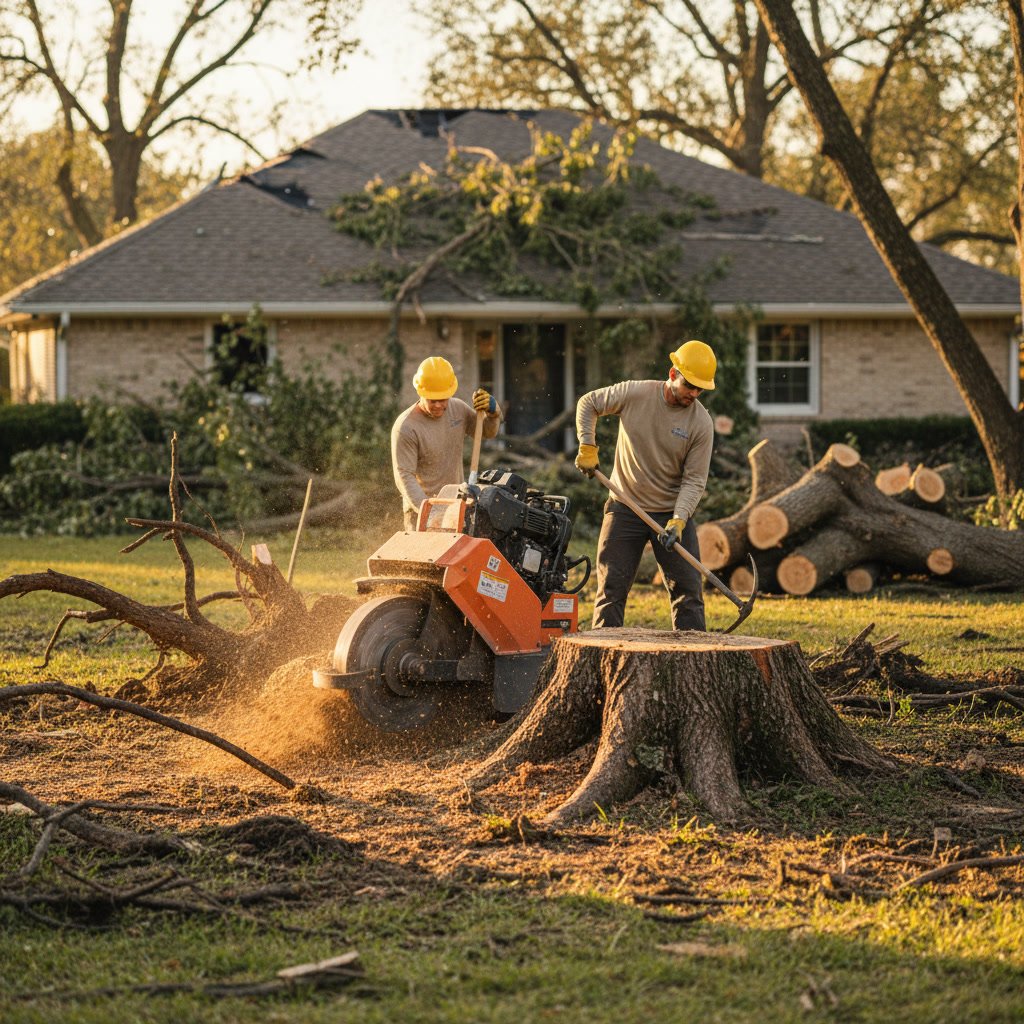
Fallen trees leave stumps and exposed roots that disrupt yard aesthetics and function. Stump grinders reduce stumps to wood chips six to twelve inches below grade, eliminating trip hazards and freeing space for replanting or construction. The grinding process pulverizes the stump and surface roots, leaving a crater filled with mulch.
Some property owners choose stump removal instead, which extracts the entire root ball. This option costs more but ensures no regrowth occurs and eliminates underground obstructions. Heavy machinery like excavators dig around the stump, sever major roots, and lift the mass from the ground.
Root balls from large oaks or maples can weigh several tons and measure eight feet across. Removing them prevents soil subsidence, foundation shifts, and pipe damage. Filling the resulting hole with topsoil and reseeding restores the lawn within weeks.
Protecting Structures and Utilities During the Cleanup Process
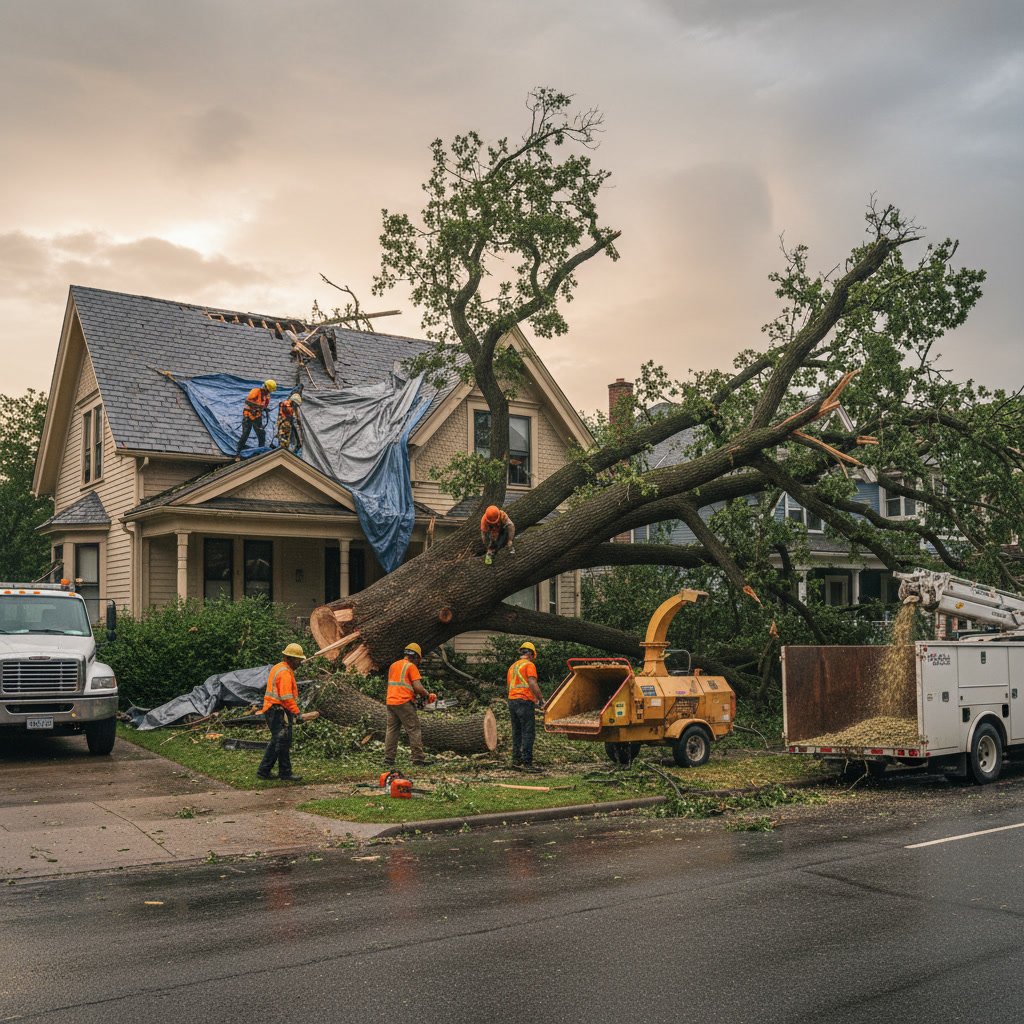
Trees resting on roofs require delicate removal to avoid tearing shingles or puncturing decking. Crews secure sections with rigging, then make relief cuts to reduce weight before lifting debris away. They inspect rooflines for damage and place tarps over exposed areas to prevent water intrusion until roofers arrive.
Branches tangled in power lines demand coordination with utility companies. Professionals never cut energized lines. They contact the electric provider to de-energize the line, then remove the tree once clearance is confirmed. Attempting this work without proper training causes electrocutions and extended power outages.
Underground utilities like gas lines, water mains, and fiber optic cables run beneath many yards. Before excavating stumps or roots, crews call 811 to mark buried lines. Trenching near marked utilities requires hand digging to avoid costly and dangerous strikes.
Assessing and Treating Trees That Survived With Minor Damage
Not every damaged tree requires removal. Arborists evaluate the health and structural integrity of survivors. Trees that lost less than 30 percent of their canopy often recover with proper pruning. Professionals remove broken stubs, making clean cuts that promote healing and prevent disease entry.
Vertical bark splits or wounds receive targeted care. Arborists smooth jagged edges and apply protective treatments to reduce infection risk. They monitor for signs of internal decay or pest colonization in the months following storms. Regular tree trimming after recovery improves future storm resilience by balancing weight distribution and removing weak limbs.
Young trees bent by wind can sometimes be staked upright if the root system remains intact. Mature trees that lost major scaffold branches may require crown reductions to prevent imbalance. Understanding how tree trimming improves health and prevents disease helps homeowners make informed decisions about salvageable trees.
Site Restoration: Regrading, Seeding, and Landscape Recovery
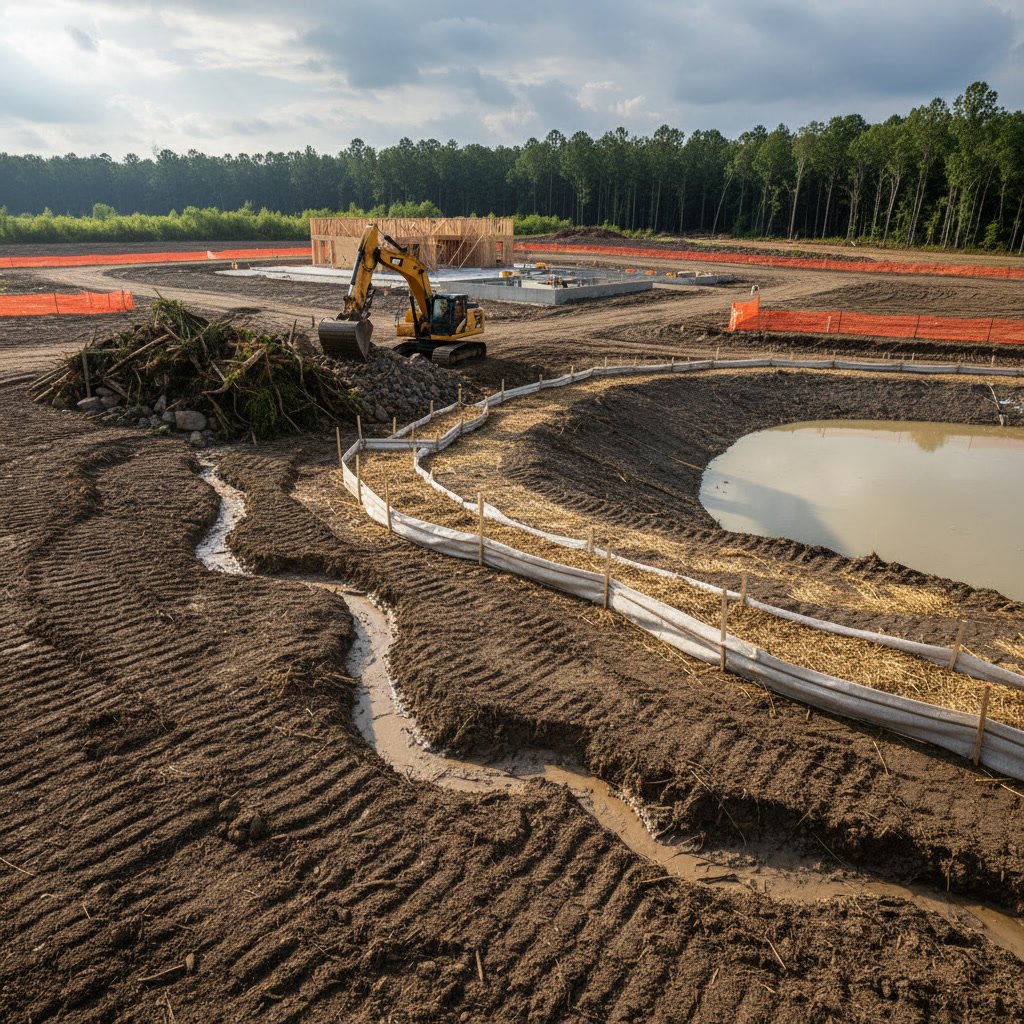
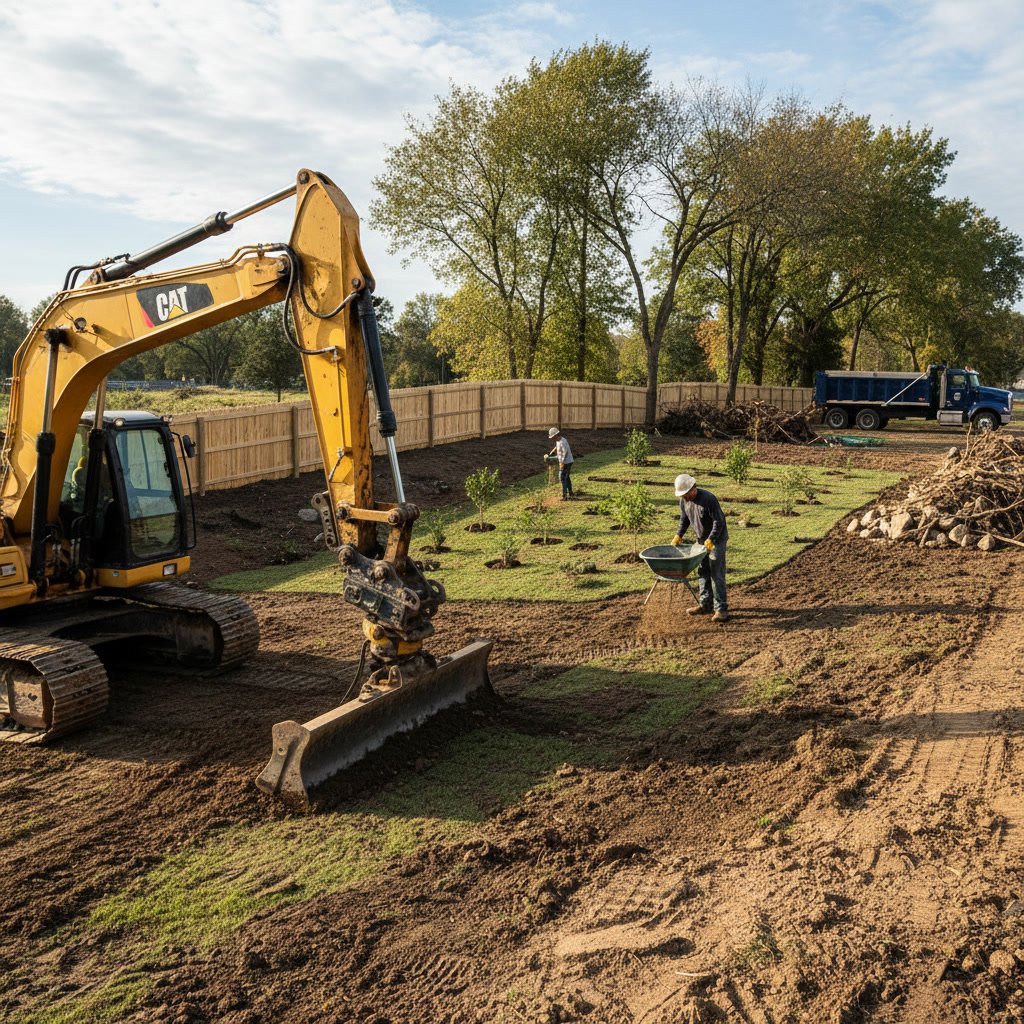
After debris removal, yards often show bare soil patches, ruts from equipment, and uneven terrain. Professional crews regrade disturbed areas, smoothing tire tracks and filling low spots. They spread topsoil over compacted zones to restore drainage and prepare for planting.
Seeding or sodding happens immediately to prevent erosion and weed colonization. Hydroseeding covers large areas quickly, spraying a mixture of seed, mulch, fertilizer, and water onto bare ground. Sod provides instant coverage but costs more. Both methods require consistent watering for the first two weeks.
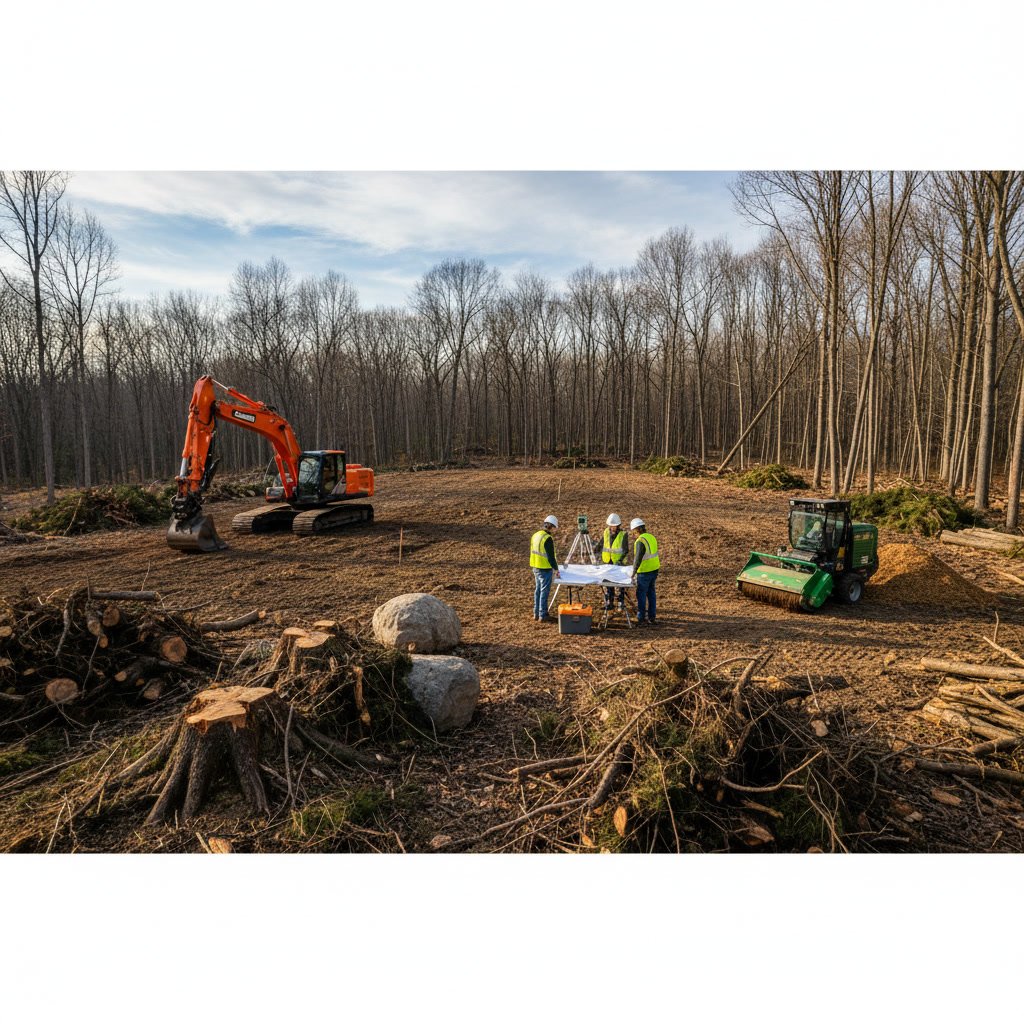
For properties requiring extensive vegetation removal beyond storm cleanup, land clearing services handle complete site preparation. This includes removing stumps, brush, and overgrown areas to create usable space for construction, landscaping, or agricultural use.
How Fast Should You Act After Storm Damage Occurs
Response speed directly impacts both safety and cost. Leaning trees and hanging branches can fall without warning, injuring people or causing additional property damage. Water infiltration through damaged roofs leads to mold growth within 48 hours. Delaying cleanup allows pests to colonize damaged wood and dead roots to decay, weakening soil stability.
Insurance companies often require documentation of damage within specific timeframes. Photographing damage immediately and contacting tree services within 24 hours strengthens claims. Many policies cover emergency tree removal if trees damage structures or block access, but may not cover routine cleanup of debris in yards.
Communities in Hampstead, MD and surrounding areas experience severe thunderstorms and winter ice regularly. Knowing what to do after storm damage trees helps residents respond effectively when weather strikes.
Preventing Future Storm Damage Through Strategic Tree Management
Proactive maintenance reduces storm vulnerability significantly. Annual inspections identify weak branch unions, decay pockets, and structural defects before storms exploit them. Cabling and bracing systems support trees with co-dominant stems or heavy limbs, distributing stress during high winds.
Crown thinning removes excess interior branches, allowing wind to pass through canopies instead of catching like sails. Professionals target 15 to 20 percent of the canopy, preserving the tree’s natural shape while reducing wind resistance. Regular pruning keeps trees balanced and prevents the development of long, unsupported limbs prone to breakage.
Strategic tree removal before storms protects properties. Dead, dying, or severely leaning trees near homes should be removed during calm weather when crews can work safely and methodically. This eliminates hazards before emergencies arise, saving money and preventing damage.
Species selection matters when replanting. Native trees adapted to Maryland’s climate withstand local weather patterns better than ornamental imports. Oaks, maples, and hickories develop strong root systems that anchor them during storms, while shallow-rooted species like willows and poplars topple easily.
Your Yard Deserves Expert Restoration After the Storm Passes
Professional storm damage cleanup transforms devastated properties into safe, functional outdoor spaces. Certified arborists bring the equipment, experience, and safety protocols needed to handle hazardous situations that homeowners should never attempt alone. Acting quickly prevents secondary damage, supports insurance claims, and restores your property’s value and usability.
Abba Chief Tree Service responds rapidly to storm emergencies throughout Westminster, MD and surrounding communities, providing comprehensive cleanup from initial assessment through final site restoration. When severe weather strikes your property, contact our experienced team at +14435367420 for safe, efficient recovery that protects your home and landscape.