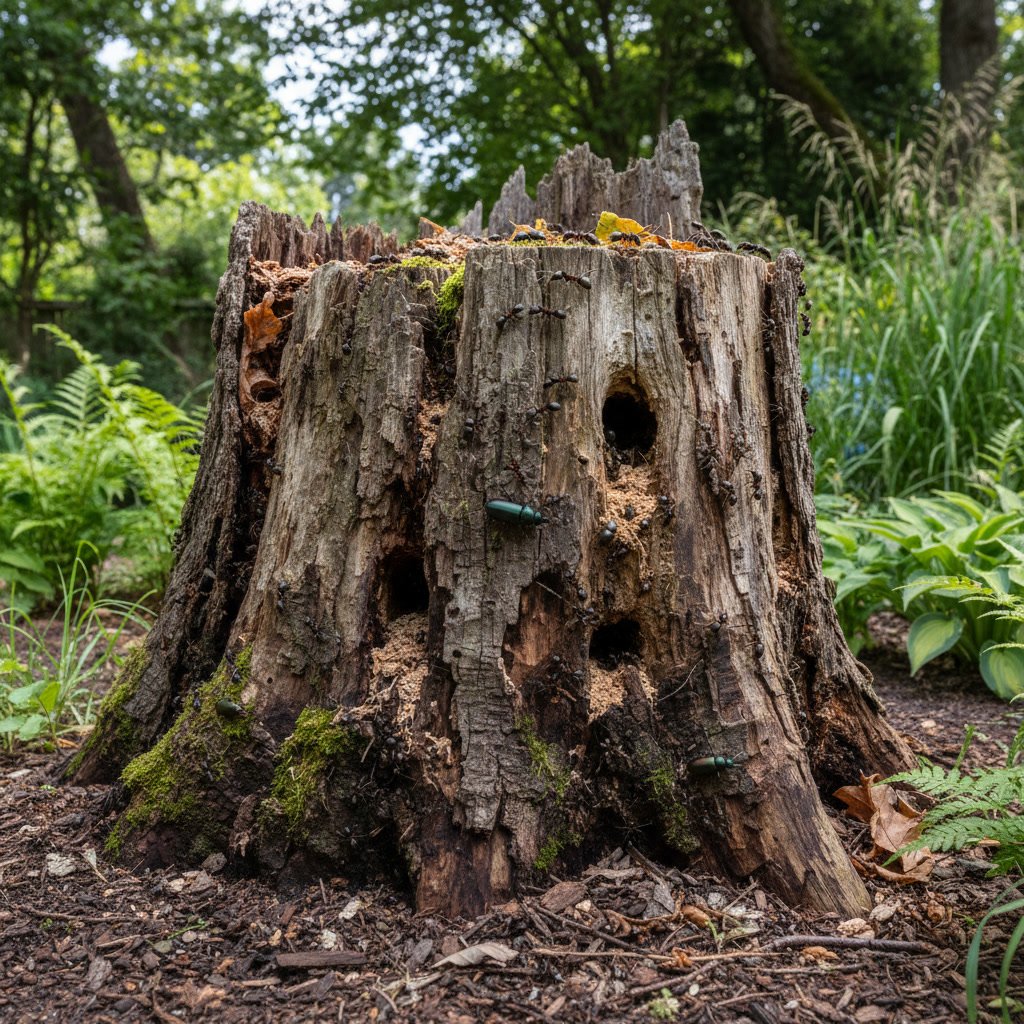
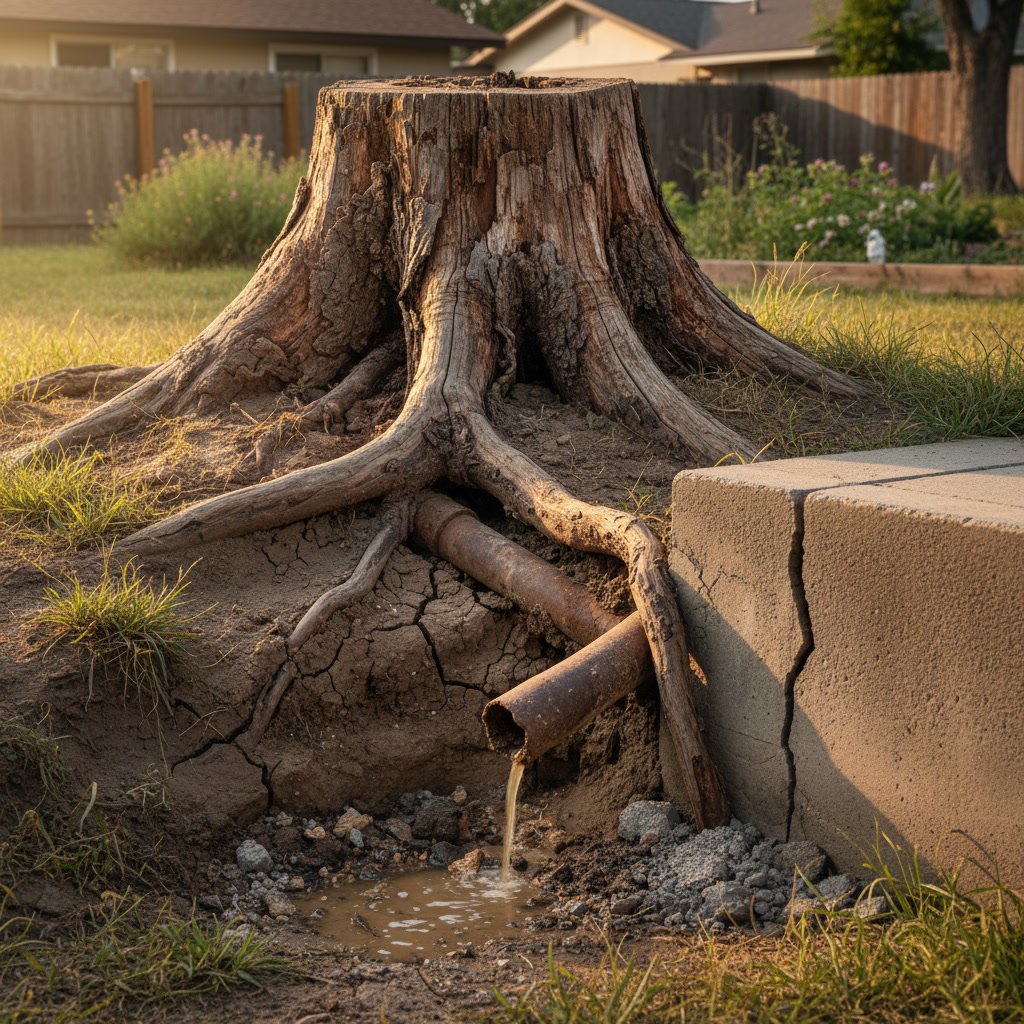
Tree stumps left in your yard don’t simply decay quietly. Their root systems often continue growing for months or even years, expanding underground and seeking moisture sources like water pipes and drainage lines. Recognizing stump root damage signs early can save you thousands in foundation repairs and plumbing bills. Watch for cracks in basement walls, unexplained wet spots in your yard, slow drains, and changes in soil level near the old tree location.
Why Tree Roots Continue Growing After the Tree Is Cut
When a tree is removed but the stump remains, the root system doesn’t immediately die. Mature tree roots can store enough energy to sustain growth for six months to two years after the trunk is gone. The roots actively search for water and nutrients, which makes underground pipes particularly vulnerable. A single oak or maple stump can maintain a root network extending 20 to 40 feet in every direction, often reaching far beyond your property lines.
Different species pose different risks. Willows, poplars, and silver maples are aggressive water seekers with roots that can detect moisture from considerable distances. Even smaller stumps from ornamental trees can cause damage if located near septic systems or foundation walls.
Foundation Cracks and Structural Movement
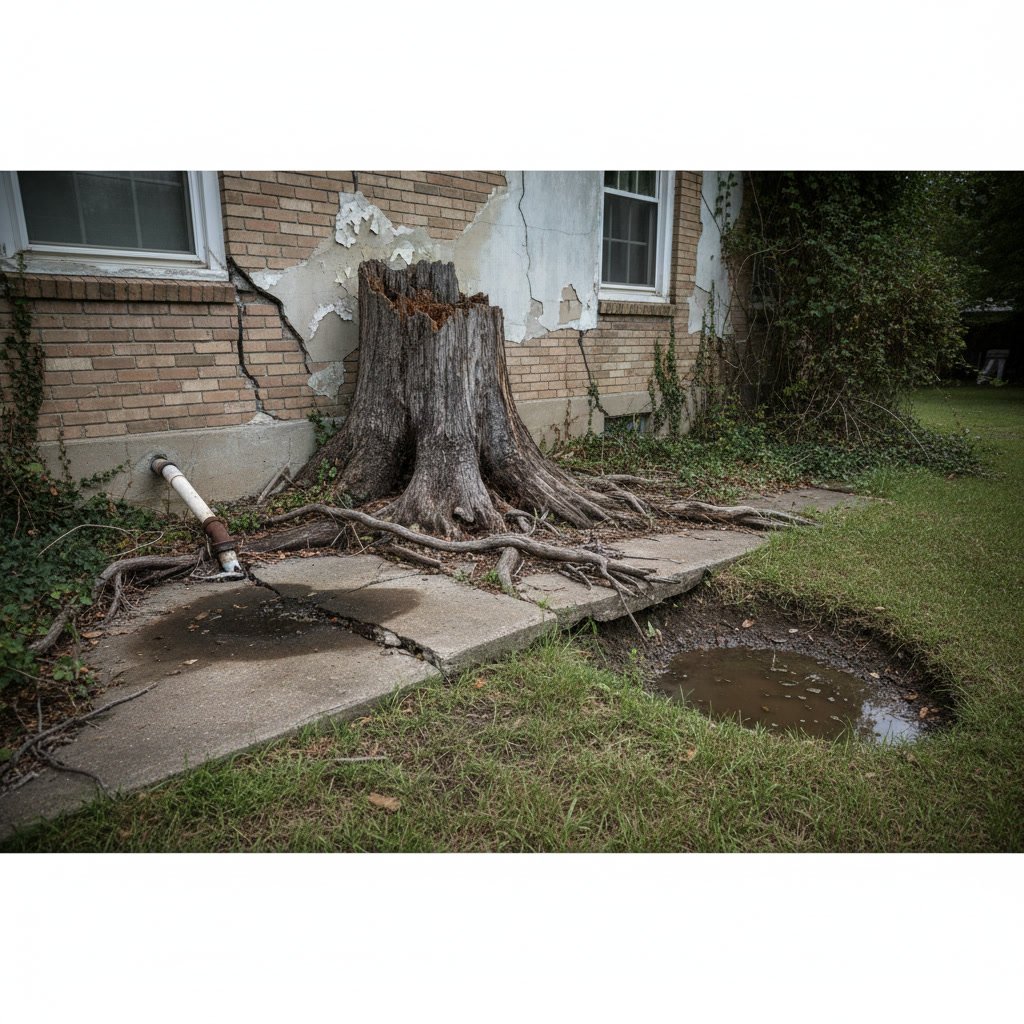
One of the clearest indicators that a stump’s roots are affecting your home appears as new cracks in your foundation or basement walls. These cracks typically run horizontally or diagonally and widen over time. You might notice doors and windows that suddenly stick or won’t close properly, which signals that your foundation has shifted.
Tree roots exert tremendous pressure as they grow. A root just two inches in diameter can generate over 2,000 pounds of lateral force. When roots grow beneath a foundation slab, they create uneven support that leads to settlement cracks. In Westminster and throughout Carroll County, the clay-rich soil expands and contracts with moisture changes, amplifying the damage roots can cause.
Plumbing Problems and Water Line Damage in Westminster
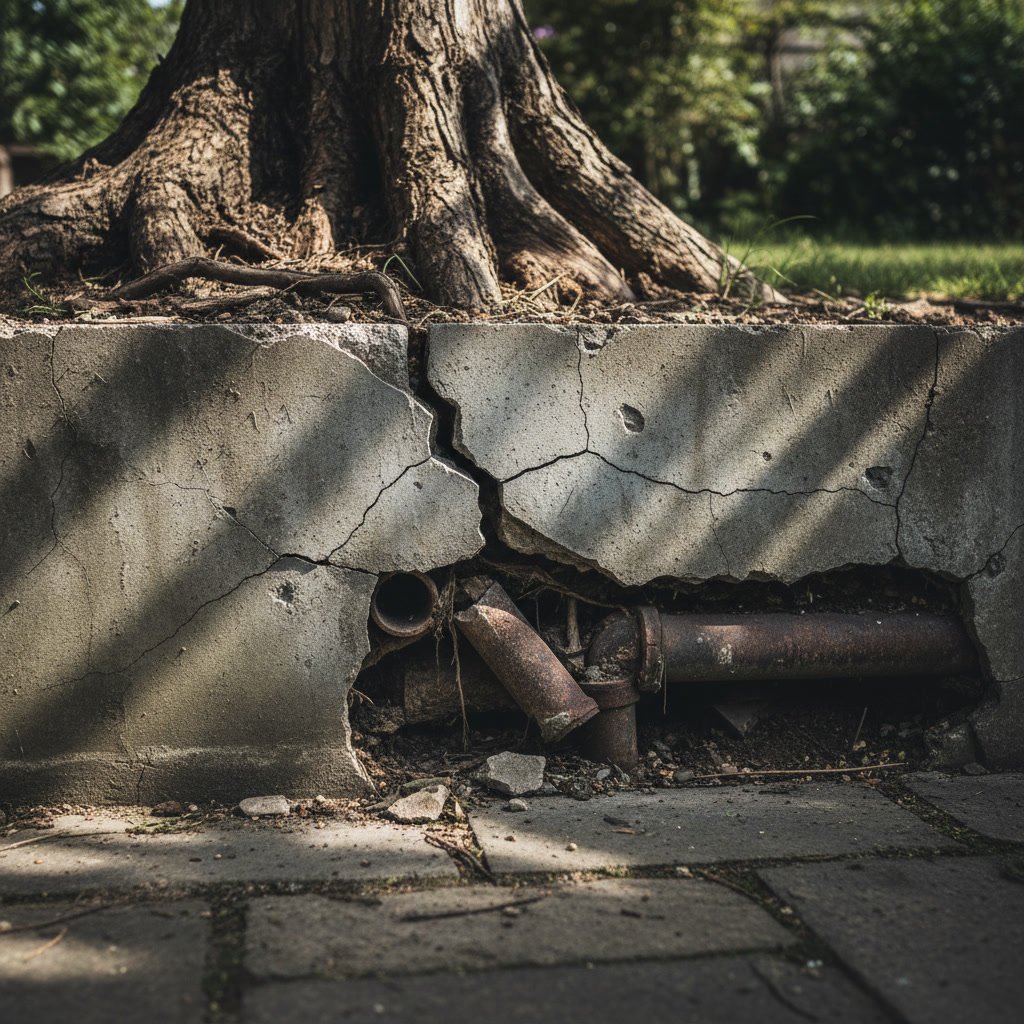
Roots infiltrate pipes through the smallest openings, seeking the water and nutrients inside. Once inside, they multiply rapidly and create complete blockages. If you experience frequent backups, gurgling sounds from drains, or toilets that drain slowly for no apparent reason, roots may have penetrated your sewer or water lines.
Older homes with clay or cast-iron pipes face the highest risk because these materials develop small cracks and joint separations over time. A professional plumber might clear the line temporarily, but the roots will return unless you address the source. Camera inspections often reveal thick root masses that have completely filled pipe sections.
Visible Surface Indicators Around Your Property
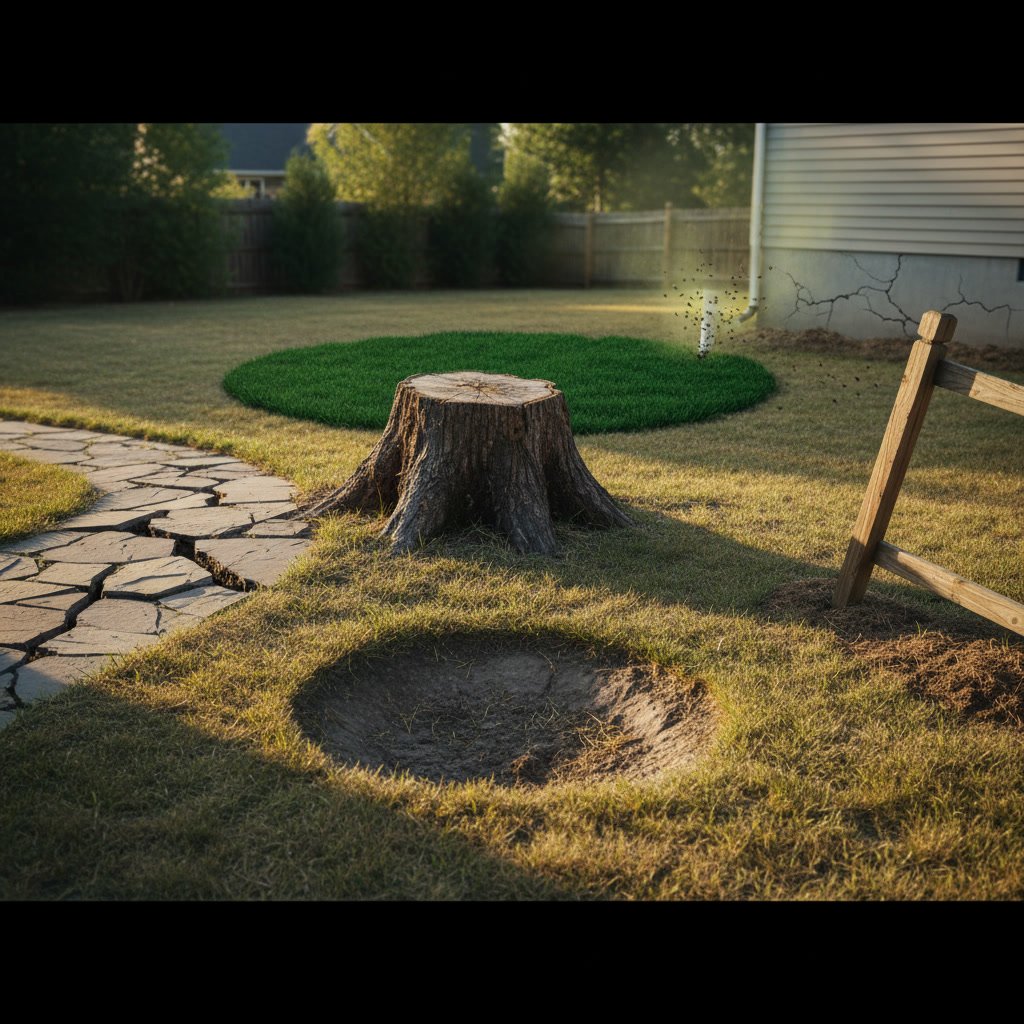
Above ground, several signs point to aggressive underground root activity. Look for unexplained wet spots or unusually lush grass patches in your yard, particularly during dry weather. These green areas often indicate a leaking water line that roots have damaged.
You might also notice soil that appears raised or buckled near the old stump location. This happens when large roots grow close to the surface and push upward. Conversely, sinkholes or depressions can form when roots decompose and leave voids in the soil. Pavement, sidewalks, and driveways may crack or lift as roots expand beneath them.
Six Warning Signs That Require Immediate Attention
Certain symptoms demand quick action to prevent escalating damage:
- New horizontal or stair-step cracks in brick, block, or poured concrete foundations wider than one-eighth inch
- Multiple slow drains throughout your home, especially if professional cleaning provides only temporary relief
- Unexplained increases in your water bill that suggest a hidden leak caused by root intrusion
- Wet basement walls or floors with no obvious source during dry periods
- Tilting or separation of exterior stairs, patios, or retaining walls near the former tree location
- Sinkholes forming in your yard, particularly along known utility line paths
Addressing these issues quickly prevents minor problems from becoming structural emergencies. A stump removal specialist can eliminate the source before roots reach critical infrastructure.
How Far Underground Roots Actually Spread
Most people underestimate root spread. While the visible stump might measure just two feet across, the root system typically extends two to three times the width of the tree’s former canopy. A tree that once provided 30 feet of shade likely has roots reaching 60 to 90 feet from the trunk.
Roots don’t grow straight down as many assume. The majority of a tree’s root mass sits in the top three feet of soil, where oxygen and nutrients are most abundant. This shallow growth pattern puts roots on a collision course with foundation footings, which typically sit just 18 to 30 inches below grade in Maryland’s climate zone.
Roots follow the path of least resistance and gravitate toward moisture. If your home has a small foundation leak or a loose pipe joint, roots will find it. They can travel along the outside of pipes for considerable distances before penetrating through a weak spot.
The Connection Between Stumps and Drainage Problems
Stumps near drainage systems create compounding issues. Roots can crush or offset drainage tiles, French drains, and perimeter drain systems that protect your foundation from water accumulation. When these systems fail, water pools against foundation walls and creates hydrostatic pressure that leads to leaks and structural damage.
You might notice that water stands in your yard after rain when it previously drained well. This change often indicates that roots have damaged underground drainage infrastructure. In severe cases, roots block storm sewers and catch basins, causing flooding that extends beyond your property.
Professional land clearing services address not just the visible stump but the entire root system, restoring proper drainage and preventing future complications.
What Happens When You Ignore the Problem
Delaying stump removal allows damage to progress from minor to catastrophic. Foundation repairs can cost $10,000 to $30,000 or more when settlement damage becomes severe. Complete sewer line replacement ranges from $8,000 to $15,000 depending on depth and distance.
Insurance typically won’t cover gradual damage from tree roots because it’s considered a maintenance issue rather than a sudden accident. Once roots compromise your foundation or plumbing, you’re responsible for both removing the stump and repairing all the damage it caused.
Beyond financial costs, extensive root damage can make your home difficult to sell. Inspection reports that document foundation cracks or sewer line intrusion will concern potential buyers and reduce your property value. Related topics like rotting stumps spreading decay show how neglected stumps create multiple property issues simultaneously.
Professional Assessment and Detection Methods
Determining the full extent of root damage requires professional tools and expertise. Arborists use ground-penetrating radar to map root systems without excavation, showing exactly where roots run in relation to your foundation and utilities. This technology reveals root depth, diameter, and direction with remarkable accuracy.
Plumbers employ video camera inspections that send a fiber-optic camera through your sewer lines to document root intrusion. These cameras provide clear footage showing where roots have entered pipes and how extensively they’ve spread. Structural engineers can assess foundation damage and determine whether roots are the primary cause or a contributing factor.
Combining these assessments gives you a complete picture of the damage and helps you prioritize repairs. In many cases, removing the stump and its root system must happen before foundation or plumbing repairs, or the damage will simply recur.
Prevention Through Complete Root System Removal
Grinding the visible stump removes the eyesore but often leaves major roots intact underground. Professional stump removal should extend to the entire root ball, typically grinding 12 to 18 inches below grade and removing roots within a radius that matches the stump diameter.
For stumps near foundations or utilities, specialized equipment can trace and remove roots without damaging surrounding infrastructure. This precision work requires experienced operators who understand how to balance thorough removal with protection of nearby structures. Understanding grinding costs and scope helps you budget for complete removal rather than surface-level cosmetic work.
Chemical root killers offer a temporary solution but rarely eliminate the entire system. They can kill smaller feeder roots but leave structural roots intact. Physical removal remains the only permanent solution for stumps threatening your home’s infrastructure.
Protecting Your Investment With Timely Action
Your home represents your largest financial investment, and protecting it from underground root damage should be a priority. Early intervention costs a fraction of what you’ll spend repairing damaged foundations and plumbing systems. Regular property inspections help you spot warning signs before they become emergencies.
If you’ve recently had a tree removed, don’t wait to see whether the stump causes problems. Proactive removal eliminates risk entirely and gives you peace of mind. Properties in Manchester, Sykesville, and surrounding Carroll County communities face particular risk due to soil conditions that encourage aggressive root growth and seasonal moisture fluctuations that stress foundations.
Understanding warning signs like foundation cracks, plumbing backups, and unusual wet spots helps you catch root damage before it becomes a major expense. The aggressive growth patterns of stump roots make timely removal essential for protecting your pipes, foundation, and overall property value.
Abba Chief Tree Service provides comprehensive stump removal throughout Westminster and Carroll County, addressing both visible stumps and the underground root systems that threaten your home. Our team uses professional-grade equipment to completely remove stumps and roots before they damage your foundation or plumbing. Contact us at +14435367420 to schedule an assessment and protect your property from costly underground damage.