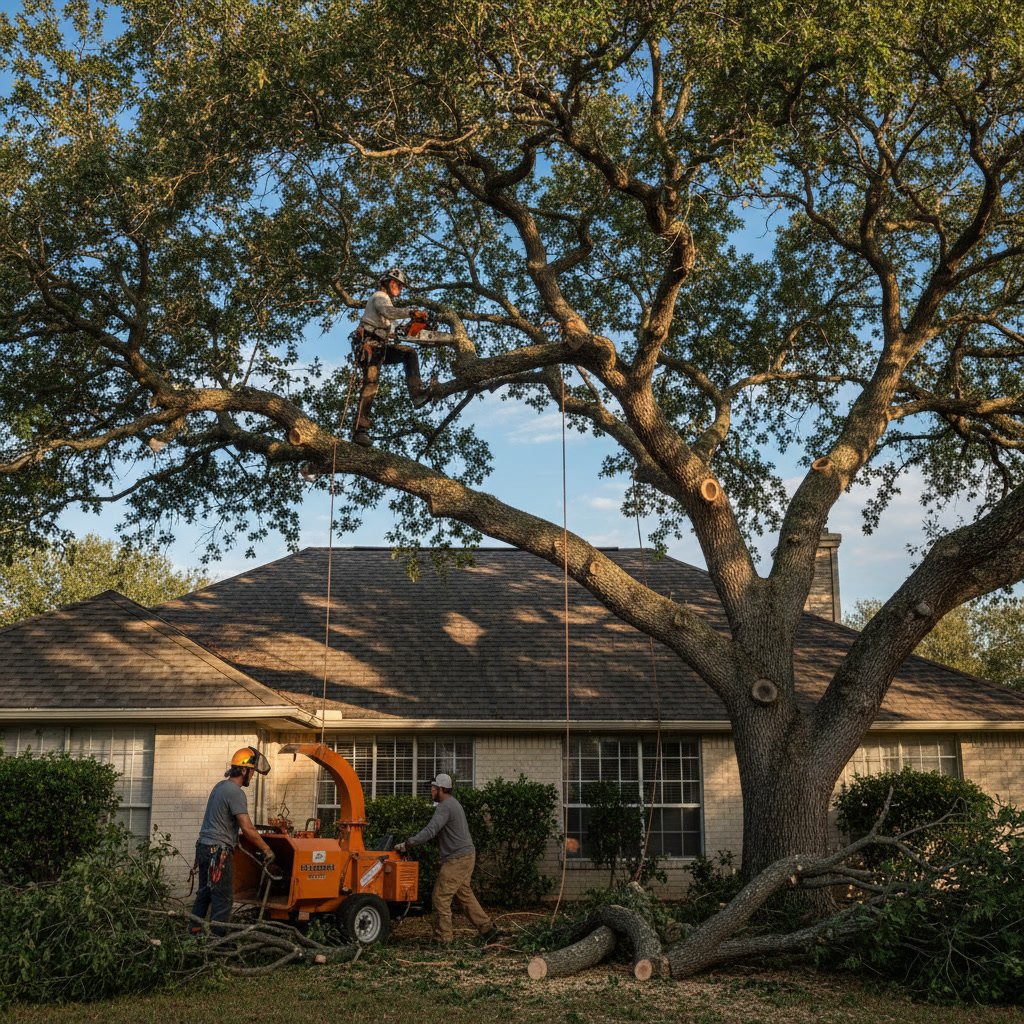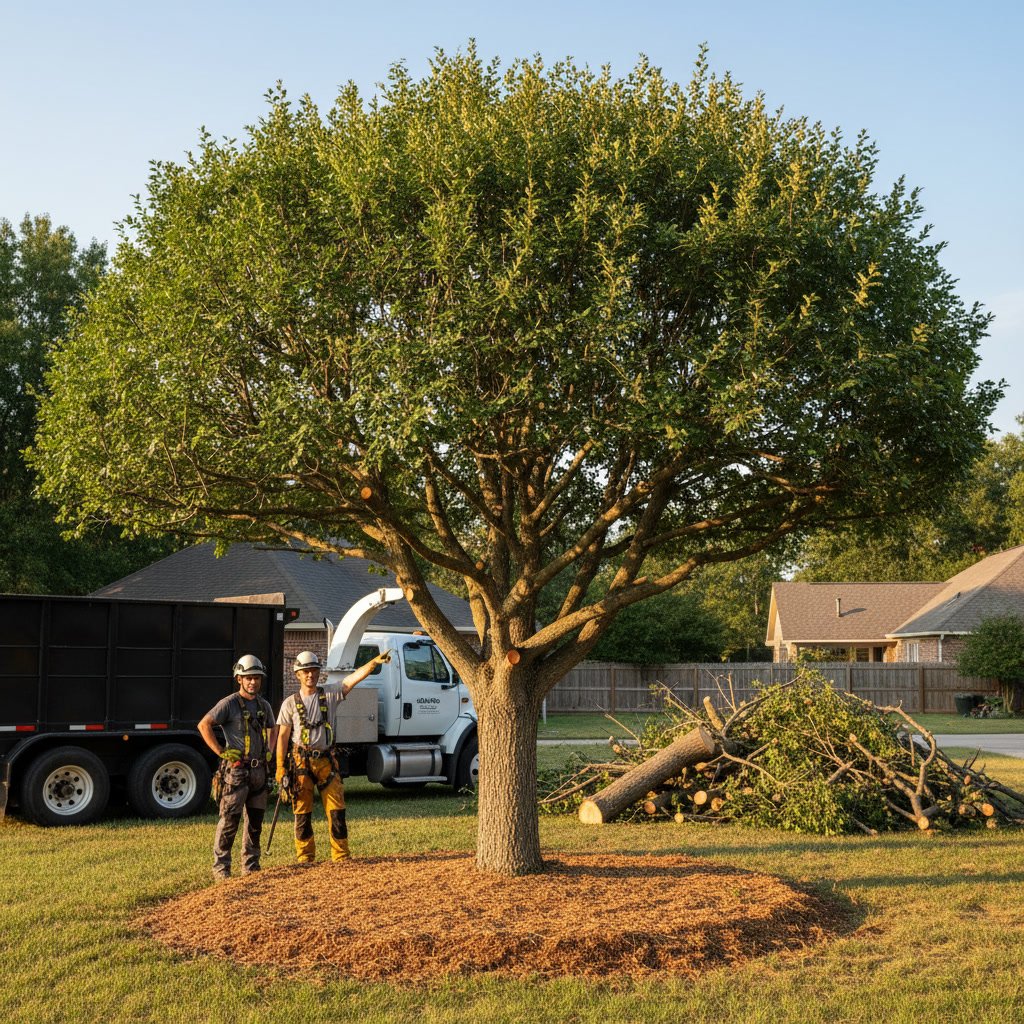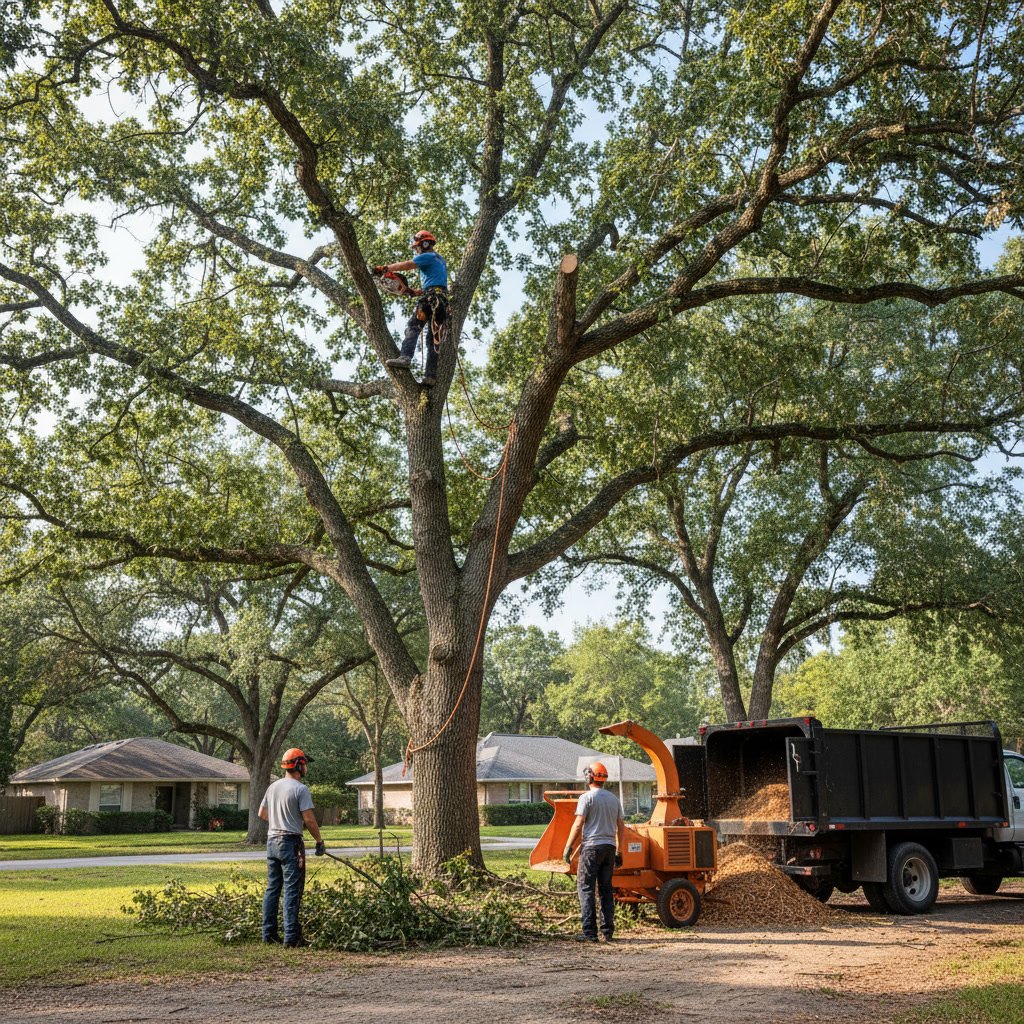
Crown thinning removes selective interior branches throughout a tree’s canopy to increase light penetration and air movement, while crown raising eliminates lower branches to lift the canopy and create clearance underneath. The right method depends on your tree’s health, the surrounding landscape, and what you want to achieve. Understanding crown thinning vs raising helps you make informed decisions that keep your trees healthy and your property safe.
Understanding the Purpose of Professional Tree Trimming
Tree trimming serves multiple purposes beyond aesthetics. Proper pruning techniques maintain tree health, reduce disease risk, prevent property damage, and improve safety for people and structures nearby. Different trimming methods address specific problems, and choosing the wrong approach can stress a tree or fail to solve the underlying issue.
Professional arborists assess each tree individually before recommending a trimming strategy. Factors like species, age, health status, and location all influence which technique delivers the best results. A mature oak near a driveway requires different care than a young maple in an open yard.
What Defines Crown Thinning
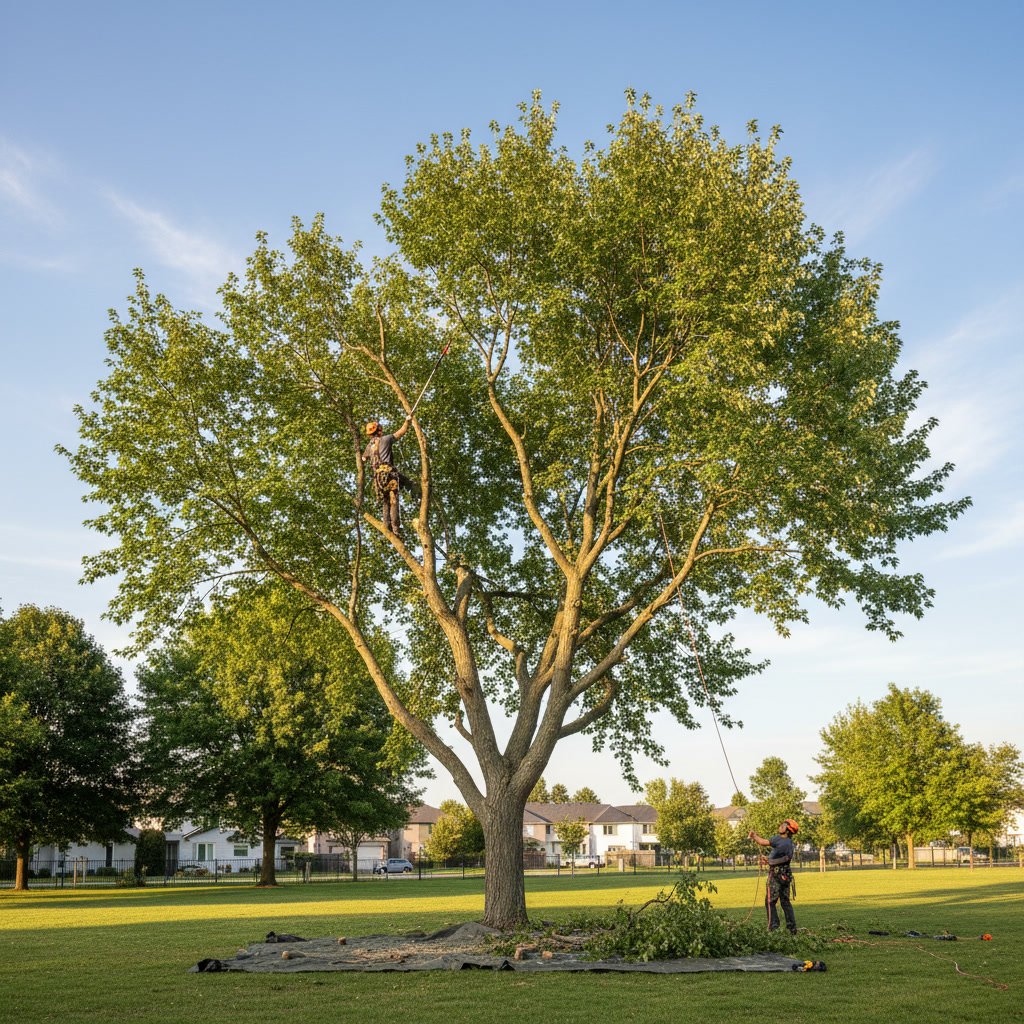
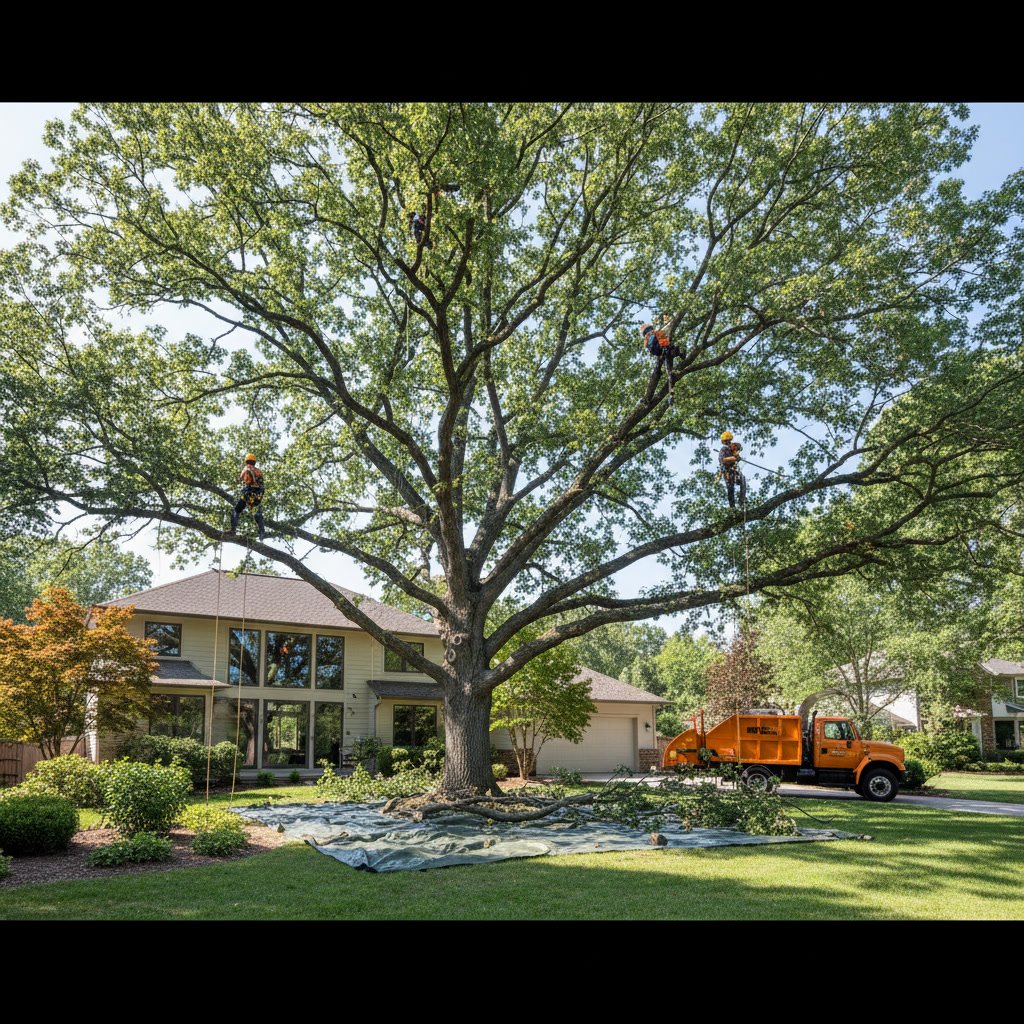
Crown thinning targets the interior and outer portions of a tree’s canopy, removing select branches to reduce density without changing the overall size or shape. Arborists remove weak, crossing, or rubbing branches first, then thin evenly throughout the crown to maintain the tree’s natural form.
This method improves air circulation through the canopy, which reduces fungal disease risk and helps trees withstand wind events. Increased light penetration benefits the grass and plants growing beneath the tree. Crown thinning also reduces weight on heavy limbs, lowering the chance of branch failure during storms.
The standard practice removes no more than 15 to 25 percent of the foliage-bearing branches in a single session. Removing more can shock the tree and trigger excessive water sprout growth, which creates more problems than it solves.
What Defines Crown Raising
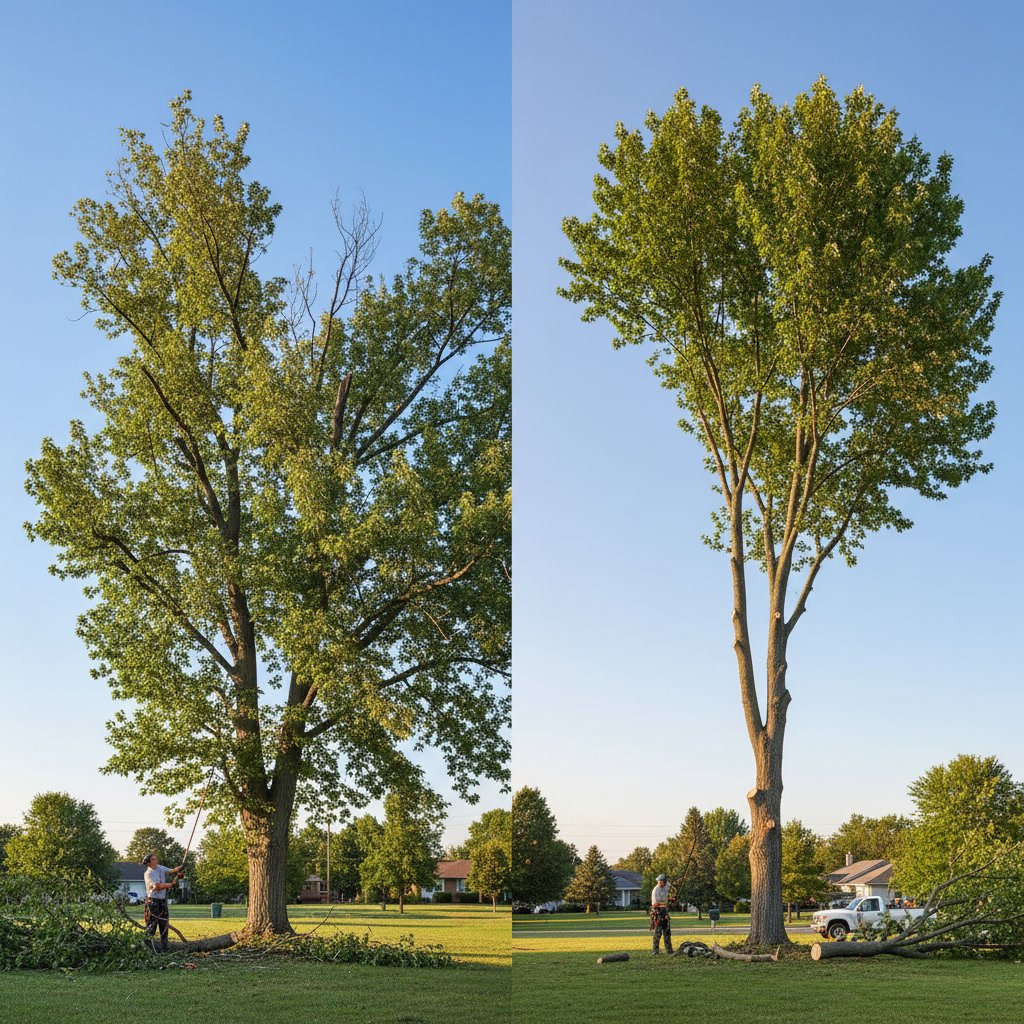
Crown raising removes the lowest branches on a tree to increase vertical clearance between the ground and the canopy. This technique is common along streets, driveways, walkways, and near buildings where low branches obstruct visibility, impede pedestrian traffic, or threaten structures.
Proper crown raising maintains at least two-thirds of the tree’s total height in live foliage. Removing too many lower branches reduces the tree’s ability to produce food through photosynthesis and can lead to stress, decline, or even death in severe cases.
Arborists make clean cuts just outside the branch collar, the swollen area where the branch meets the trunk. Cutting flush with the trunk or leaving long stubs both cause decay and slow healing. Crown raising is permanent because once a branch is removed, the tree does not grow new branches in that location.
Key Differences Between Crown Thinning and Crown Raising in Westminster
Crown thinning focuses on the canopy’s density and weight distribution, while crown raising addresses vertical clearance and access beneath the tree. Thinning preserves the tree’s size but opens up the interior, whereas raising permanently lifts the lowest edge of the canopy.
The two methods also differ in their impact on tree health. Thinning improves air flow and light, which can reduce disease pressure and improve overall vigor when done correctly. Raising reduces the tree’s photosynthetic capacity because it removes foliage-bearing branches, so it must be done conservatively to avoid weakening the tree.
You might choose crown raising when branches hang too low over a driveway or block sightlines at an intersection. Crown thinning makes more sense when a tree’s dense canopy traps moisture, when heavy limbs threaten to break, or when you want more sunlight to reach your lawn without reducing the tree’s height.
When Your Trees Need Crown Thinning
Crown thinning is ideal for trees with dense, overcrowded canopies that block too much sunlight or trap moisture. Trees in humid climates or shaded areas often develop thick foliage that stays wet for long periods, creating conditions favorable for fungal infections like anthracnose or powdery mildew.
Large trees with heavy, horizontal limbs also benefit from thinning. Reducing weight on these limbs lowers the risk of breakage during ice storms or high winds. If you notice dead grass beneath a tree or struggling plants that once thrived, the canopy may have become too dense and thinning can restore light levels.
Trees with crossing or rubbing branches need thinning to prevent bark damage and entry points for pests and disease. This is especially important for species prone to decay, such as maples and birches. Professional tree trimming addresses these issues before they escalate into costly removals.
When Your Trees Need Crown Raising
Crown raising solves clearance problems around structures, vehicles, and walkways. If low branches scrape the roof of your house, block your view when backing out of the driveway, or force pedestrians to duck on a sidewalk, raising the canopy provides the needed space.
This method also improves sightlines at property corners and intersections, which enhances safety for drivers and pedestrians. Municipalities often require crown raising for street trees to maintain minimum clearance heights, typically eight feet over sidewalks and 14 feet over roads.
Young trees sometimes benefit from early crown raising to establish proper clearance as they grow. Removing lower branches while they are small causes less stress and heals faster than waiting until branches are large and well-established. However, this must be balanced against the tree’s need for foliage to fuel growth.
Combining Both Methods for Optimal Tree Health
Many trees benefit from a combination of crown thinning and crown raising performed during the same service visit. For example, a mature tree near a driveway might need lower branches removed for clearance and interior branches thinned to reduce wind resistance and improve light penetration.
Combining methods requires careful planning to avoid removing too much foliage at once. The total amount of live canopy removed should stay within safe limits, typically no more than 25 percent in a single year. Arborists prioritize which branches to remove based on health, structure, and the specific goals for the property.
This integrated approach often delivers better long-term results than focusing on a single method. Trees maintain better balance and structure, recover faster, and continue growing vigorously. Homeowners in areas like Hampstead, MD and Sykesville, MD frequently request combined services to address multiple concerns in one appointment.
Common Mistakes to Avoid With Tree Trimming
One of the most damaging mistakes is over-pruning, which removes too much foliage and starves the tree of the energy it needs to grow and defend itself. Trees respond to severe pruning by producing clusters of weak, fast-growing shoots called water sprouts, which require additional pruning and create ongoing maintenance problems.
Another common error is topping, the indiscriminate cutting of large branches or the entire upper canopy. Topping destroys a tree’s natural structure, creates large wounds that rarely heal properly, and dramatically increases the risk of decay, disease, and structural failure. Despite being common, topping is universally condemned by arborists and horticulturists.
Improper cutting techniques also cause lasting harm. Cuts made too close to the trunk remove protective tissue and allow decay organisms to enter. Cuts made too far from the trunk leave stubs that die back and become entry points for pests. Using dull tools tears bark instead of making clean cuts, which slows healing and increases infection risk.
Species-Specific Considerations for Trimming Methods
Different tree species respond differently to pruning. Oaks should not be pruned during the growing season in areas where oak wilt is present, as fresh cuts attract beetles that spread the deadly fungal disease. The safest time to prune oaks is during winter dormancy.
Maples, birches, and walnuts are heavy bleeders that drip sap profusely from cuts made in late winter or early spring. While this sap flow looks alarming, it does not harm the tree. Pruning these species in summer or early winter avoids the mess without affecting tree health.
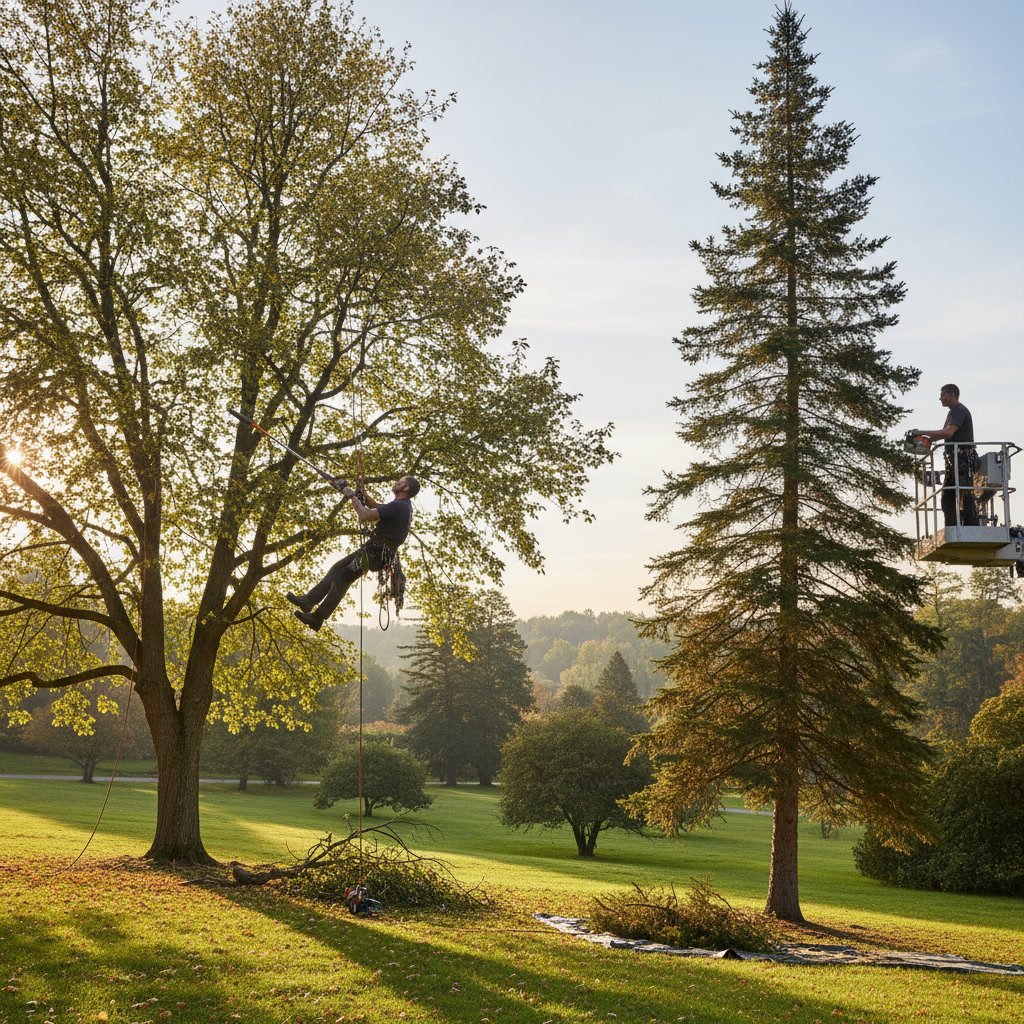
Evergreens like pines and spruces have different growth patterns than deciduous trees. They do not produce new growth from old wood, so cuts must be made carefully to avoid creating permanent gaps in the canopy. Crown thinning is possible but requires species-specific knowledge to execute properly.
How Weather Events Influence Trimming Decisions
Storm damage often creates urgent trimming needs that combine both crown thinning and crown raising. After severe weather, trees may have broken branches hanging dangerously, split limbs that threaten structures, or damaged canopies that need reshaping to restore balance and safety.
Proactive trimming before storm season reduces damage risk. Thinning dense canopies allows wind to pass through rather than pushing against a solid mass of foliage, which reduces the force on the trunk and root system. Raising low branches prevents them from snapping under snow or ice load.
If your property experienced recent storm damage, addressing the immediate hazards is the first priority, followed by corrective pruning to help the tree recover. Professional assessment determines whether the tree can be saved or if removal is the safer option. Homeowners dealing with severe damage can learn more about what to do after storm damage to trees.
Making the Right Choice for Your Property
Choosing between crown thinning and crown raising starts with identifying your specific goals. Walk around your property and note which trees block light, obstruct pathways, threaten structures, or show signs of disease. Consider future growth as well, since trees continue expanding over time.
Professional evaluation provides the most reliable guidance. Certified arborists assess tree health, identify structural weaknesses, and recommend trimming strategies that align with both your immediate needs and the tree’s long-term wellbeing. They also recognize when a tree is beyond saving and requires removal instead of trimming.
Timing matters as much as technique. Most deciduous trees tolerate pruning best during dormancy, while certain species and situations call for summer or fall work. Scheduling services at the right time improves results and minimizes stress on your trees. Residents across Reisterstown, MD and Manchester, MD rely on experienced professionals to time these services correctly.
Protecting Your Trees and Property With Expert Care
Both crown thinning and crown raising offer valuable benefits when performed correctly by trained professionals. Thinning improves canopy health, reduces storm damage risk, and allows more light to reach your landscape. Raising creates clearance for structures, vehicles, and foot traffic while maintaining safe sightlines.
The right choice depends on your tree’s condition, its location on your property, and what you want to accomplish. Many situations benefit from a combination of both methods, applied thoughtfully to keep removal percentages within safe limits.
Abba Chief Tree Service brings years of arboricultural expertise to every project, ensuring your trees receive the specific care they need to thrive. Whether you need selective thinning to reduce disease pressure, raising to improve clearance, or emergency tree service after a storm, our team delivers safe, effective solutions tailored to your property. Contact us at +14435367420 to schedule a consultation and discover how professional tree care protects your investment and enhances your outdoor space.