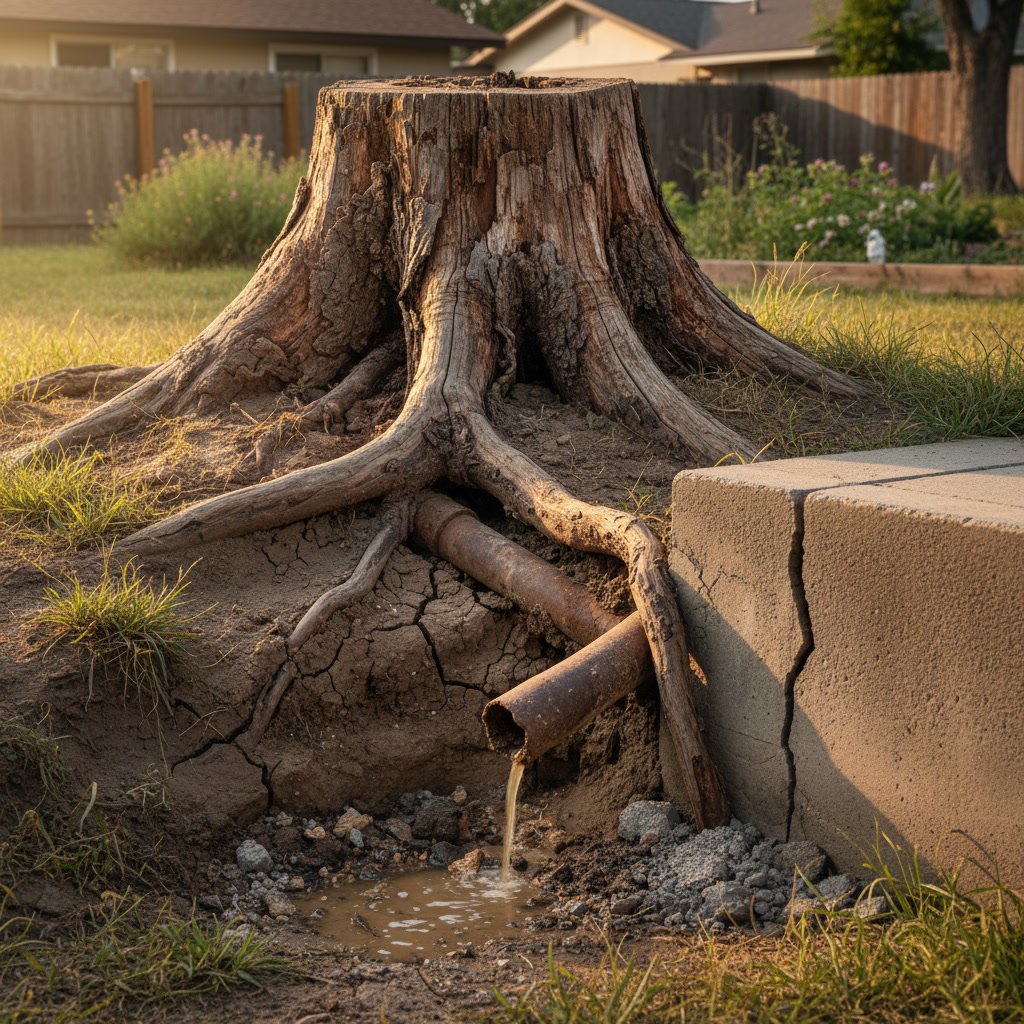
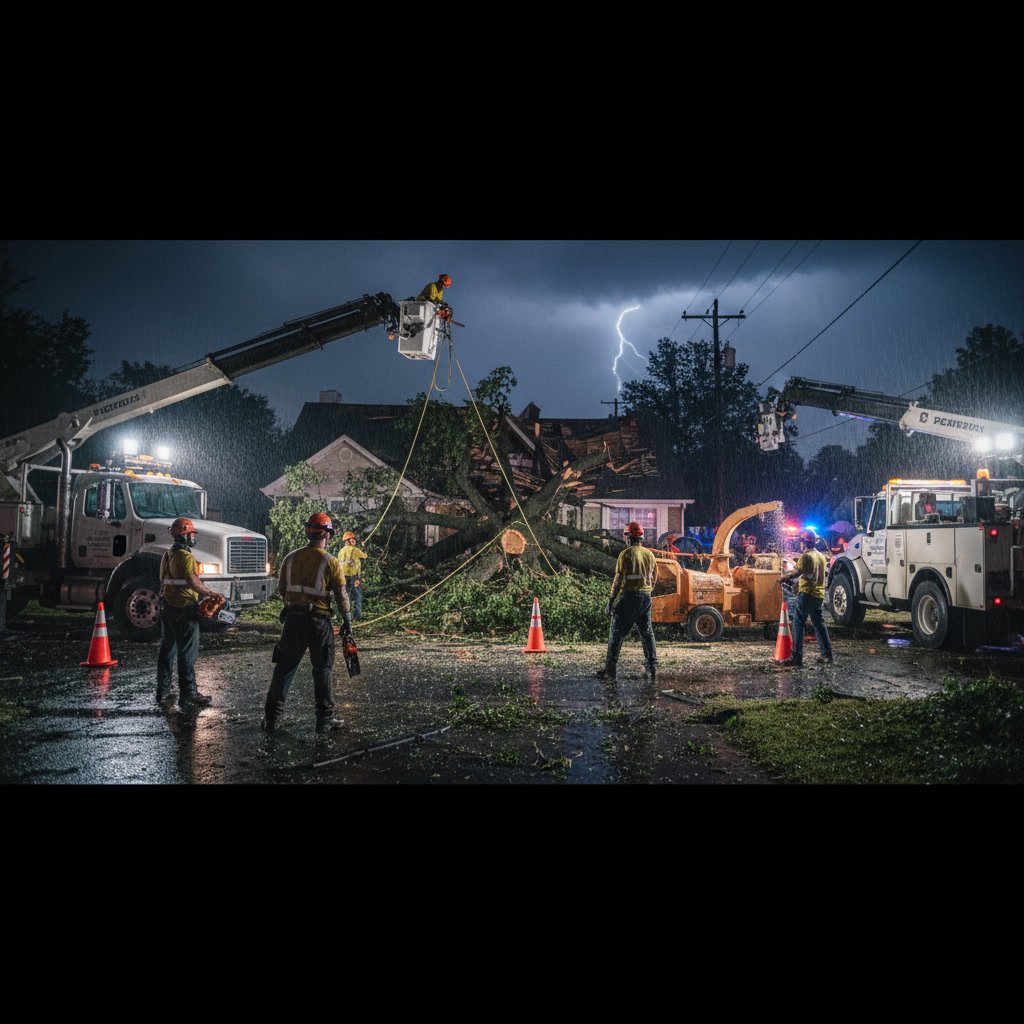
An emergency tree service response follows a carefully structured protocol designed to protect people, property, and infrastructure when trees pose immediate danger. From the moment you place the call, trained professionals assess the situation, dispatch crews with specialized equipment, and execute a step-by-step plan that prioritizes safety while restoring normalcy to your property. Most emergency responses begin with a rapid assessment and end with complete site cleanup, typically within hours of the initial report.
Why Tree Emergencies Require Immediate Professional Attention
Trees that have fallen, split, or begun leaning dangerously create risks that escalate with every passing hour. A partially fallen tree can shift unexpectedly, severing power lines or collapsing onto structures. Heavy branches suspended in tree canopies after storms become widow-makers, capable of falling without warning and causing serious injury or death.
Attempting DIY tree removal during emergencies puts homeowners at risk of electrocution, crushing injuries, and property damage that far exceeds the original problem. Professional crews carry liability insurance, specialized rigging equipment, and training in electrical hazard identification that most property owners lack.
Time sensitivity matters because weather conditions can worsen unstable situations. Rain softens soil around root systems, wind increases the likelihood of secondary failures, and darkness makes assessment nearly impossible without proper lighting equipment.
The Initial Call and Dispatch Process
When you contact a professional tree service during an emergency, the first responder gathers critical information to determine response priority and crew requirements. Operators ask about immediate hazards such as power line contact, structural damage, blocked roadways, and whether anyone is injured or trapped.
This triage process determines whether your situation qualifies for emergency tree service or can wait for standard scheduling. True emergencies involve active threats to life, property, or essential services. Dispatch teams notify utility companies if power lines are involved and coordinate with local authorities when trees block public roads.
The operator also collects your exact location, property access details, and any obstacles that might affect equipment placement. This information allows crews to arrive prepared with the right tools, whether that means compact equipment for tight spaces or heavy machinery for large removals.

On-Site Assessment in Westminster and Throughout Carroll County
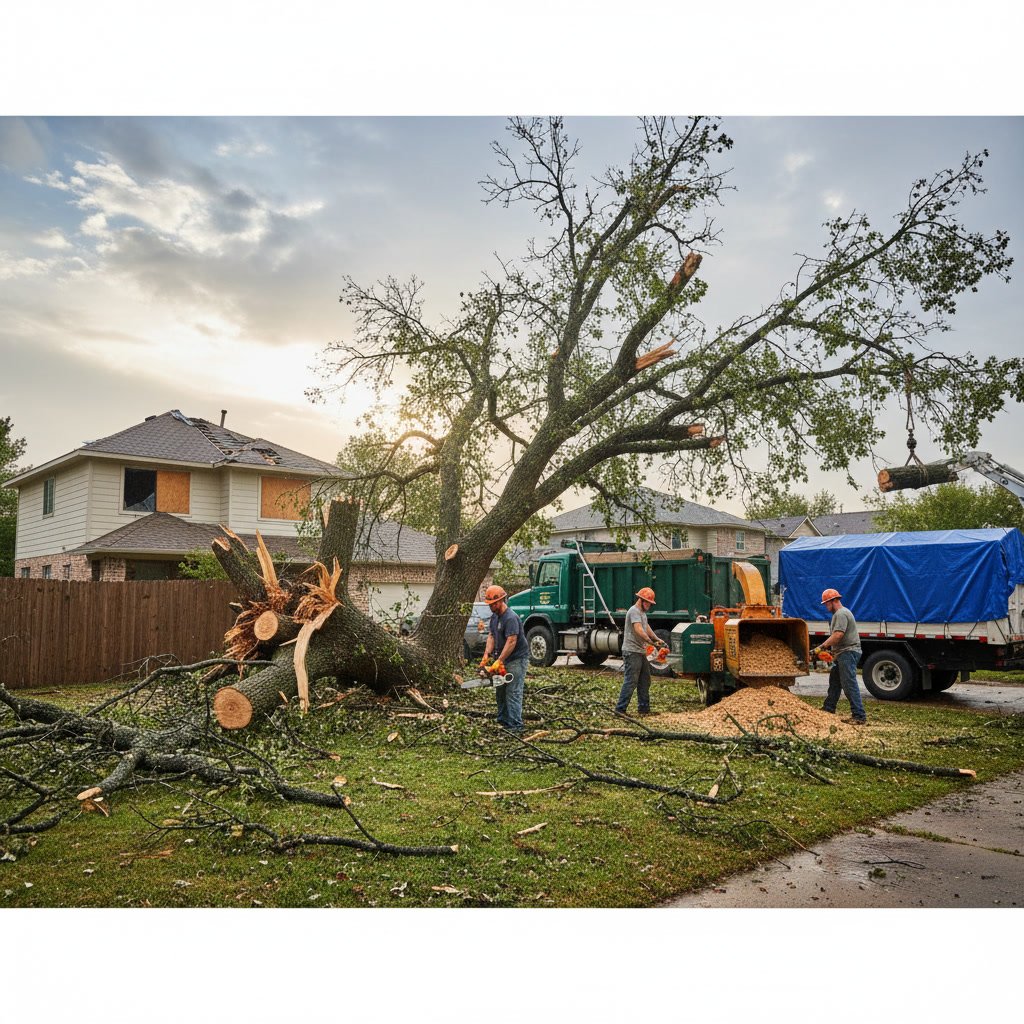
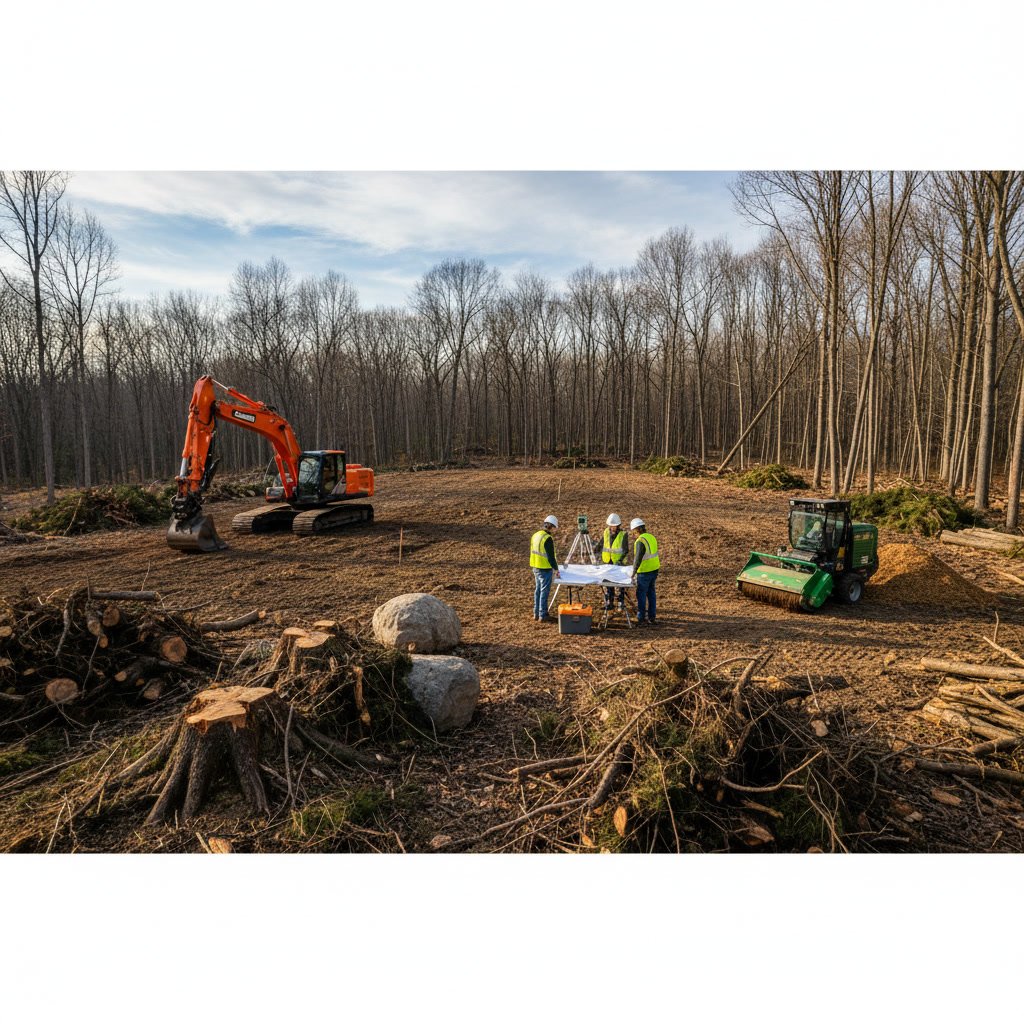
Upon arrival, the crew leader conducts a systematic site evaluation before anyone begins cutting. This assessment identifies all hazards, including electrical wires, gas lines, unstable structures, and secondary tree failures waiting to happen. Professionals look for tension and compression forces in fallen timber, which determine the cutting sequence needed to prevent sudden, dangerous movements.
The team establishes safety zones, sets up barriers to keep bystanders clear, and develops a removal strategy that accounts for every phase of the operation. In residential areas throughout Westminster, MD, this often means protecting landscaping, driveways, and neighboring properties while working in confined spaces.
Arborists assess whether the tree can be saved through pruning or if complete removal is necessary. They also identify root damage that might affect other trees or underground utilities, information that proves valuable for preventing future emergencies.
Safety Protocols and Site Preparation
Before any chainsaw starts, crews verify that all utilities are either de-energized or clearly marked. If power lines are down or in contact with trees, only utility company personnel can handle electrical components. Tree service professionals coordinate closely but maintain safe distances until clearance is given.
Personal protective equipment for emergency tree work includes hard hats, eye protection, cut-resistant clothing, and steel-toed boots. Crews set up ground protection where heavy equipment will travel and place rigging points that allow controlled lowering of large sections rather than letting them fall freely.
Communication protocols ensure every team member understands the plan and their specific role. Radio contact or clear hand signals maintain coordination when noise levels make verbal communication impossible.
Step-by-Step Emergency Tree Removal Process
The removal sequence follows principles that reduce risk at every stage. Here is how professionals approach a typical emergency removal:
Step 1: Secure the Work Zone. Establish a perimeter at least two tree-lengths away from the base. Post signs and barriers to prevent entry by people, pets, or vehicles during active operations.
Step 2: Address Immediate Hazards. Remove or stabilize the most dangerous elements first, such as branches under tension or sections leaning toward structures. This might involve rigging systems that distribute weight and allow controlled cuts.
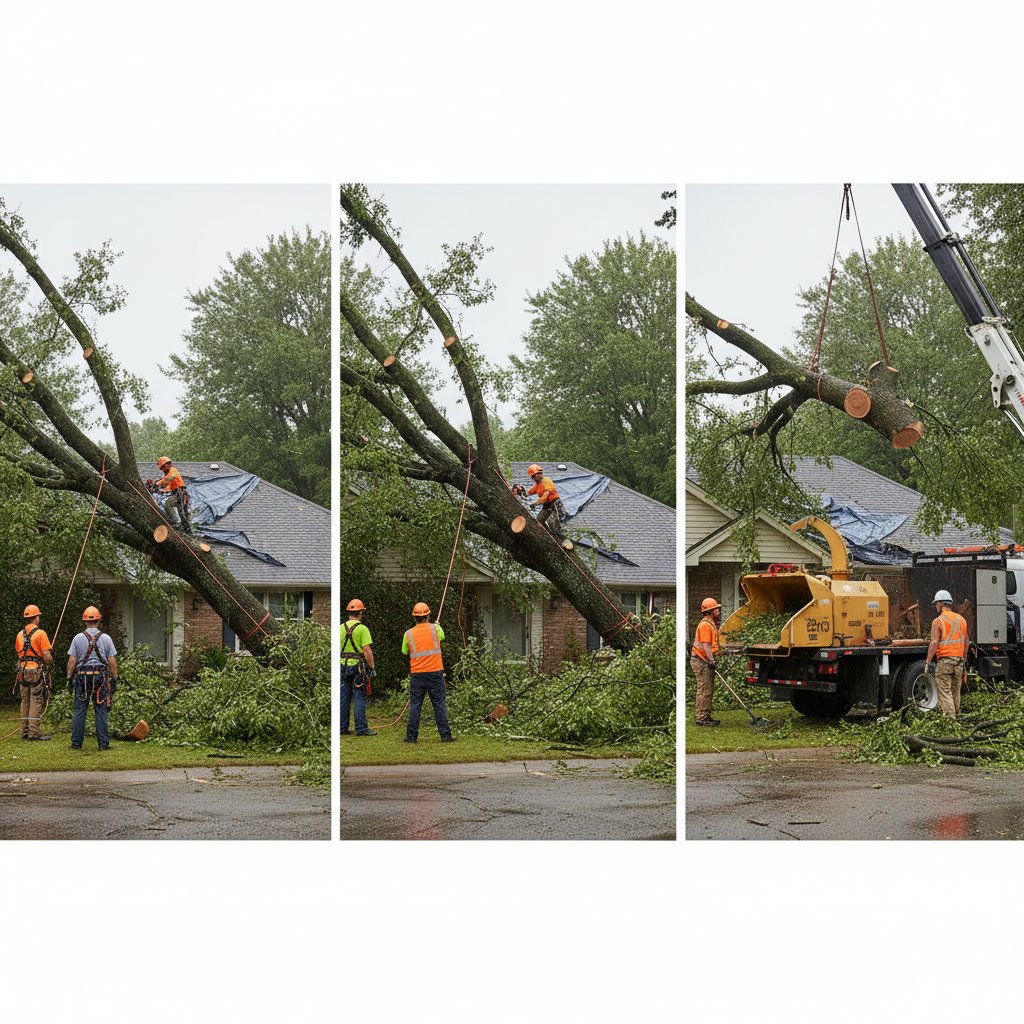
Step 3: Systematic Dismantling. Working from the top down or from smaller sections toward the trunk, crews cut and remove pieces in a sequence that maintains balance and prevents sudden shifts. Each cut considers the tree’s weight distribution and internal stresses.
Step 4: Trunk Removal. After branches are cleared, the main trunk is sectioned into manageable pieces. Large sections may require cranes or specialized lifting equipment to prevent ground damage.
Step 5: Stump Management. Depending on urgency and ground conditions, stumps may be cut flush with the ground immediately or scheduled for later grinding. Emergency situations prioritize clearing access and eliminating trip hazards.
Equipment Used During Emergency Response
Emergency tree crews arrive with specialized tools that enable safe work under challenging conditions. Chainsaws ranging from compact pruning saws to large felling saws handle different cutting tasks. Crews carry multiple saws to ensure backup capacity if one fails mid-operation.
Rigging equipment includes ropes rated for thousands of pounds of load, pulleys that redirect force, and friction devices that allow controlled lowering. Portable winches and come-alongs reposition sections too heavy for manual handling.
Bucket trucks and cranes provide aerial access when ground-based cutting is impossible or unsafe. These machines allow arborists to reach high sections while maintaining stable platforms for precise cuts. Chippers process branches into mulch on-site, reducing the volume of material that must be hauled away.
Stump grinders handle root removal when immediate site restoration is required, though this equipment may arrive in a second phase if the emergency demands faster debris clearing. For properties requiring extensive cleanup, professionals may also coordinate storm damage cleanup services that address multiple trees and widespread debris.
Handling Trees in Contact With Structures
When trees rest on roofs, vehicles, or other structures, removal becomes significantly more complex. The tree’s weight may be the only thing preventing further structural collapse, so premature cutting can worsen damage rather than fix it.
Professional crews use support systems to transfer the tree’s weight before making relief cuts. This might involve building temporary cribbing, installing mechanical jacks, or using cranes to lift sections vertically away from the structure. The goal is to remove the tree while minimizing additional harm to whatever lies beneath.
In situations where roofs have been penetrated, crews work with building contractors to tarp openings immediately after tree removal, preventing water intrusion and secondary damage. Understanding what qualifies as a tree emergency and typical response times helps property owners set realistic expectations during stressful situations.
Debris Removal and Site Restoration
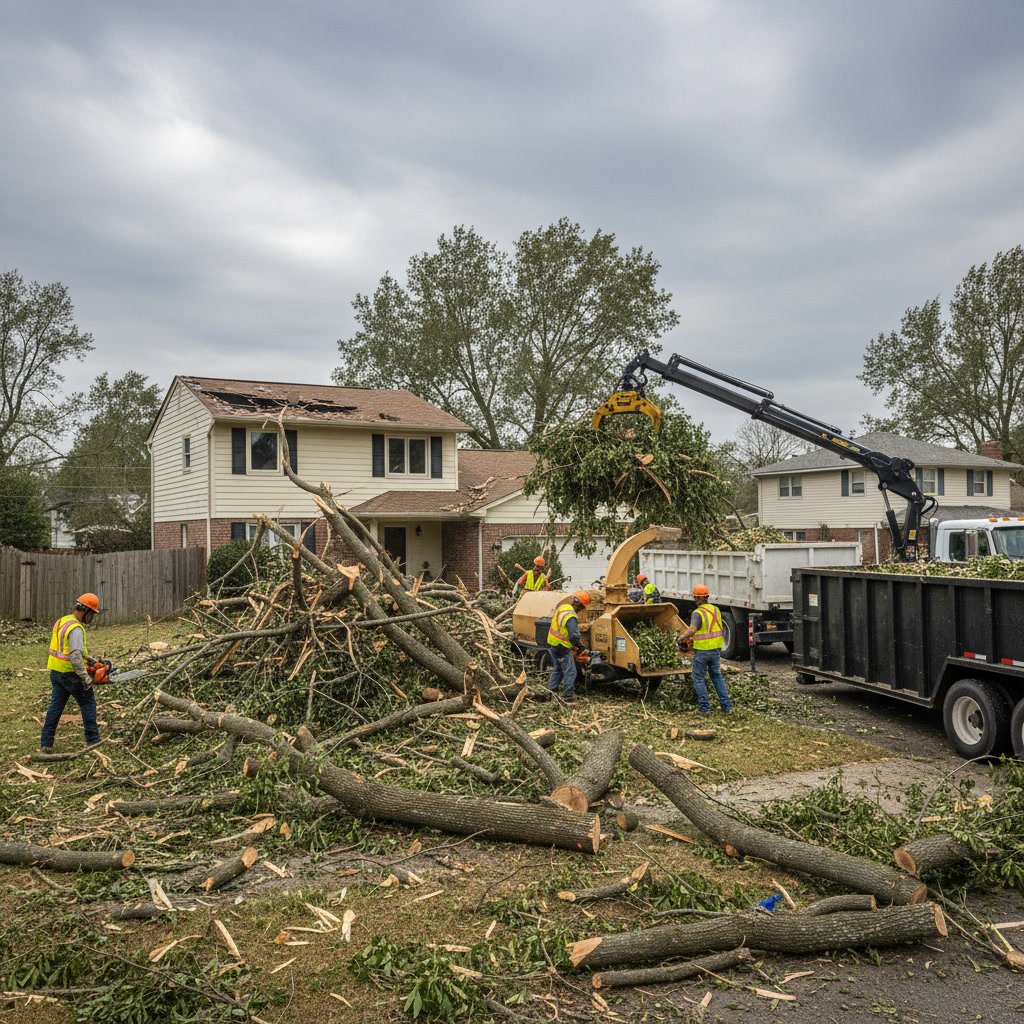
Once the dangerous tree sections are neutralized, attention shifts to clearing debris and restoring site usability. Crews stack firewood-quality logs separately from brush and unusable wood. Branch material goes through chippers, creating mulch that can be left for the property owner or hauled away based on preference.
Large trunk sections too big for chipping are cut into transportable lengths and loaded onto trucks. Professional services include thorough cleanup that leaves properties free of sawdust, wood chips, and small debris. Raking and blowing ensure driveways, walkways, and lawns return to their pre-emergency condition as much as possible.
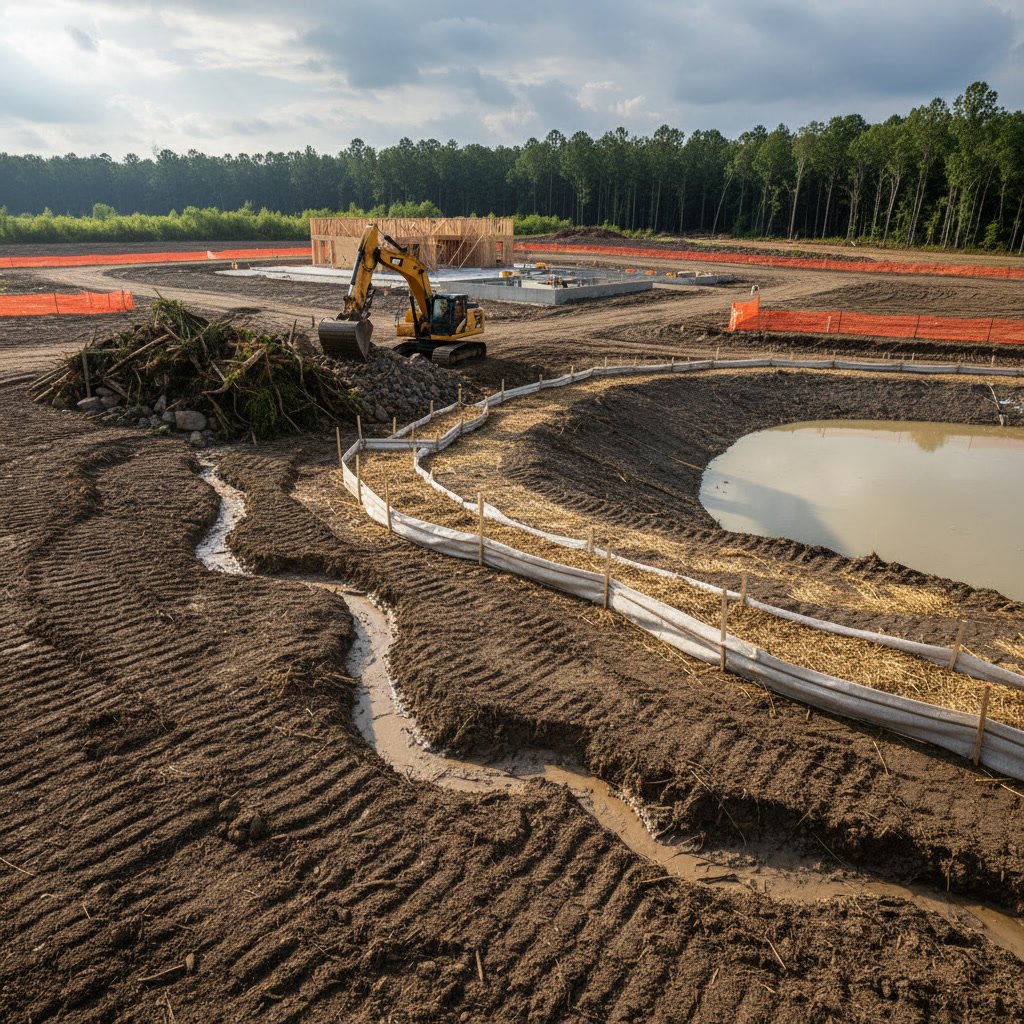
Ground disturbance from equipment is minimized through careful planning, but when ruts or compaction occur, crews grade and repair affected areas. This attention to restoration details separates professional services from basic tree cutting operations.
Documentation and Insurance Coordination
After completing the emergency work, reputable tree services provide detailed documentation that supports insurance claims. This includes photographs of the damage before and after removal, written descriptions of the hazards that necessitated emergency response, and itemized invoices that break down labor, equipment, and disposal costs.
Many homeowner policies cover tree removal when trees damage insured structures but exclude removal of trees that fall in yards without hitting buildings. Professional crews familiar with insurance requirements can explain coverage limits and help document the circumstances that justify emergency response.
Property owners should photograph damage before crews arrive if safely possible, as these images supplement professional documentation. Keep all receipts and communications related to the emergency, as insurance adjusters will review the entire claim package when determining coverage.
Post-Emergency Assessment and Future Prevention
Once immediate dangers are resolved, arborists often recommend comprehensive property evaluations to identify other at-risk trees. Storm events that topple one tree frequently weaken others through root damage, soil saturation, or wind stress.
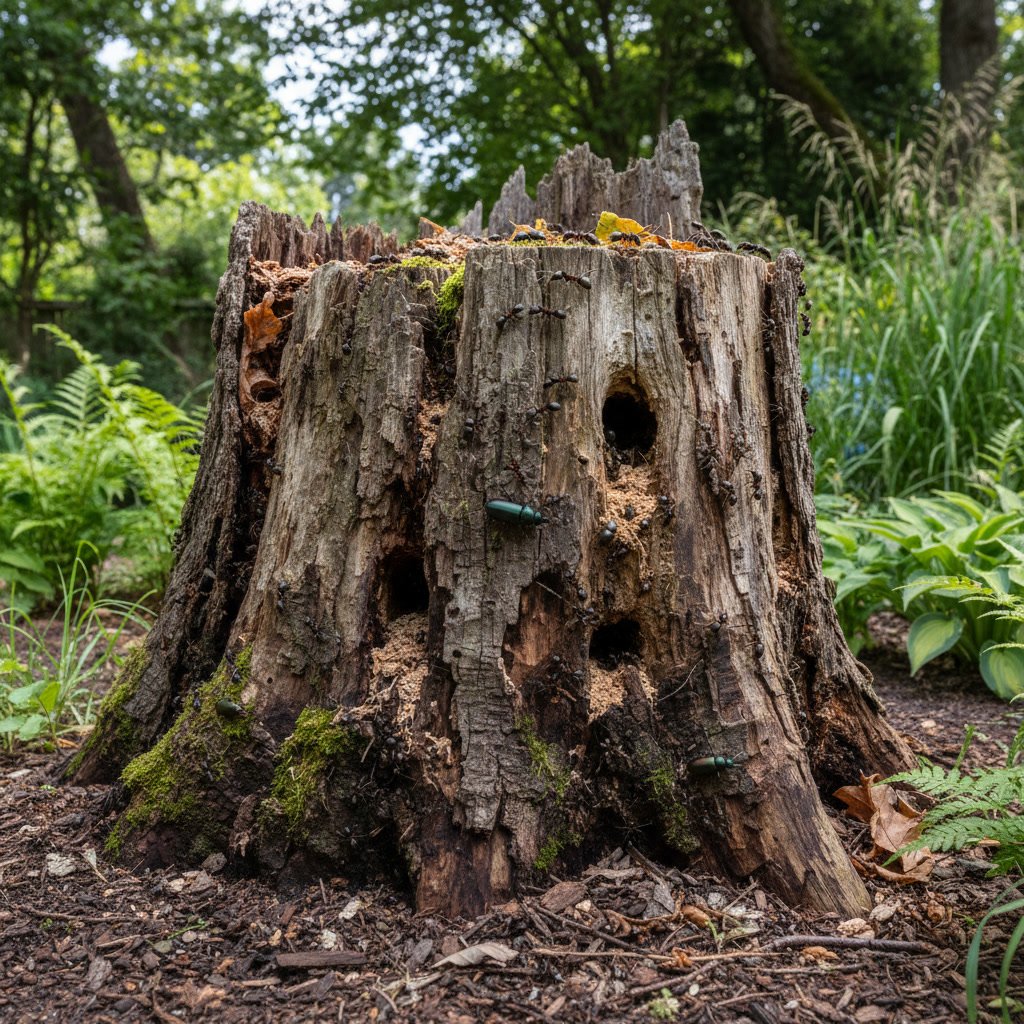
Professional assessments look for warning signs such as cracks in trunks, fungal growth indicating internal decay, dead branches in the canopy, and lean patterns that suggest root failure. Proactive tree trimming removes hazardous branches before they become emergency situations.
Property owners benefit from learning which tree species on their land are most vulnerable to storm damage and whether strategic removal or cabling can reduce future risks. This forward-looking approach transforms a crisis into an opportunity for long-term landscape safety improvements.
Protecting Your Property Before Emergencies Strike
Understanding the emergency response process helps property owners throughout Carroll County prepare for tree-related crises. Keep contact information for professional tree services readily accessible, and discuss your property’s specific vulnerabilities with certified arborists during routine maintenance visits.
Regular inspections identify problems while they are still manageable, preventing the need for emergency calls. Pruning removes weak branches, cabling supports split trunks, and strategic removal eliminates trees that pose unacceptable risks. These preventive measures cost less than emergency services and spare property owners the stress of crisis management.
When emergencies do occur, having an established relationship with a professional tree service streamlines the response. Companies familiar with your property can mobilize faster and work more efficiently because they already understand site access, tree inventory, and potential complications.
Abba Chief Tree Service responds to tree emergencies throughout Carroll County with fully equipped crews ready to handle situations from single fallen branches to multi-tree storm damage. Our systematic approach prioritizes your safety while protecting your property from further harm, and our team coordinates with utilities and insurance providers to simplify the recovery process. If you are facing a tree emergency or want to schedule a preventive assessment, contact us at +14435367420 for immediate assistance.