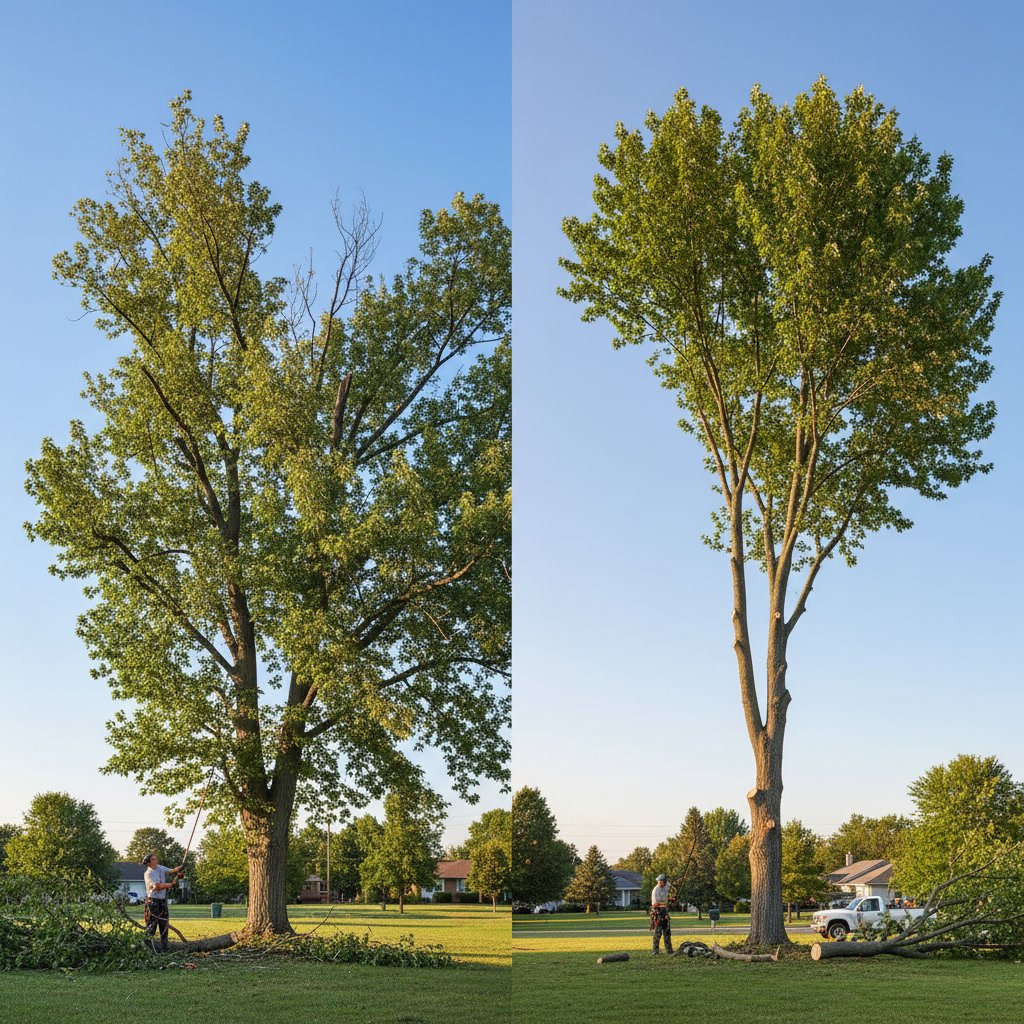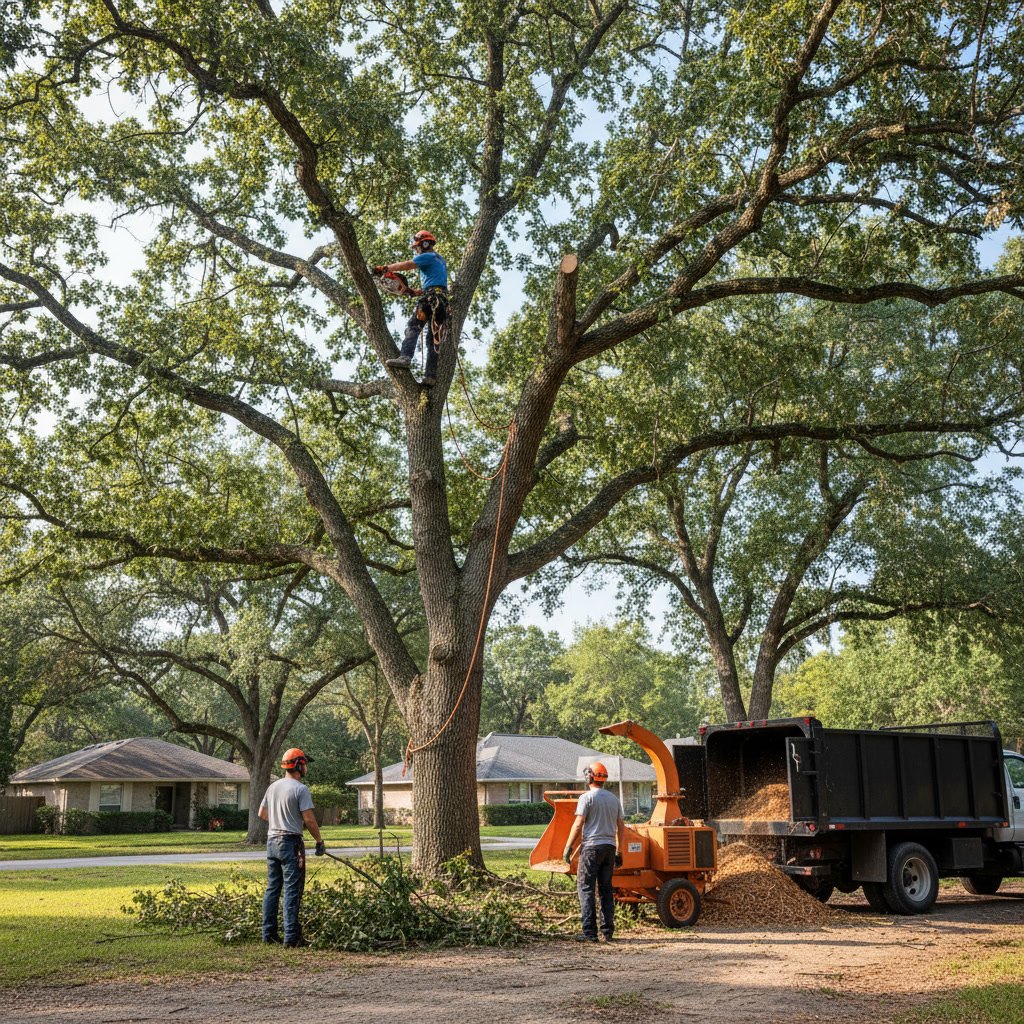
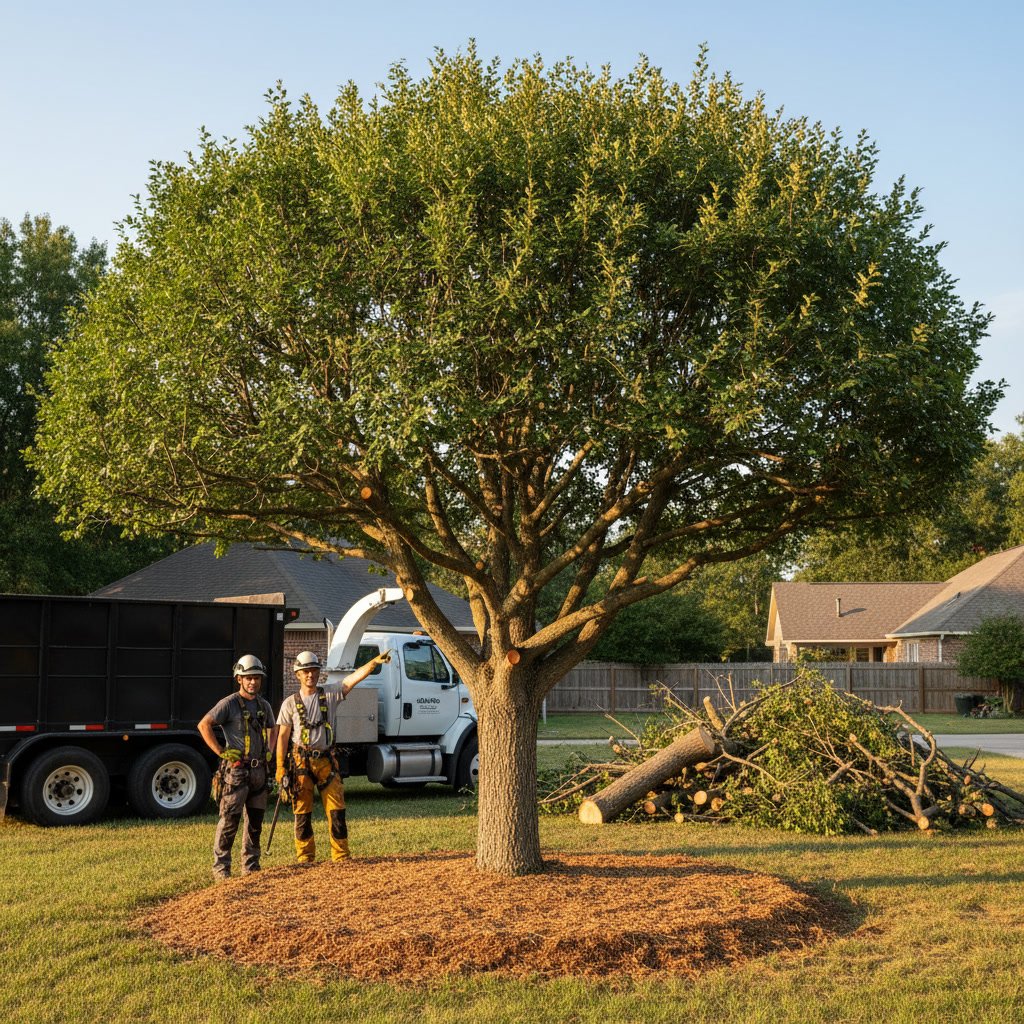
Professional tree trimming done correctly will show clean cuts that heal quickly, balanced canopy structure, and no torn bark or branch stubs. Poor trimming leaves ragged wounds, topped branches, and excessive foliage removal that can permanently damage or kill your trees. Understanding these differences protects your landscape investment and helps you evaluate whether your arborist delivered quality work.
Why Professional Tree Care Standards Matter
The difference between skilled and careless trimming becomes obvious within weeks. Trees respond to proper cuts by compartmentalizing wounds and growing new tissue to seal the injury. When cuts ignore basic arboriculture principles, trees struggle to defend against disease and pests while trying to recover from unnecessary trauma.
Most homeowners hire tree services without knowing what good work looks like. You might assume all companies follow the same standards, but training and technique vary dramatically across the industry. Some crews learn proper methods through certification programs, while others rely on shortcuts that create long-term problems.
The Science Behind Proper Pruning Cuts
Every cut you make on a tree creates a wound the tree must seal. Trees evolved to handle branch loss from storms and animal damage, developing specialized tissue called the branch collar where branches meet the trunk. This raised ring of bark contains cells that rapidly produce callus tissue to cover wounds.
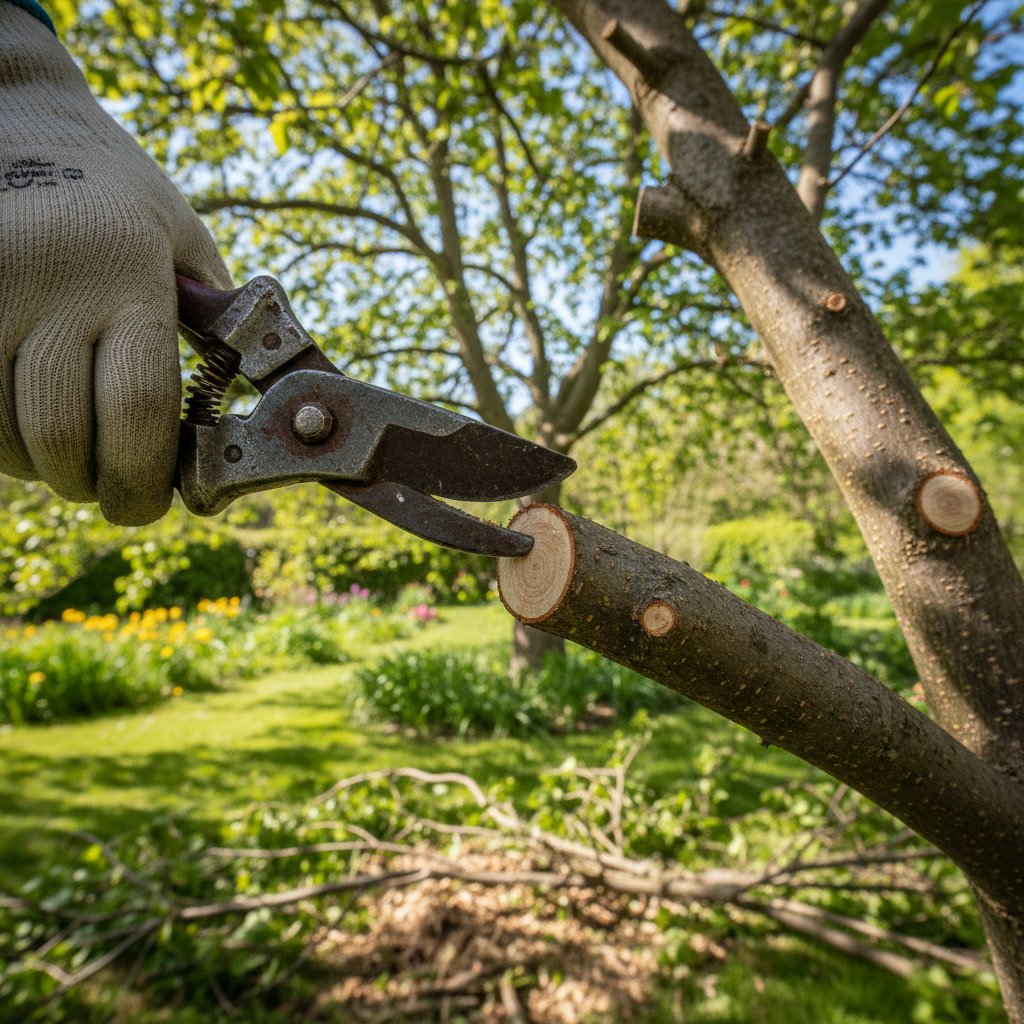
Proper cuts preserve the branch collar while removing the branch just outside this zone. The tree seals these wounds efficiently, usually within one growing season for branches under two inches in diameter. Cuts made flush with the trunk destroy the collar and leave wounds that may never fully close, creating permanent entry points for decay fungi.
Eight Clear Signs Your Trees Were Trimmed Properly
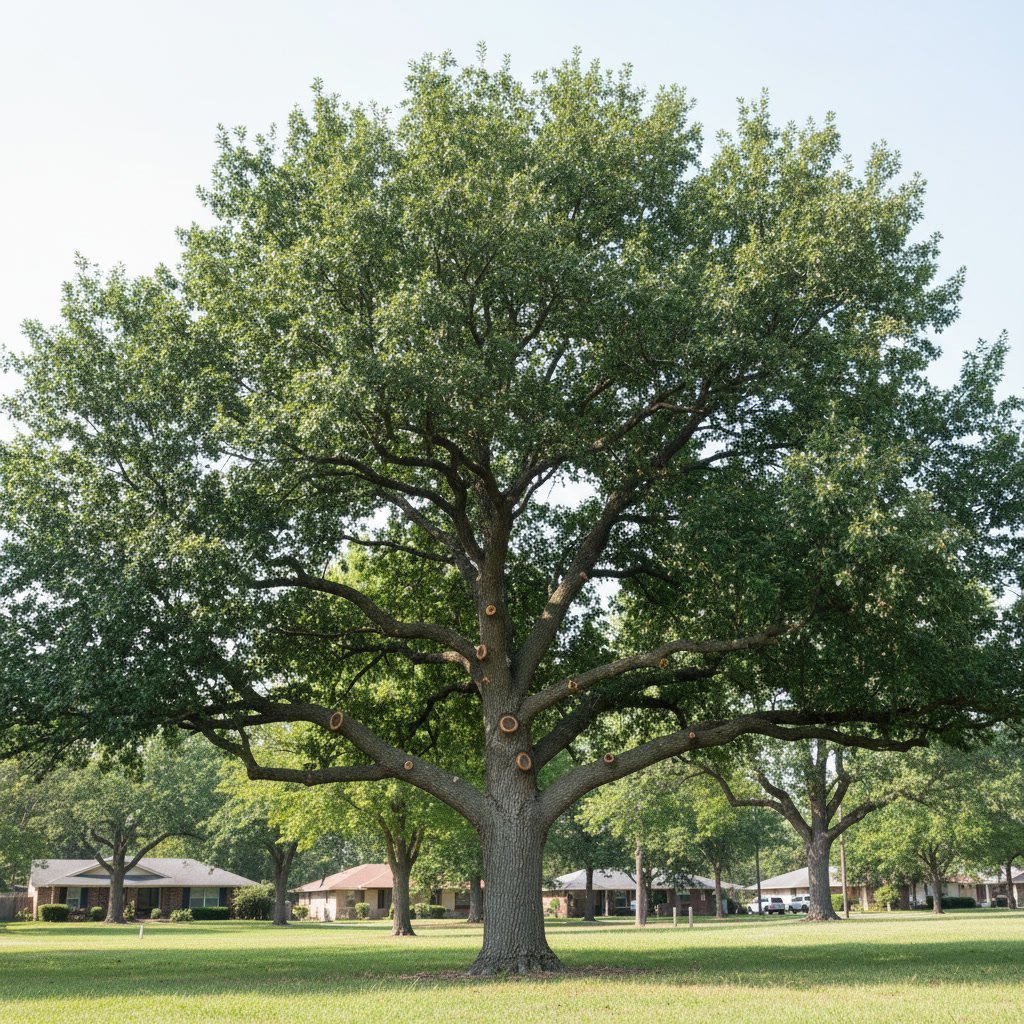
Clean cuts tell the first part of the story. When you examine trimmed branches up close, you should see smooth surfaces cut at slight angles. The cuts should sit just beyond the branch collar, leaving that protective ring intact. No torn bark should hang from the cut edge, and the remaining branch stub should measure less than one inch.
The tree canopy maintains its natural shape after quality trimming. Rather than appearing sheared or unnaturally geometric, the crown keeps an organic silhouette appropriate to the species. A skilled tree trimming professional removes selected branches to enhance structure while preserving the tree’s character.
Balanced weight distribution across the canopy prevents future splitting and storm damage. After proper trimming, no single branch should carry disproportionate weight. The remaining limbs spread evenly around the trunk, and major branches maintain adequate spacing to prevent rubbing.
Interior light penetration improves without creating large gaps. You should notice sunlight filtering through the canopy more evenly, but the tree should not look sparse or have obvious holes where large sections were removed. Strategic thinning allows air and light to reach interior branches and the ground below.
All climbing spikes stayed off living trees. Climbing spikes create hundreds of wounds that invite disease and insect problems. Proper arborists only use spikes when removing a tree completely, never during trimming work on trees intended to survive. Check the trunk for spike puncture patterns, which appear as paired holes ascending the bark.
No branch tops remain on the tree. Topping refers to cutting main branches back to stubs, leaving large wounds and destroying natural tree structure. This outdated practice creates weak new growth that attaches poorly and breaks easily. Professional work never includes topped branches, regardless of homeowner requests to reduce height drastically.
The ground cleanup matches the quality of the tree work. Branches, leaves, and wood chips should be removed completely unless you requested them for mulch. The work area should look cleaner than before the crew arrived, with no damage to surrounding plants, lawn, or hardscaping.
You received clear communication about what was done and why. Quality tree services explain their pruning decisions and can identify which branches they removed and the reasoning behind each cut. This transparency demonstrates knowledge and gives you confidence in their methods.
Common Mistakes That Signal Poor Work
Flush cuts sit flat against the trunk with no visible branch collar remaining. These cuts take years to close and often decay before the wound seals completely. Flush cutting was once taught as correct technique, but decades of research proved it damages trees significantly.
Stub cuts leave several inches of dead branch beyond the collar. These stubs never seal properly and eventually rot, creating hollow pockets that weaken the tree structure. Stubs also produce ugly clusters of weak shoots as the tree attempts to replace the lost branch.
Lion tailing strips all interior foliage and leaves only branch tips covered with leaves. This creates excessive weight at branch ends, increasing breakage risk during storms. It also removes the small interior shoots that help stabilize branches and provide backup growth points.
Over thinning removes more than 25 percent of the canopy in a single session. Trees need their leaves to produce energy through photosynthesis. Removing too much foliage at once stresses the tree and triggers survival responses that produce excessive water sprouts and weak new growth.
How Timing Affects the Quality of Trimming Results in Westminster
Different seasons create different wound responses in trees. Late winter and early spring trimming allows trees to seal wounds quickly as active growth begins. Summer trimming exposes fresh cuts during peak disease and insect activity, though necessary for hazard removal.
Oak trees require special timing to avoid oak wilt disease, a fatal fungal infection spread by beetles attracted to fresh cuts. The safest trimming window runs from November through March when beetles remain dormant. Some tree species tolerate year-round trimming better than others, making species knowledge essential for proper care.
What Different Tree Species Need
Oaks develop strong central leaders and respond poorly to aggressive pruning. Light structural trimming every five to seven years maintains health without triggering excessive interior growth. Maples tolerate more frequent trimming but bleed sap heavily when cut during spring, making late summer the preferred timing.
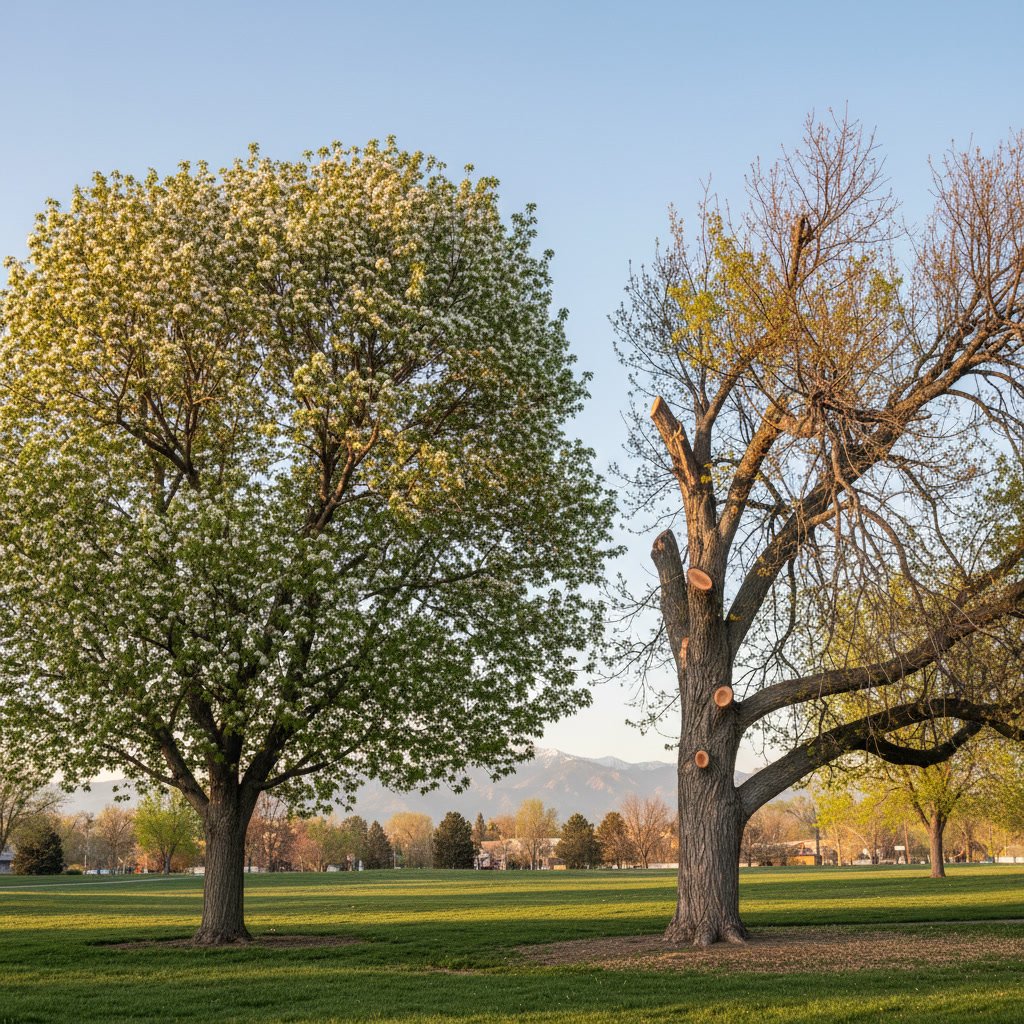
Bradford pears require regular pruning to reduce their tendency toward splitting. Their weak branch structure benefits from early training and ongoing maintenance to reduce co-dominant stems. Many mature specimens around Westminster, MD need corrective work to extend their lifespan.
Pine trees only produce growth from branch tips, making interior cuts permanent. Once you remove a pine branch completely, nothing grows back in that location. This makes careful planning essential before any cuts, as mistakes cannot be corrected later.
The Tools Professional Arborists Use
Sharp pruning tools create clean cuts that heal quickly. Professional crews maintain their equipment daily, sharpening blades between jobs and replacing damaged cutting edges. Dull tools crush and tear wood fibers rather than cutting cleanly, creating ragged wounds that seal slowly.
Hand pruners handle branches up to three-quarters of an inch in diameter. Loppers extend reach and cutting capacity to branches around 1.5 inches thick. Pruning saws cut branches from two to six inches, while chainsaws remove larger material. Each tool serves specific purposes, and using the wrong tool for the branch size produces poor results.
Pole pruners allow ground-based cutting of branches up to 15 feet high without climbing. Quality services use these tools extensively rather than defaulting to climbing for every cut. This approach proves faster, safer, and less expensive while producing identical results for accessible branches.
Safety Practices That Protect Trees and Property
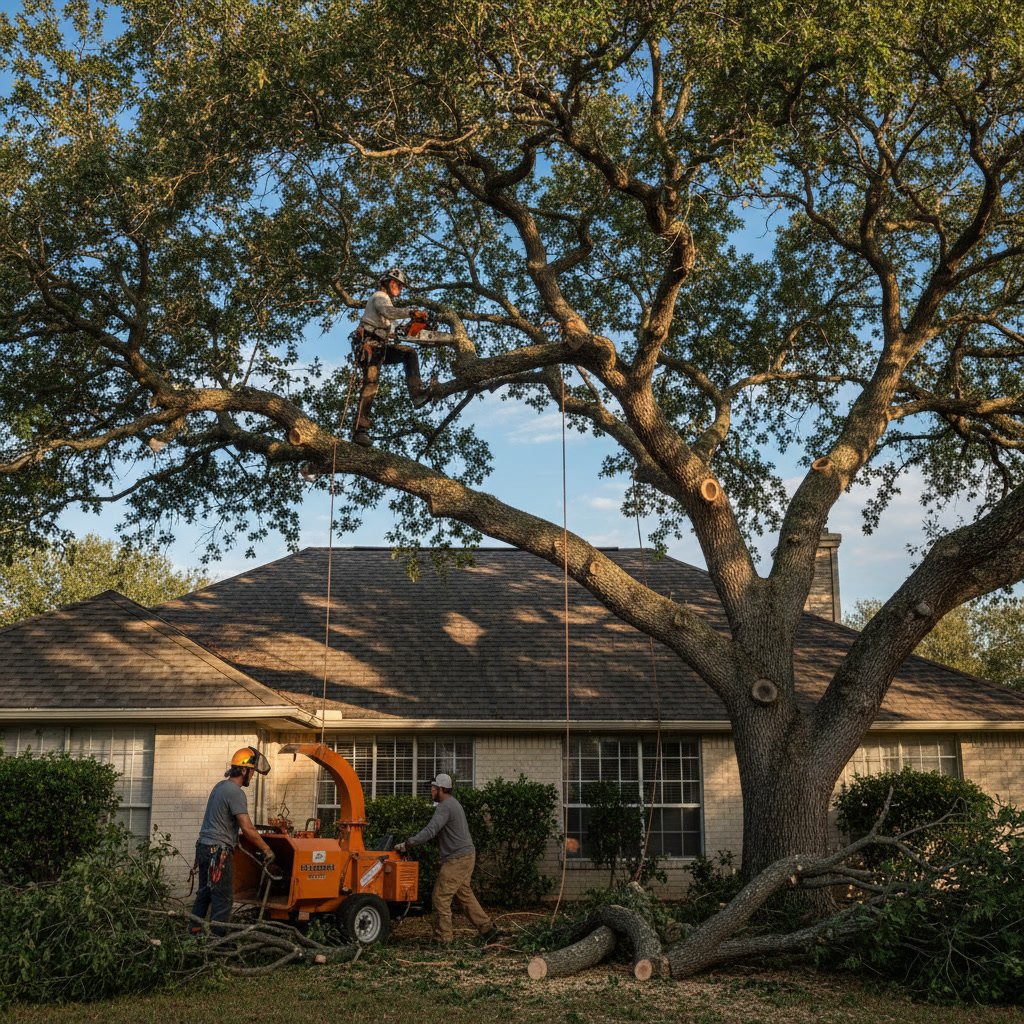
Proper rigging prevents falling branches from damaging structures, vehicles, and landscape features. Experienced crews use ropes and pulleys to control branch descent, lowering large pieces gently rather than letting them crash down. This careful approach also prevents bark stripping on the trunk as branches slide past during removal.
Equipment positioning matters as much as cutting technique. Bucket trucks and cranes should never rest against tree trunks or crush surface roots. Ground protection such as plywood sheets distributes equipment weight and prevents soil compaction in the root zone. If your property shows tire ruts or crushed plants after tree work, the crew lacked proper care.
Professional insurance and worker credentials protect you from liability. Reputable companies carry both liability insurance and workers compensation coverage. They also employ certified arborists who understand tree biology and follow industry standards. Asking for proof of these credentials before work begins prevents problems if accidents occur. Related tree emergencies may require immediate attention, as explained in guidance about emergency tree situations in Carroll County.
Long Term Tree Health Indicators
Wound closure speed reveals tree vitality and cut quality. Check trimmed branches six months after work completion. You should see callus tissue growing around cut edges, gradually covering the wound. Cuts on healthy trees under four inches in diameter typically seal within two growing seasons.
New growth patterns show whether the tree accepted the pruning well. Moderate new shoot growth near cut locations indicates healthy response. Excessive water sprout production suggests the tree experienced stress from too much removal or poor cut placement. No new growth at all might indicate deeper problems requiring professional assessment.
Disease and pest resistance improves after quality pruning. Proper structural work removes crossing branches, dead wood, and diseased material that harbor problems. The improved air circulation through the canopy reduces fungal disease pressure. Better light penetration throughout the crown strengthens interior branches and reduces weak growth.
When to Schedule Follow Up Inspections
Most trees benefit from professional evaluation every three to five years. Fast-growing species like maples and willows need more frequent attention, while slow growers such as oaks require less intervention. Storm damage can accelerate this timeline significantly, making immediate assessment critical after severe weather events. Understanding proper storm damage response procedures helps protect your trees when weather strikes.
Young trees need formative pruning every one to two years during their first decade. This establishes strong structure and prevents problems that become expensive to correct in mature specimens. The investment in early training pays dividends throughout the tree’s life by reducing future maintenance costs and hazard risks.
Major pruning for size control should happen gradually over several years. Removing no more than 25 percent of the canopy per session allows trees to adjust without excessive stress. Planning a multi-year reduction program produces better results than trying to shrink a tree dramatically in one visit.
Protecting Your Investment with Quality Tree Care
Proper trimming extends tree life by decades while reducing hazards and improving property value. The visual difference between skilled and careless work becomes obvious once you know what to look for. Clean cuts, preserved branch collars, balanced canopy structure, and appropriate removal percentages all signal quality work that benefits your trees long term.
Trees represent significant investments in your property that deserve protection through knowledgeable care. The techniques and standards outlined here help you evaluate whether your trees received treatment that promotes health and longevity or creates problems requiring future correction. Understanding these principles empowers you to ask better questions and recognize expertise when you see it.
When you need tree care that prioritizes your trees’ long-term health and safety, Abba Chief Tree Service brings certified expertise and proven methods to every project. Our team follows industry best practices for all trimming work, ensuring your trees receive care that enhances their beauty and extends their lifespan. Call +14435367420 to schedule a professional assessment and learn how proper tree care protects your landscape investment.