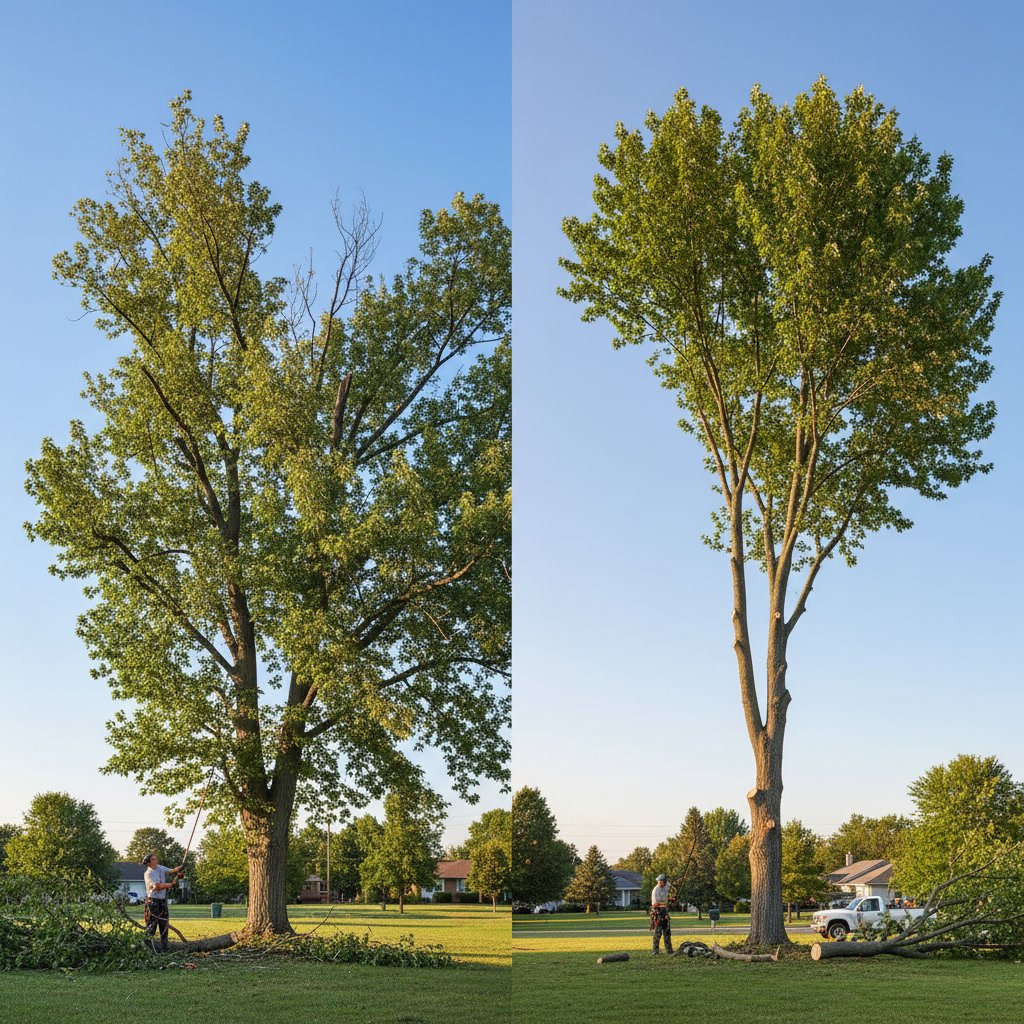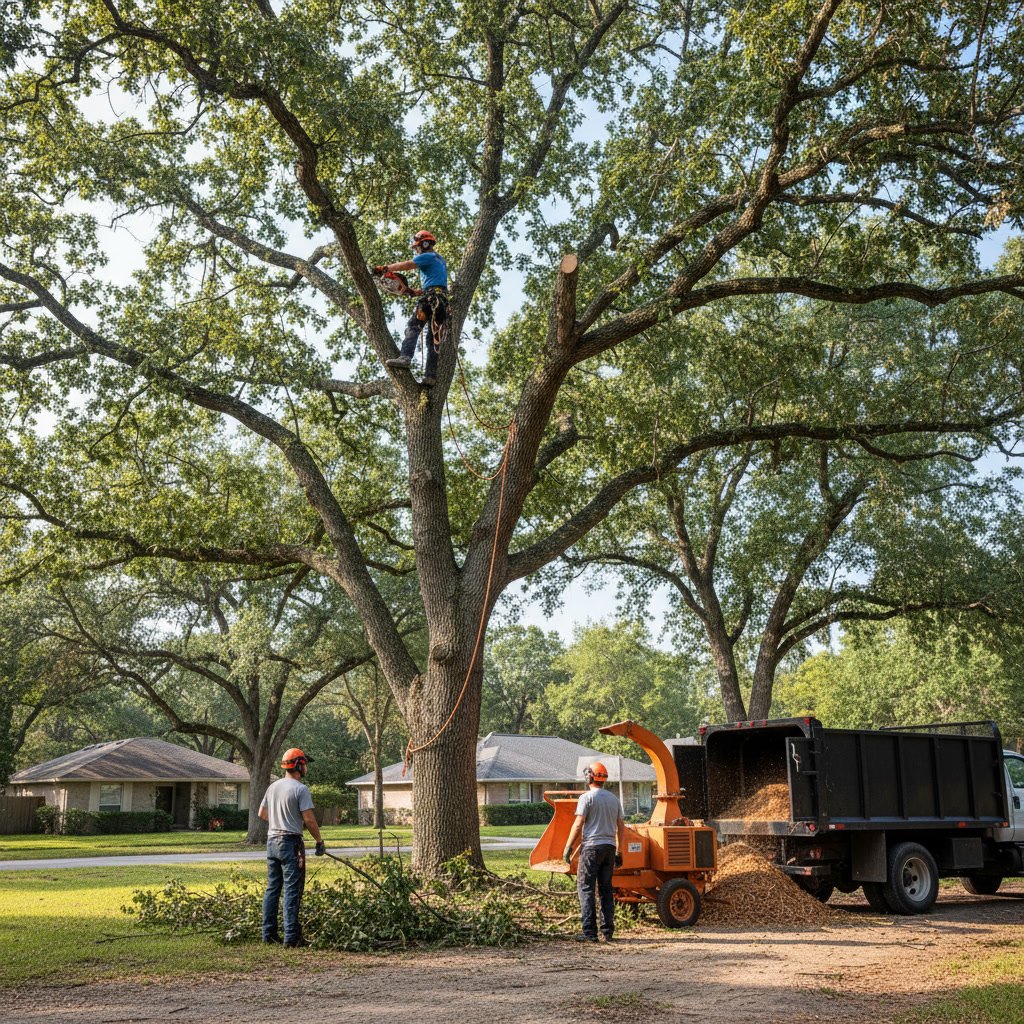
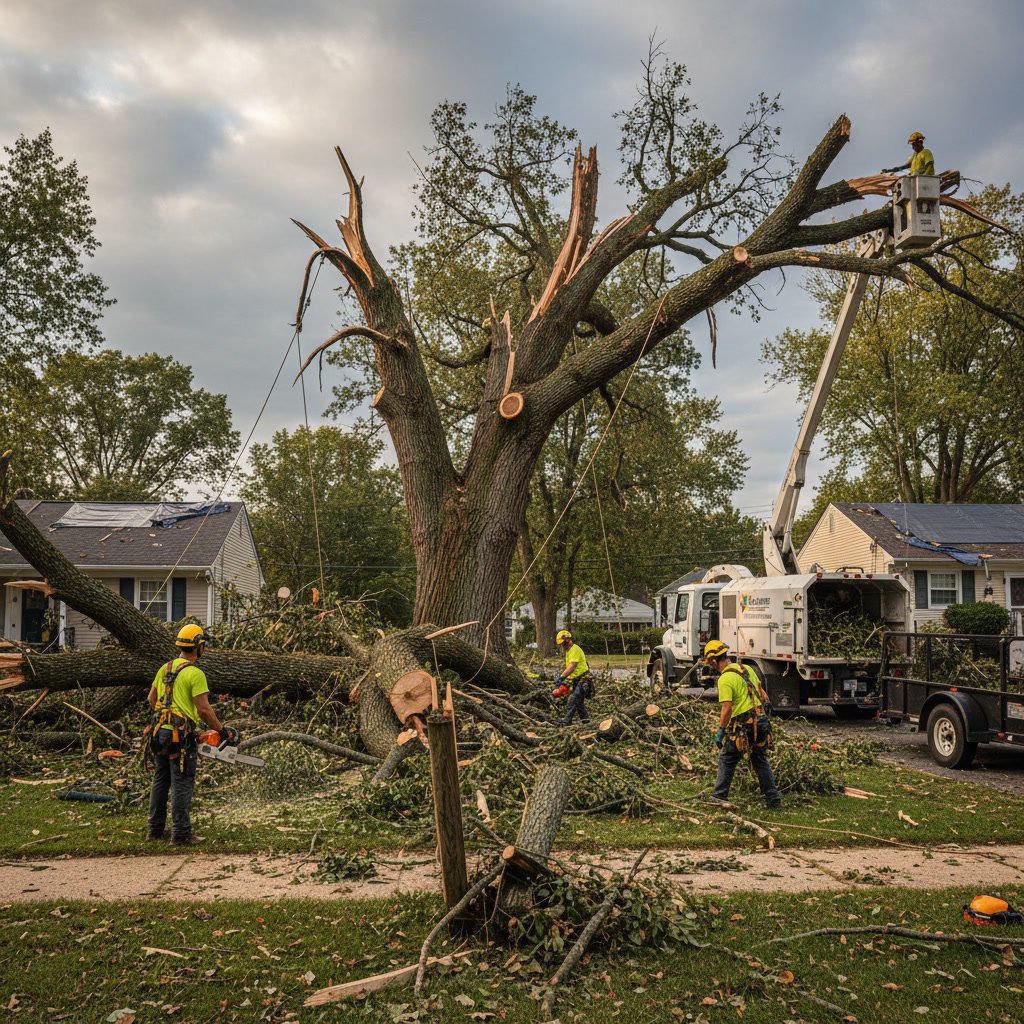
A powerful storm just tore through your Hampstead property, and now you’re staring at broken branches, split trunks, and trees leaning dangerously close to your home. Storm damage trees create immediate safety hazards that require quick, informed action. Understanding what to do in those critical first hours and days after a storm can mean the difference between a manageable situation and a catastrophic one.
This guide covers the essential steps every Hampstead homeowner should take after discovering tree damage from severe weather. You’ll learn how to assess immediate dangers, document the damage properly, understand when professional help is non-negotiable, and navigate the recovery process from start to finish.
Assess Immediate Safety Risks First
Before you do anything else, evaluate whether storm damage trees pose an immediate threat to people or property. Your safety comes before any cleanup effort or damage assessment.
Look for trees or large branches touching power lines. Never approach or attempt to remove any tree material in contact with electrical wires. Assume all downed lines are live and stay at least 30 feet away. Contact your utility company immediately and keep family members and pets clear of the area.
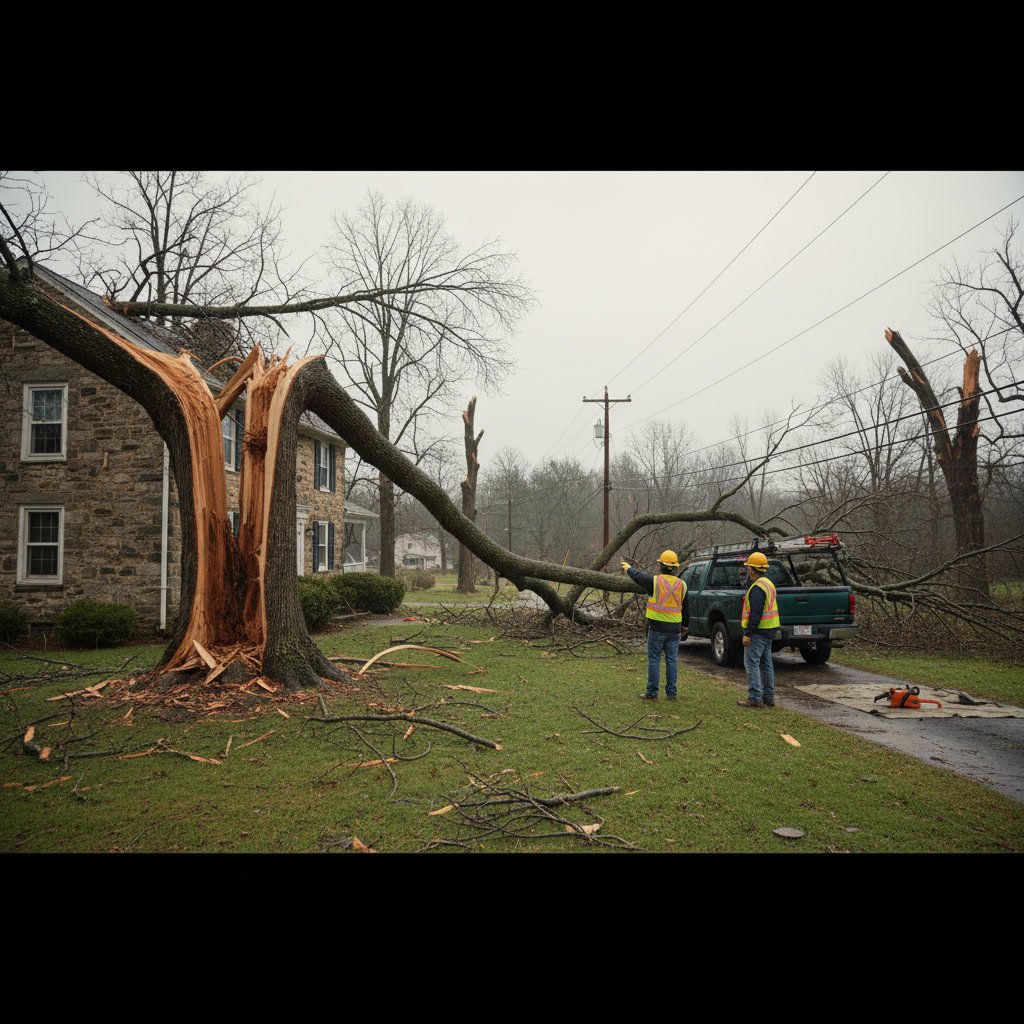
Check for structural threats to your home or other buildings. Trees leaning against your house, branches resting on your roof, or root systems that have partially lifted from the ground all constitute emergencies. These situations can worsen quickly, especially if another storm approaches or high winds return.
Examine the area around damaged trees for signs of instability. Cracked trunks, exposed roots, or soil heaving near the base indicate a tree may fall without warning. Mark off these areas and keep everyone away until professionals can safely address the hazard.
Pro Tip: Take photos and videos from a safe distance before anyone touches the damage. This documentation proves invaluable for insurance claims and helps tree care professionals plan their approach.
Document Everything for Insurance Claims
Thorough documentation makes the insurance claim process smoother and increases the likelihood of full coverage for storm damage trees and related property loss.
Photograph all visible damage from multiple angles. Capture wide shots showing the overall scene and close-ups of specific damage points like split branches, torn bark, or uprooted sections. Include reference points like your home, vehicles, or fencing to provide scale and context.
Record the date and time of each photo. Most smartphones automatically embed this information, but keep a written log as backup documentation. Note weather conditions at the time you discovered the damage and when the storm occurred.
List every damaged tree with its approximate size, species if known, and specific damage details. Note whether trees fell on structures, vehicles, fences, or other property. Document any secondary damage like broken windows, roof damage, or crushed landscaping features.
Contact your insurance company as soon as it’s safe to do so. Many policies have strict reporting timelines, and delays can complicate claims. Ask specifically about coverage for tree removal, debris cleanup, and any structural repairs needed due to the storm damage trees.
What Your Insurance May Cover
Standard homeowners policies typically cover tree removal when a tree falls on an insured structure like your house, garage, or fence. Coverage amounts vary but often range from $500 to $1,000 per tree, with some policies offering more.
Many policies do not cover removal of trees that fell in your yard without hitting a structure, even if they pose safety risks. Understanding your specific coverage before an emergency helps you budget for potential out-of-pocket expenses.
If a neighbor’s tree falls on your property, your own insurance usually handles the claim rather than your neighbor’s policy. Exceptions apply if you can prove the neighbor knew the tree was hazardous and failed to address it before the storm.
Understand When to Call Emergency Tree Services
Some situations absolutely require professional intervention. Attempting DIY removal of storm damage trees in these scenarios risks serious injury or additional property damage.
Call emergency tree professionals immediately when trees or branches contact power lines, lean against your home or other structures, block critical access routes like driveways or roads, or show signs of imminent collapse. These situations demand specialized equipment and expertise that homeowners simply don’t possess.
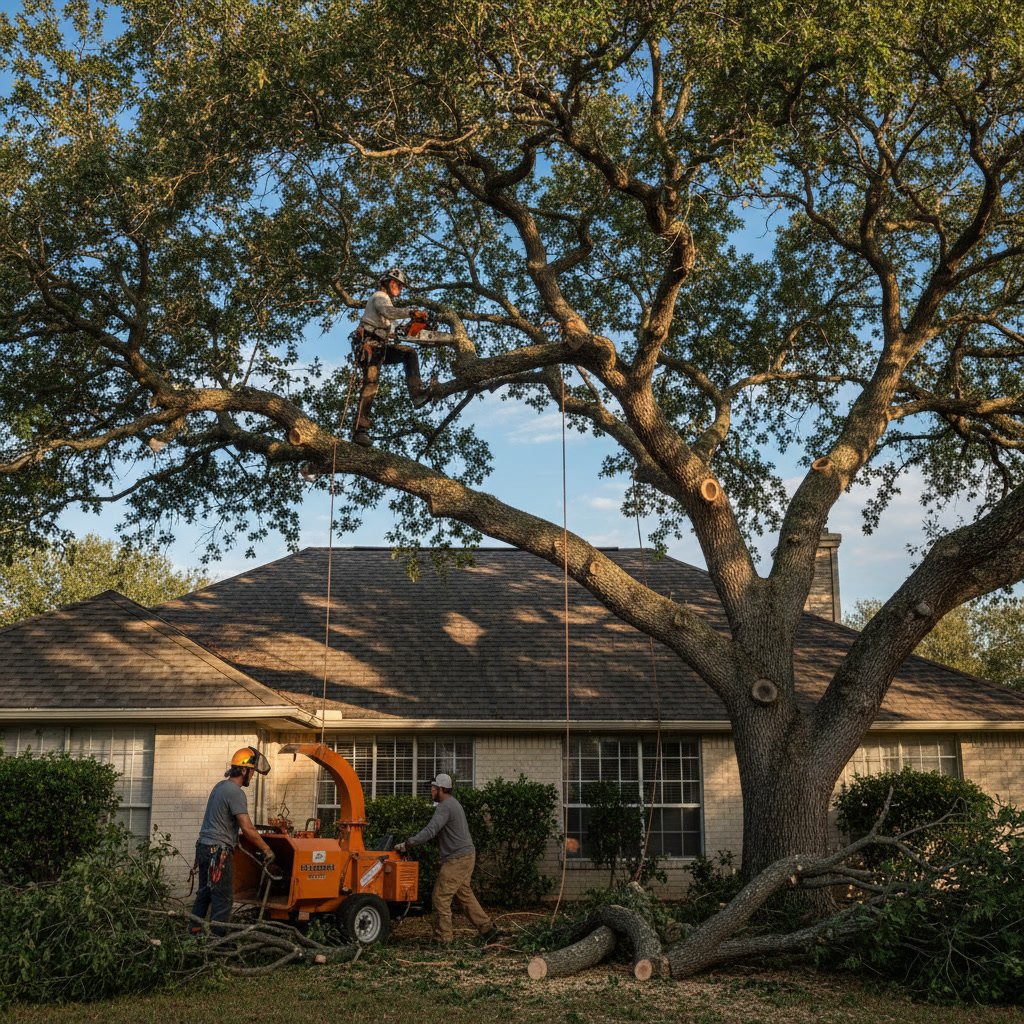
Large trees over 15 feet tall or branches thicker than 4 inches in diameter require professional equipment for safe removal. Chainsaws and ladders put untrained users at high risk of life-threatening injuries. The weight and unpredictability of storm-damaged wood make these operations exponentially more dangerous than routine tree work.
Trees with complex damage patterns like multiple split trunks, partially detached crowns, or compromised root systems behave unpredictably during removal. Certified arborists understand tree physics and can identify hidden fractures or tension points that could cause sudden, catastrophic movement.
Key Takeaway: Emergency tree service isn’t just about speed. It’s about having the training, insurance, and equipment to handle hazardous situations without making them worse.
Clear Small Debris Safely
While major storm damage trees require professionals, you can often handle minor debris cleanup yourself if you follow proper safety protocols.
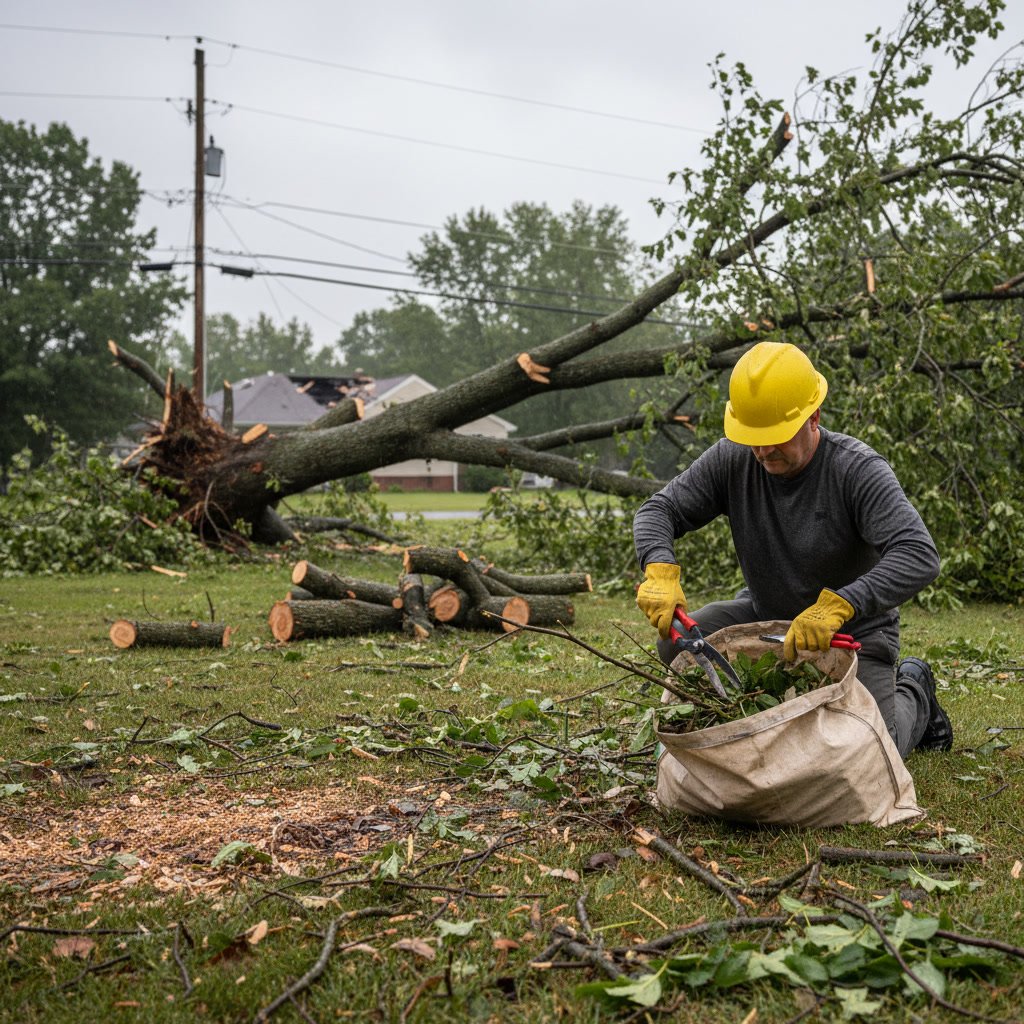
Start with branches on the ground that are smaller than your wrist in diameter. Wear heavy gloves, long sleeves, sturdy boots, and safety glasses. Watch for hidden nails, wire, or other hazards embedded in or around the debris.
Never work alone when using a chainsaw, even on small material. Always have someone nearby who can call for help if an accident occurs. Keep your chainsaw chain sharp and properly tensioned to prevent kickback.
Cut branches into manageable lengths of 3 to 4 feet for easier handling and disposal. Stack cut material in a designated area away from structures and power lines. Many communities in Carroll County offer storm debris pickup services after major weather events, so check with local authorities about collection schedules.
What Not to Do During Cleanup
Avoid using ladders to reach hanging branches or widow makers (partially broken branches caught in the canopy). These can fall without warning and cause fatal injuries. Never climb on damaged trees or walk under compromised canopies.
Don’t burn storm debris without checking local ordinances and obtaining necessary permits. Many Maryland jurisdictions restrict open burning, and storm-damaged wood often contains excess moisture that creates dangerous smoke and poor combustion.
Resist the urge to rush through cleanup. Storm damage trees create adrenaline-driven urgency, but hasty decisions lead to injuries. Take breaks, stay hydrated, and stop immediately if you feel fatigued or uncertain about any task.
Evaluate Trees for Long-Term Damage
Not all storm damage results in tree removal. Many trees survive significant trauma with proper assessment and corrective care.
Trees that lost less than 25% of their crown often recover fully with minimal intervention. Those missing 25% to 50% of branches may survive but require professional pruning to rebalance the canopy and prevent future structural problems. Trees stripped of more than 50% of their canopy rarely recover and usually decline over the following years.
Look for bark damage along the trunk. Scrapes and gouges smaller than the size of your hand typically heal without issue on healthy trees. Large strips of missing bark, especially if they circle more than one-third of the trunk, compromise the tree’s vascular system and often prove fatal.
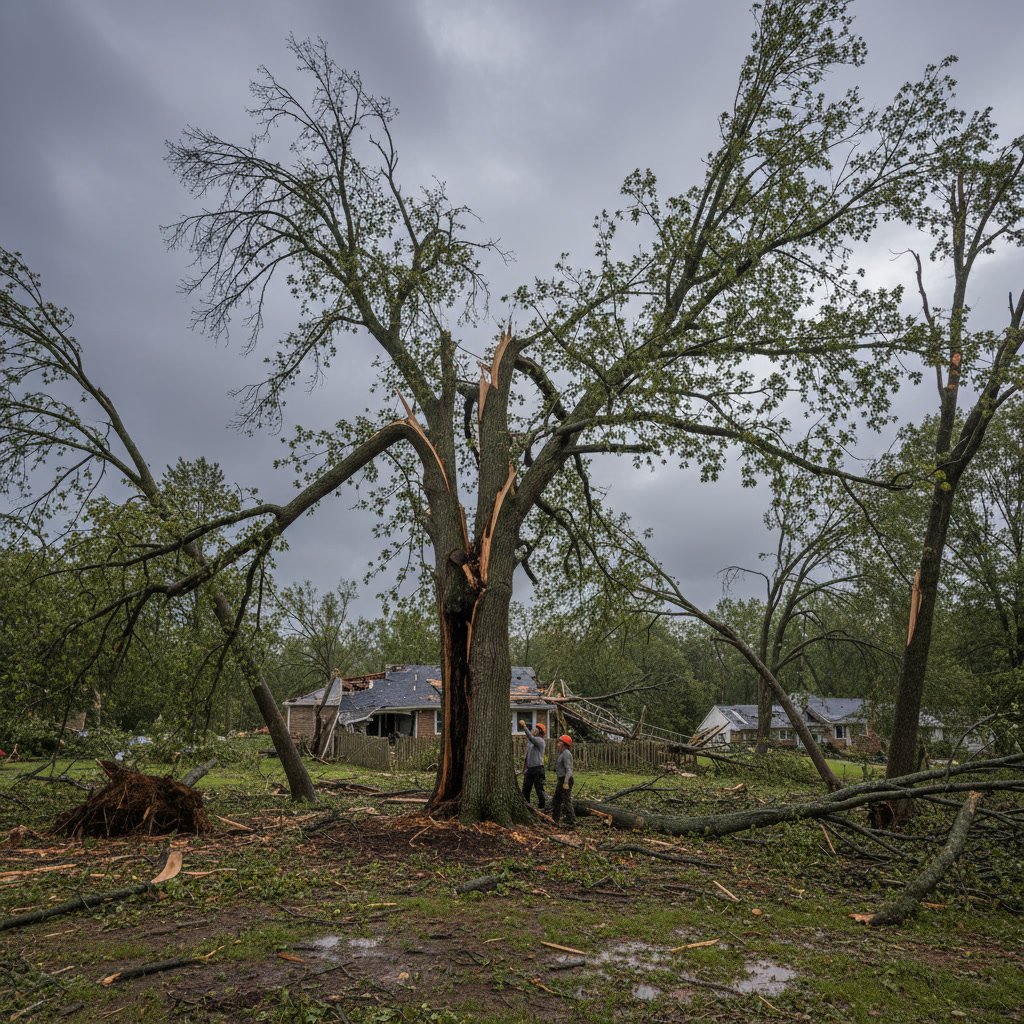
Check for cracks in the main trunk or major branches. Vertical cracks longer than 12 inches or horizontal cracks extending more than halfway through the trunk indicate structural failure. These trees pose ongoing hazards and should be removed.
Examine the root zone for signs of upheaval or exposure. Trees that tilted more than 15 degrees from vertical during the storm seldom re-establish stable root systems. Soil mounding on one side of the tree or depression on the other confirms root damage requiring professional evaluation.
Consider the Tree’s Overall Health
Young, vigorous trees recover from storm damage more successfully than old or already-stressed specimens. A healthy tree with good foliage density, strong annual growth, and no pre-existing disease often bounces back from moderate storm damage.
Trees already showing signs of decline like thin canopies, dead branches, discolored leaves, or visible decay rarely improve after storm trauma. In these cases, removal often makes more financial and safety sense than investing in corrective treatment.
Species matters too. Oaks, hickories, and beeches typically recover better than fast-growing species like silver maples, Bradford pears, or poplars. A certified arborist can assess species-specific recovery potential for storm damage trees on your Hampstead property.
Work with Qualified Tree Care Professionals
After severe weather, unqualified operators and scammers flood affected areas offering quick, cheap tree services. Choosing the right professional protects you from shoddy work, liability, and additional expenses.
Verify that any tree service carries proper insurance including general liability and workers compensation coverage. Ask for certificates and confirm coverage directly with the insurance company. If an uninsured worker gets injured on your property, you may face devastating financial liability.
Look for ISA (International Society of Arboriculture) certified arborists. This credential demonstrates professional training, ongoing education, and tested knowledge of proper tree care practices. Certification doesn’t guarantee quality work, but it indicates a baseline commitment to professional standards.
Get detailed written estimates from at least two or three companies. Legitimate businesses provide itemized quotes specifying exactly what work they’ll perform, what equipment they’ll use, and how they’ll handle debris removal and site cleanup.
Be wary of companies demanding full payment upfront or offering prices dramatically lower than competitors. Quality tree work requires specialized equipment, trained crews, and comprehensive insurance. Unrealistically low bids often signal corner-cutting that puts your property and safety at risk.
Questions to Ask Before Hiring
How long has your company operated in the Carroll County area? Established local companies have reputations to protect and relationships with suppliers and other professionals. Fly-by-night operators disappear after major storms, leaving you with no recourse if problems arise.
Can you provide references from recent storm damage work? Speaking with past customers gives you insight into the company’s reliability, work quality, and how they handle unexpected complications.
What’s your timeline for completing the work? During busy periods after widespread storm damage, honest companies acknowledge realistic schedules. Be suspicious of anyone promising immediate service when other reputable companies quote wait times.
Prevent Future Storm Damage
Once you’ve addressed immediate storm damage trees, take steps to reduce vulnerability to future severe weather events.
Schedule regular tree maintenance including professional pruning every 3 to 5 years for mature trees. Proper pruning removes weak branches, corrects poor structure, and reduces wind resistance without harming tree health. Trees with properly maintained crowns suffer significantly less damage during storms.
Have large trees inspected annually by a certified arborist. Professional assessments identify developing problems like decay, disease, or structural weaknesses before they become hazards. Early intervention often saves trees that would otherwise require removal after the next storm.
Plant new trees with an eye toward storm resistance. Species like oaks, bald cypress, and American holly withstand high winds better than brittle species like silver maple or Bradford pear. Plant trees at appropriate distances from structures, giving them room to grow without threatening buildings.
Address soil health and drainage issues that compromise root stability. Compacted soil, poor drainage, or shallow root systems make trees more susceptible to windthrow during storms. Mulching, aeration, and proper watering encourage deep, stable root development.
Pro Tip: Create a property map noting the location and condition of all significant trees. Update it after storms and following major tree work. This record helps you track changes over time and provides valuable information for insurance purposes.
Frequently Asked Questions
How quickly should I remove storm damaged trees?
Trees posing immediate safety hazards like those touching power lines, leaning on structures, or showing signs of imminent collapse require emergency removal within 24 hours. Trees that fell without hitting structures but block access or create trip hazards should be addressed within a week. Damaged trees that remain standing but sustained significant trauma should be professionally evaluated within two weeks to assess whether removal or corrective pruning is appropriate.
Will my tree survive if it lost half its branches in a storm?
Trees losing 50% or more of their crown have poor survival prospects, though outcomes depend on species, age, and overall health before the storm. Young, vigorous trees in good health sometimes recover with proper corrective pruning and care. Mature or already-stressed trees rarely bounce back successfully and often decline over the following seasons, becoming increasing safety hazards as dead wood accumulates.
Can I leave a damaged tree and just monitor it?
This depends entirely on the type and severity of damage. Trees with minor branch loss and no structural compromise can often be monitored safely. Trees with cracked trunks, severe leans, exposed roots, or large sections of missing bark should not be left without professional evaluation, as they may fail suddenly. If a damaged tree could hit your home, vehicles, or areas where people gather, err on the side of professional assessment rather than monitoring.
How much does emergency tree removal cost after a storm?
Emergency tree removal costs vary widely based on tree size, location, complexity, and accessibility. Small trees under 30 feet typically range from $300 to $800, medium trees from 30 to 60 feet cost $800 to $2,500, and large trees over 60 feet or those tangled with structures often exceed $2,500. Emergency callouts during or immediately after storms may include premium charges. Most insurance policies cover removal costs when trees damage insured structures.
Should I hire the first tree company that offers service after a storm?
No. While urgency feels overwhelming after storm damage, taking time to verify credentials, insurance, and get multiple estimates protects you from liability and poor work quality. For genuine emergencies like trees on houses or touching power lines, choose a company that can verify insurance immediately over the phone. For less critical situations, invest a day or two in proper due diligence before committing to a contractor.
Taking Action After the Storm
Storm damage trees demand quick assessment but thoughtful action. Prioritize safety, document everything thoroughly, and recognize when professional expertise is essential rather than optional. The decisions you make in the days following severe weather protect your property value and your family’s safety for years to come.
If you’re dealing with storm damage trees in Hampstead, Manchester, Westminster, or anywhere in Carroll County, Abba Chief Tree Service provides the emergency response and professional expertise you need. Our certified team handles everything from immediate hazard removal to comprehensive property assessment and recovery planning. Call +14435367420 for 24/7 emergency tree service or to schedule a post-storm property evaluation.