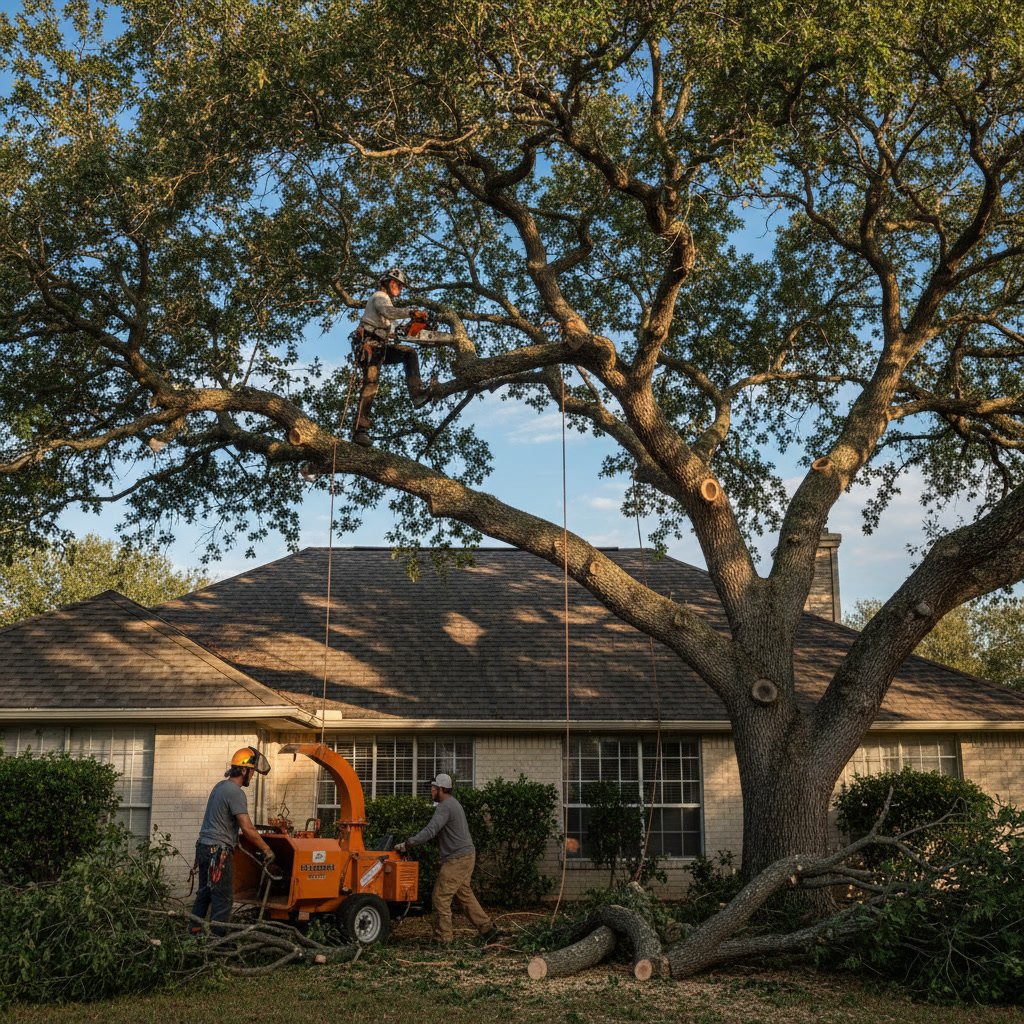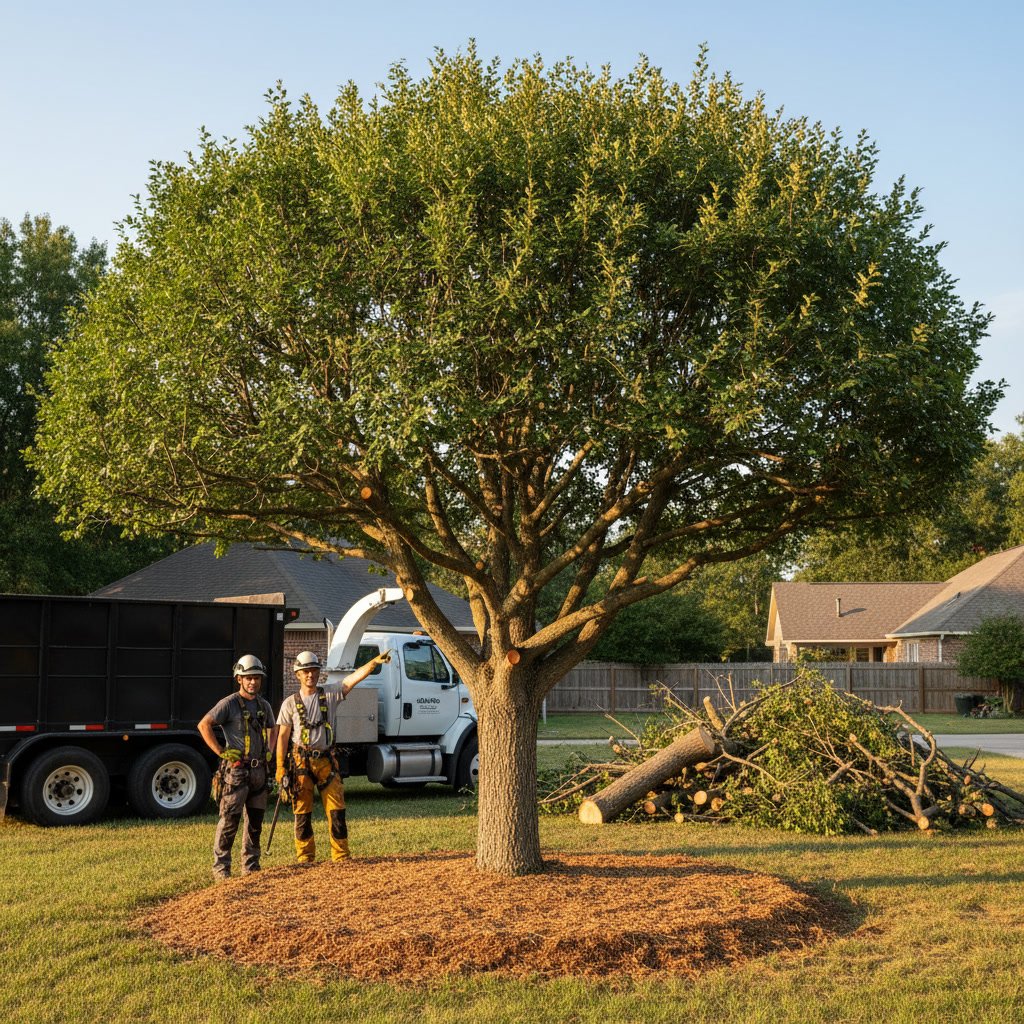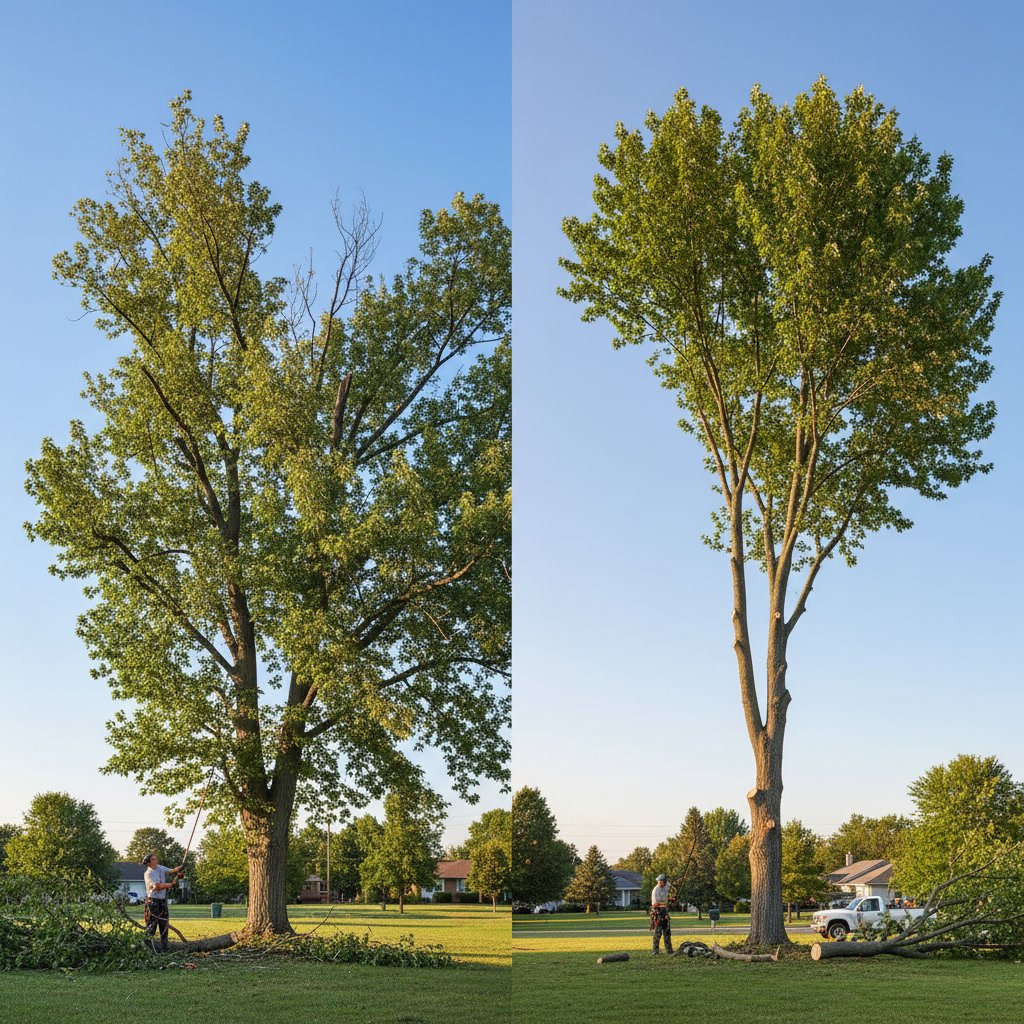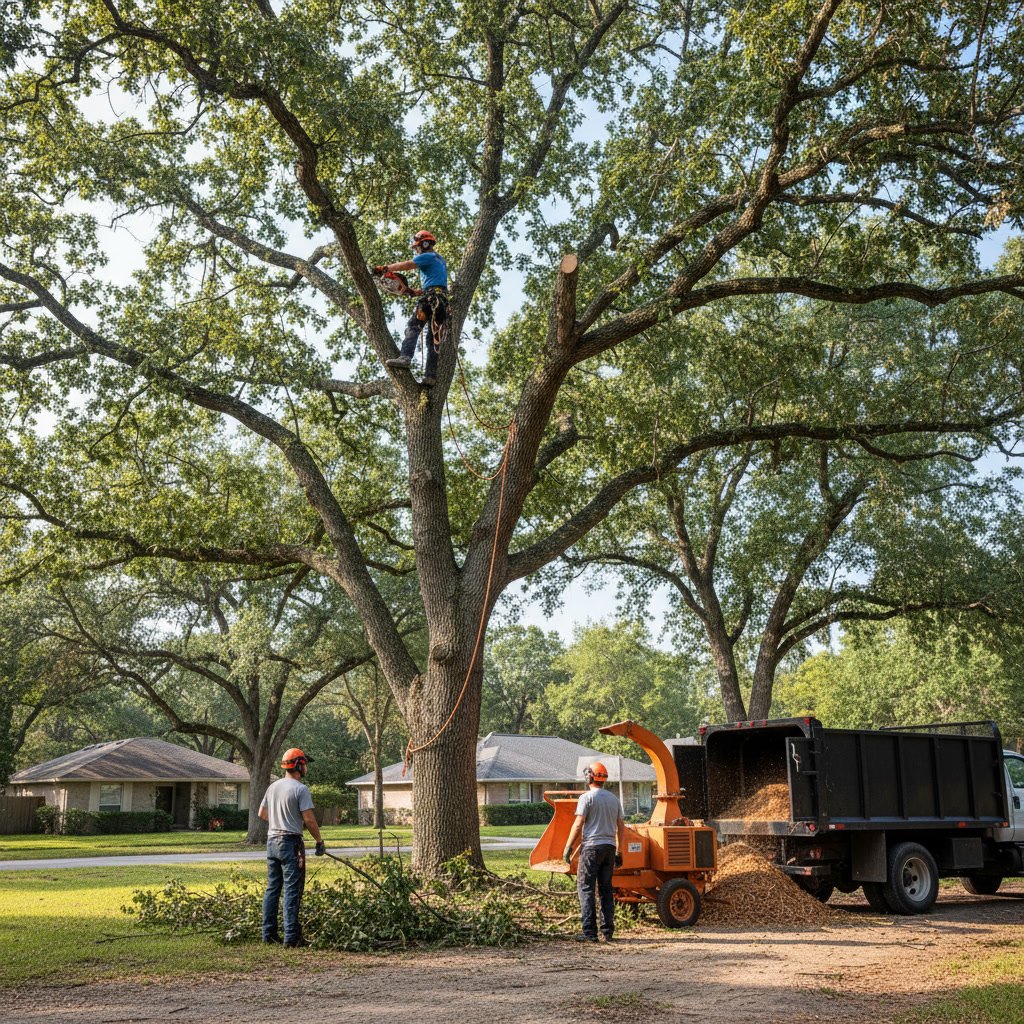
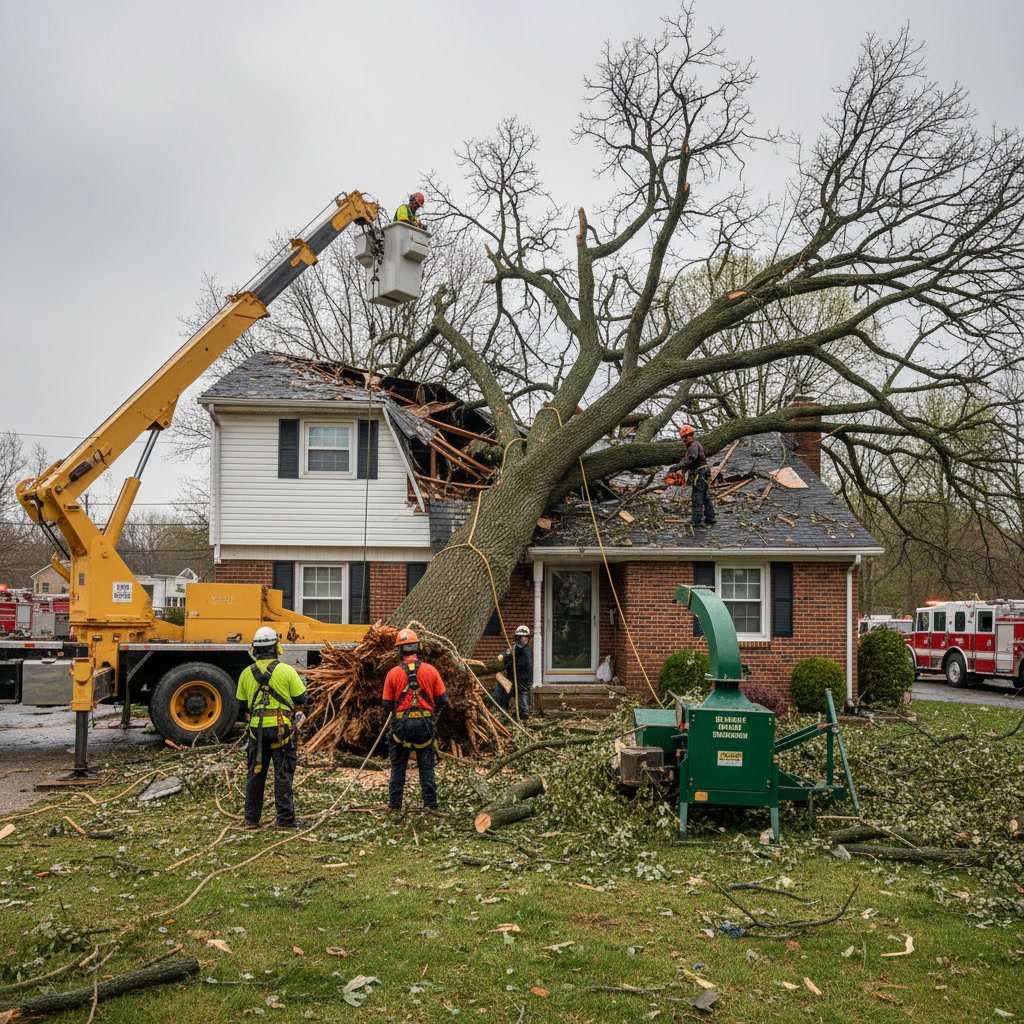
A tree leaning dangerously over your home after a thunderstorm. A massive branch blocking your driveway at 2 AM. A split trunk threatening to collapse onto power lines. These scenarios demand immediate action, but many property owners in Carroll County aren’t sure what truly qualifies as emergency tree removal or how quickly help can arrive.
Understanding the difference between urgent tree care and routine maintenance can save you money, prevent property damage, and most importantly, keep your family safe. This guide explains exactly what constitutes a tree emergency, typical response times in Westminster and surrounding areas, and what to expect when you call for emergency service.
What Qualifies as an Emergency Tree Removal Situation
Not every fallen branch or damaged tree requires emergency response. Emergency tree removal applies to situations where there is immediate danger to people, structures, or critical infrastructure. The key word is immediate.
A tree hanging over power lines and actively sparking qualifies. A tree that fell six months ago and is still lying in your back yard does not. The distinction matters because emergency services typically cost more due to 24/7 availability, rapid response requirements, and the hazardous conditions crews work under.
Trees That Pose Immediate Danger to Structures
If a tree or large limb is resting on your home, garage, vehicle, or any occupied structure, you’re dealing with an emergency. Even if the initial damage seems minor, that tree could shift, fall further, or cause secondary damage at any moment.
Trees leaning at severe angles (typically 20 degrees or more from vertical) after a storm event also qualify, especially if they’re positioned to strike buildings, vehicles, or high-traffic areas. The lean indicates root failure or structural compromise that could worsen without warning.
Blocked Roads and Access Points
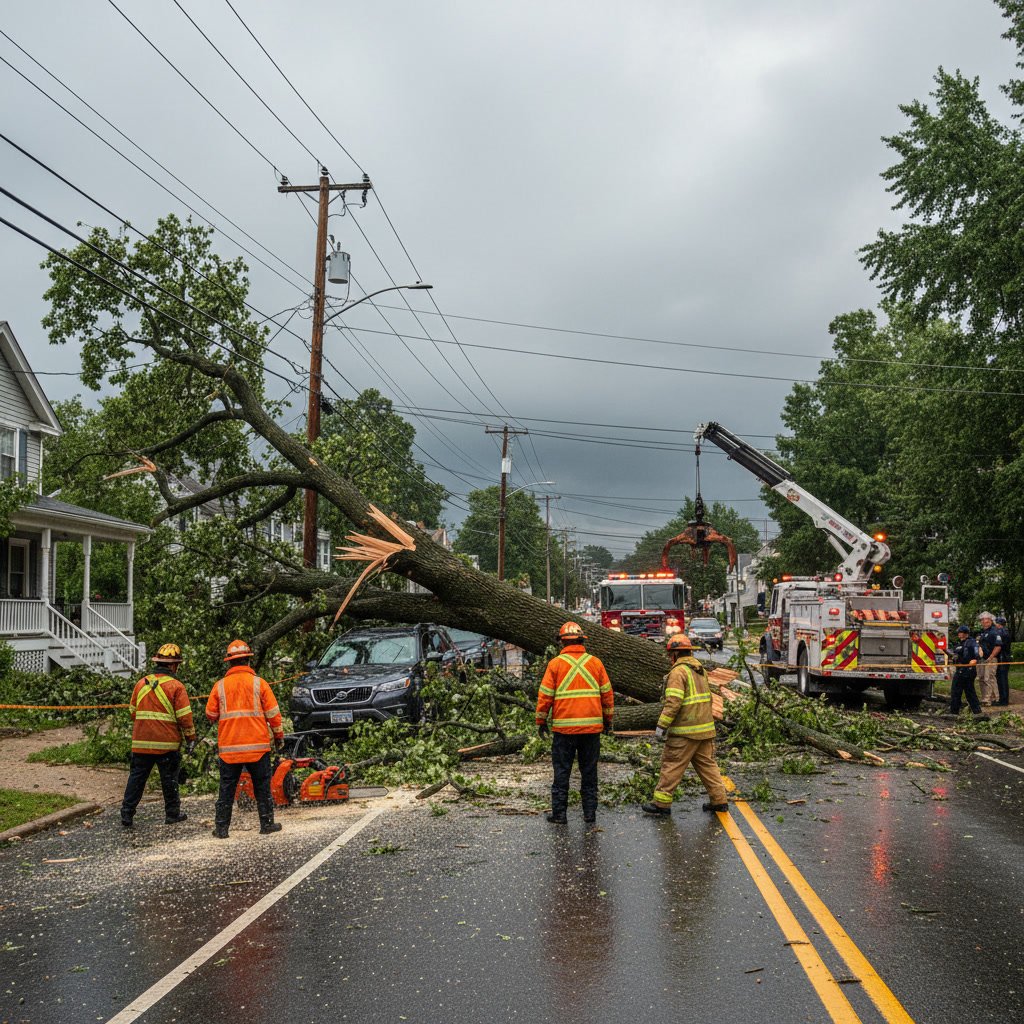
A tree blocking your only driveway or preventing emergency vehicle access constitutes an urgent situation, though it may not always require full emergency pricing. If the obstruction prevents you from leaving for work or accessing essential services, most tree care companies will prioritize your call.
In Carroll County, fallen trees blocking public roads should be reported to local authorities first. They coordinate with tree service providers to clear roadways quickly and safely.
Trees Contacting or Threatening Power Lines
Any tree in contact with active power lines requires immediate professional attention, but never attempt to remove it yourself. Contact your utility company first, as they’re responsible for de-energizing lines before tree removal can safely begin.
Trees leaning toward power lines or with large branches hanging above electrical infrastructure should be evaluated urgently. High winds or additional stress could send them into the lines, creating fire hazards and widespread outages.
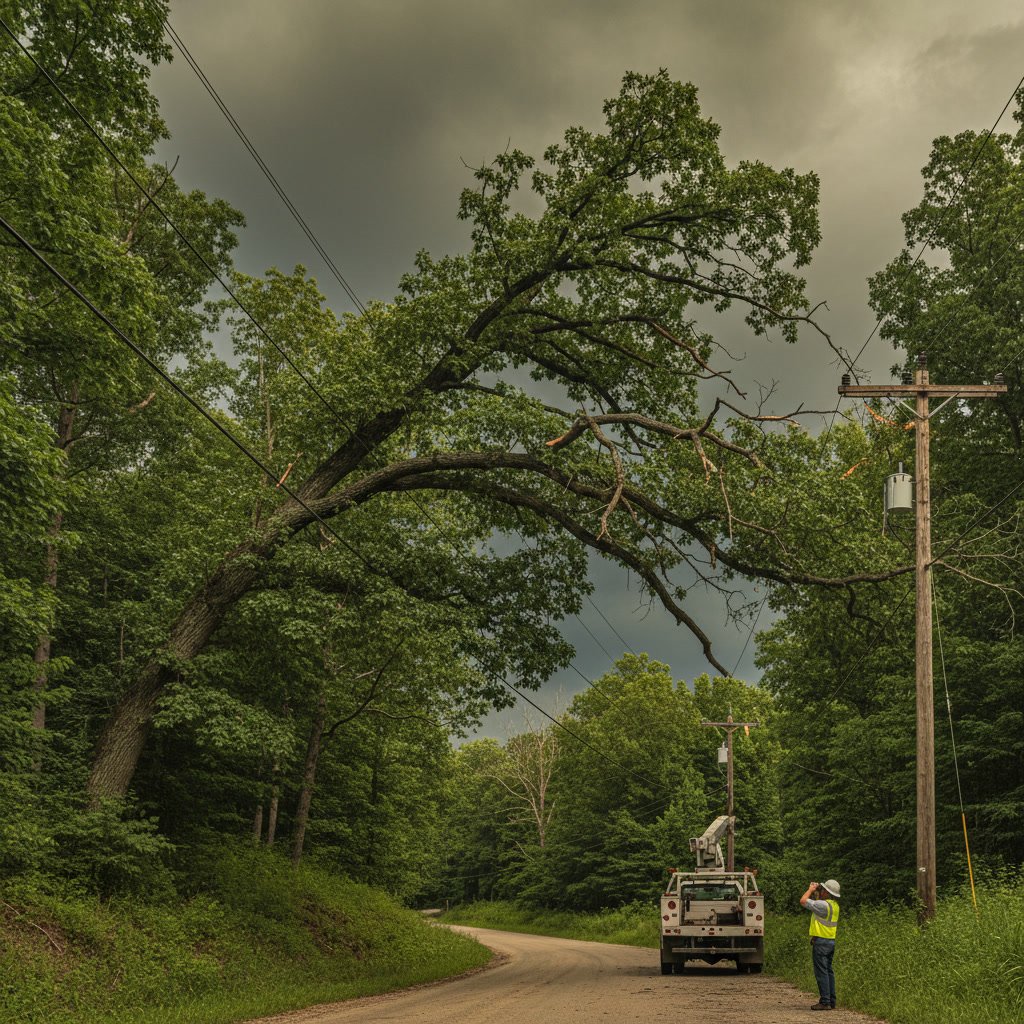
Situations That Are Urgent But Not Emergency
Some tree problems require prompt attention within 24 to 48 hours but don’t necessitate middle-of-the-night service. Understanding this distinction helps you communicate clearly with tree care professionals and often saves on service costs.
A tree with visible cracks in the trunk or major limbs needs assessment soon, but unless weather conditions are worsening, it’s not typically an emergency. Similarly, a dead tree standing near structures should be removed promptly, but if it’s been standing for weeks or months, waiting until normal business hours is usually acceptable.
Hanging branches (often called widow makers) that broke partially but didn’t fall completely require urgent attention. They’re unstable and dangerous, but if they’re not positioned over high-traffic areas or structures, they can often wait for next-day service.
Pro Tip: Take photos of any tree damage and send them to your tree service provider when you call. Visual documentation helps them assess urgency accurately and dispatch the right equipment on the first trip.
Typical Response Times for Emergency Tree Removal in Carroll County
Response times vary based on several factors, but understanding what’s realistic helps set proper expectations during stressful situations. In Westminster, Finksburg, Hampstead, Manchester, and surrounding Carroll County communities, most established tree service companies aim for specific response windows.
For true emergencies involving immediate danger, professional tree services typically respond within two to four hours during normal weather conditions. This includes dispatch time, travel, and initial assessment.
During widespread storm events affecting multiple properties simultaneously, response times can extend to 6 to 12 hours or even longer. Tree service companies prioritize based on safety risk, handling situations with injuries, trapped persons, or active fires first, followed by trees on structures, then blocked access routes.
Factors That Affect Response Time
Weather conditions play the largest role in emergency response timing. During active severe weather with lightning, high winds over 40 mph, or heavy ice accumulation, even emergency crews cannot safely operate. They respond as soon as conditions improve to safe working levels.
Your location within the service area matters. Properties in Westminster and nearby communities like New Windsor or Taneytown typically see faster response than those in more remote areas, simply due to travel distance and equipment staging locations.
Time of day impacts response as well. Calls received during business hours (7 AM to 6 PM) generally see faster dispatch than late-night calls, though true emergencies receive 24/7 attention.
What Happens During the Initial Emergency Response
The first crew arrival focuses on safety and stabilization, not complete removal. Emergency responders assess the immediate danger, secure the area, and perform critical cuts to eliminate the most pressing hazards.
If a tree is on your house, the initial response involves removing enough of the tree to prevent further damage and making the area safe. Complete cleanup and stump removal often happen during follow-up visits scheduled for daylight hours when conditions are optimal.
Emergency crews may install temporary tarps or supports, cut away branches from power lines (after utility company coordination), or remove trees blocking critical access. They document damage for insurance purposes and provide estimates for complete remediation.
How to Prepare for a Tree Emergency
Preparation before a crisis strikes makes emergency response faster and more effective. Taking a few simple steps now can reduce property damage and streamline the help process when you need it most.
Keep contact information for a qualified local tree service readily available. Store the number in your phone and keep a written copy with other emergency contacts. Don’t wait until a tree is on your roof to search for providers.
Know the locations of your property’s trees in relation to structures, power lines, and access routes. Walk your property twice a year and note any trees with dead branches, splits, fungal growth, or excessive lean. Addressing these issues during routine maintenance prevents many emergencies.
Document Your Trees Before Damage Occurs
Take photos of all large trees on your property from multiple angles. This documentation helps with insurance claims and provides before-and-after comparisons if damage occurs. Note the approximate height, diameter, and species of significant trees.
Review your homeowner’s insurance policy to understand what tree damage is covered and what your deductible involves. Many policies cover tree removal if the tree damages a structure but not if it simply falls in your yard.
Create a Safety Plan
Identify safe areas in your home away from large trees and windows during severe weather. Basements, interior rooms, and lower floors offer the best protection from falling trees and branches.
Never approach a downed tree that’s in contact with power lines, even if the lines appear inactive. Assume all downed lines are energized and maintain a distance of at least 35 feet. Contact your utility company immediately and keep family members and pets away from the area.
Storm Damage and Mass Casualty Events
Carroll County experiences severe thunderstorms, ice storms, and occasional tropical weather systems that can damage hundreds of trees simultaneously. During these widespread events, the emergency response system functions differently than during isolated incidents.
Tree service companies implement triage protocols during mass casualty events, similar to hospital emergency rooms. The most dangerous situations receive priority, which means your emergency may be considered lower priority if no one is injured and the tree isn’t actively causing additional damage.
Communication becomes critical during widespread storms. Calling repeatedly won’t speed up your response time but does tie up phone lines that crews need for coordination. After your initial call is logged and prioritized, the company will contact you with estimated arrival times as they work through the queue.
Key Takeaway: During major storm events affecting the entire region, response times of 24 to 72 hours are common even for situations that would normally qualify as emergencies. Companies work continuously but can only service so many properties at once.
What You Can Do While Waiting for Emergency Response
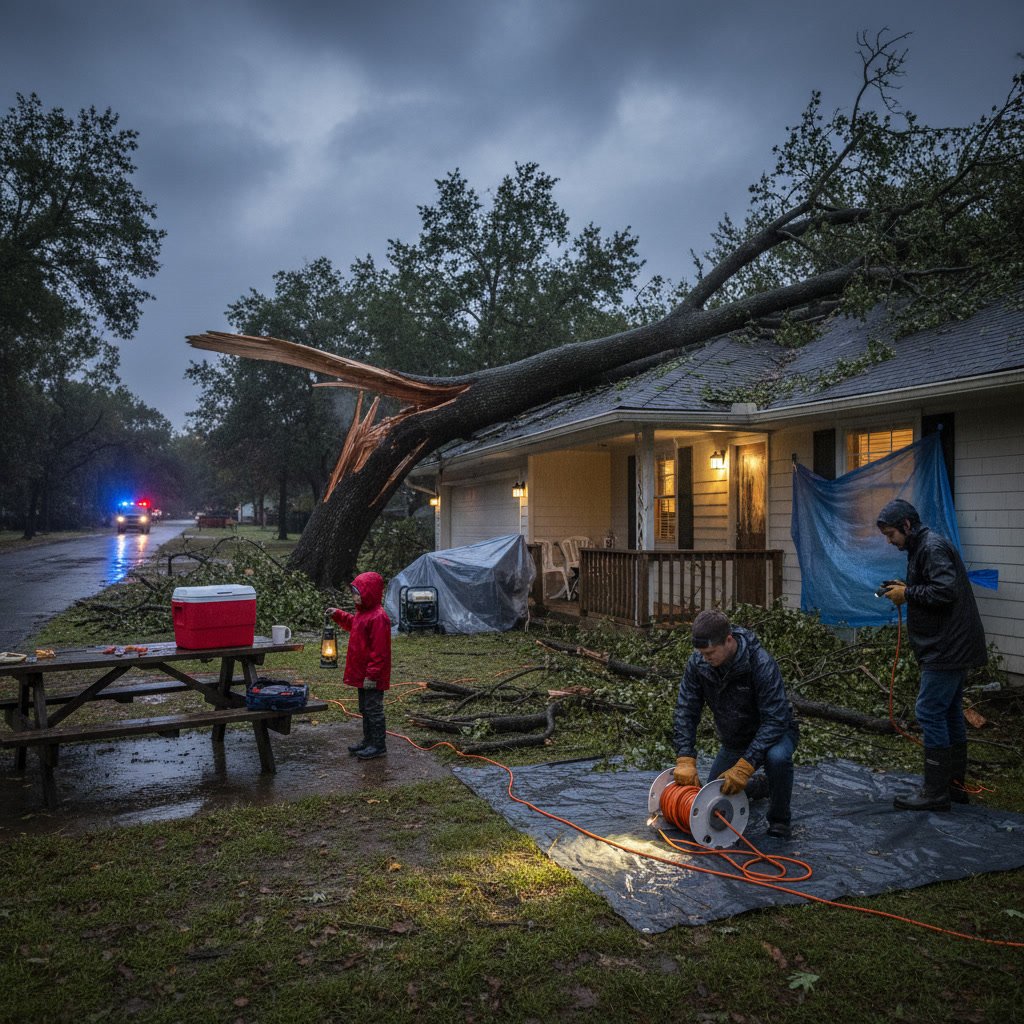
If safe to do so, remove valuables and important documents from areas at risk of further tree damage. Move vehicles away from leaning trees or hanging branches. Do not attempt to cut, move, or climb on damaged trees yourself.
Place barriers or warning markers around dangerous areas to keep family members, neighbors, and pets away. Rope, caution tape, or even lawn furniture can create visual boundaries until professionals arrive.
Take detailed photos and videos of all damage from multiple angles. Document the tree’s position, damage to structures, and any relevant weather conditions. This evidence supports insurance claims and helps tree service professionals prepare appropriate equipment.
Cost Considerations for Emergency Tree Services
Emergency tree removal costs more than scheduled tree work, typically 50% to 100% more than standard rates. This premium covers 24/7 availability, rapid response, hazard pay for crews working in dangerous conditions, and the opportunity cost of interrupting scheduled work.
In Carroll County, emergency tree removal typically ranges from $1,000 to $5,000 for most residential situations, though complex scenarios involving large trees on structures can exceed $10,000. Multiple trees or extensive storm damage increase costs proportionally.
Factors affecting emergency removal costs include tree size and species, accessibility for equipment, proximity to structures and utilities, time of day, and current weather conditions. A tree on a house during an ice storm at midnight will cost more to remove than the same tree during dry weather on a Tuesday afternoon.
Insurance Coverage for Emergency Tree Removal
Most homeowner’s insurance policies cover tree removal if the tree damages a covered structure like your home, garage, or fence. Coverage typically ranges from $500 to $1,500 per tree, with total limits around $5,000 to $10,000 per storm event.
Trees that fall without damaging insured structures generally aren’t covered, even if they block your driveway or pose safety hazards. Review your specific policy and contact your insurance agent with questions before an emergency occurs.
Document everything for insurance purposes. Take photos before any work begins, save all receipts and invoices, and get written estimates from your tree service provider. Most insurance companies require documentation before approving claims.
Choosing a Qualified Emergency Tree Service Provider
The middle of an emergency is the worst time to vet a tree service company, but unfortunately that’s when many property owners make hasty decisions. Knowing what qualifications to look for beforehand protects you from uninsured, inexperienced, or predatory operators.
Verify that any company you contact carries both general liability insurance and worker’s compensation coverage. Ask for proof of insurance and contact the insurance company to confirm the policy is active. Without proper coverage, you could be liable for injuries or additional property damage.
Look for certified arborists with credentials from the International Society of Arboriculture (ISA). While not every crew member needs certification, companies with certified arborists on staff demonstrate commitment to professional standards and ongoing education.
Warning Signs of Unreliable Emergency Services
Be cautious of any company that demands full payment upfront before starting work. Legitimate tree services typically require a deposit or work with insurance companies on payment arrangements, but full prepayment is a red flag.
Avoid companies that show up unsolicited after storms offering emergency services. Reputable local companies are too busy responding to existing customers to go door-to-door soliciting work. Storm chasers often provide substandard work and disappear when problems arise.
Question any provider who cannot provide references, insurance documentation, or a physical business address. Emergency situations make people vulnerable, and unfortunately some operators exploit that vulnerability.
Preventing Tree Emergencies Through Regular Maintenance
While some tree emergencies result from unpredictable weather events, many can be prevented through regular inspection and maintenance. Proactive tree care costs less than emergency response and protects your property investment.
Schedule professional tree inspections every two to three years, or annually for properties with large, mature trees. Certified arborists identify structural weaknesses, diseases, and hazardous conditions before they become emergencies.
Regular pruning removes dead or weak branches that could fall during storms. Proper trimming also improves tree structure, reducing wind resistance and the likelihood of major limb failure. Most trees benefit from professional pruning every three to five years.
Address warning signs promptly. Cracks in trunks or major limbs, fungal growth at the base, excessive deadwood, sudden lean, or root damage from construction all indicate potential problems. Early intervention prevents emergency situations and often saves trees that would otherwise require removal.
Frequently Asked Questions
How quickly can emergency tree removal services arrive in Westminster and Carroll County?
For true emergencies involving immediate danger to people or structures, most professional tree services in Carroll County respond within two to four hours under normal conditions. During widespread storm events affecting multiple properties, response times can extend to 6 to 12 hours or longer as companies prioritize based on safety risk. Abba Chief Tree Service provides 24/7 emergency response to Westminster, Finksburg, Hampstead, and surrounding communities.
Does homeowner’s insurance cover emergency tree removal costs?
Most homeowner’s insurance policies cover emergency tree removal when the tree damages a covered structure such as your house, garage, or fence. Coverage typically ranges from $500 to $1,500 per tree with total limits of $5,000 to $10,000 per event. Trees that fall without damaging insured structures are generally not covered, even if they create hazards or block access. Always document damage with photos and save all receipts for insurance claims.
Should I call the utility company or tree service first if a tree hits power lines?
Always contact your utility company first when trees are in contact with power lines. They must de-energize the lines before any tree removal work can safely begin. After the utility company secures the lines, they’ll typically coordinate with tree service providers or clear you to contact your own company. Never approach or attempt to move trees touching power lines, as they may be energized even if they appear inactive.
What’s the difference between urgent and emergency tree removal?
Emergency tree removal addresses situations with immediate danger to people, occupied structures, or critical infrastructure requiring response within hours. Urgent tree removal involves potentially hazardous conditions that should be addressed within 24 to 48 hours but don’t pose immediate danger. A tree resting on your occupied home is an emergency; a dead tree near your house that’s been standing for weeks is urgent but not an emergency requiring after-hours service.
Can I remove a fallen tree myself to save money during an emergency?
Attempting DIY tree removal during emergency situations is extremely dangerous and not recommended. Fallen and damaged trees are under tension and compression forces that can cause unpredictable movement, leading to serious injury or death. Additionally, trees near structures or power lines create additional hazards that require professional equipment and training. The cost savings aren’t worth the safety risks, and improper removal can cause additional property damage that exceeds professional service costs.
When to Call for Emergency Tree Services
Emergency tree removal situations demand quick decisions and professional response. If a tree threatens immediate harm to people or property, don’t hesitate to call for help regardless of the time or day. The cost of emergency service is always less than the potential damage from delayed action.
For less urgent but still serious tree problems, waiting for normal business hours saves money while still addressing the issue promptly. Use your best judgment, and when in doubt, make the call. Reputable tree service professionals will honestly assess whether your situation requires emergency response or can wait for scheduled service.
Abba Chief Tree Service provides 24/7 emergency tree removal throughout Westminster, Finksburg, Hampstead, Manchester, New Windsor, Taneytown, Sykesville, Reisterstown, Eldersburg, and Mount Airy. Our experienced crews respond quickly to protect your property and ensure safety during tree emergencies. Contact us at +14435367420 for immediate assistance or to schedule a property assessment that can prevent future emergencies.